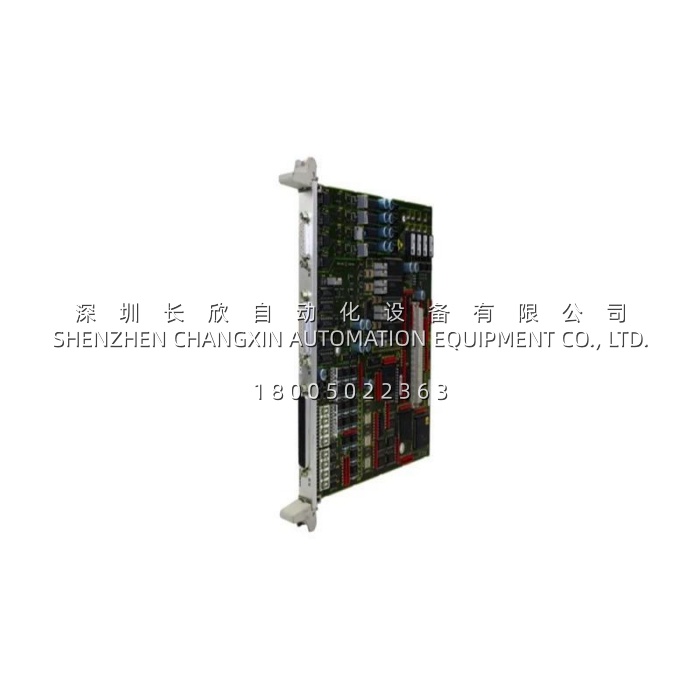
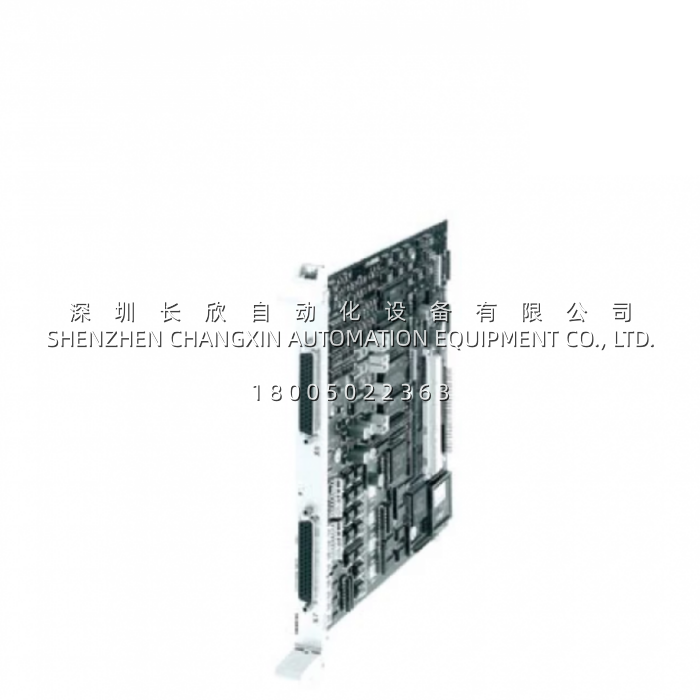
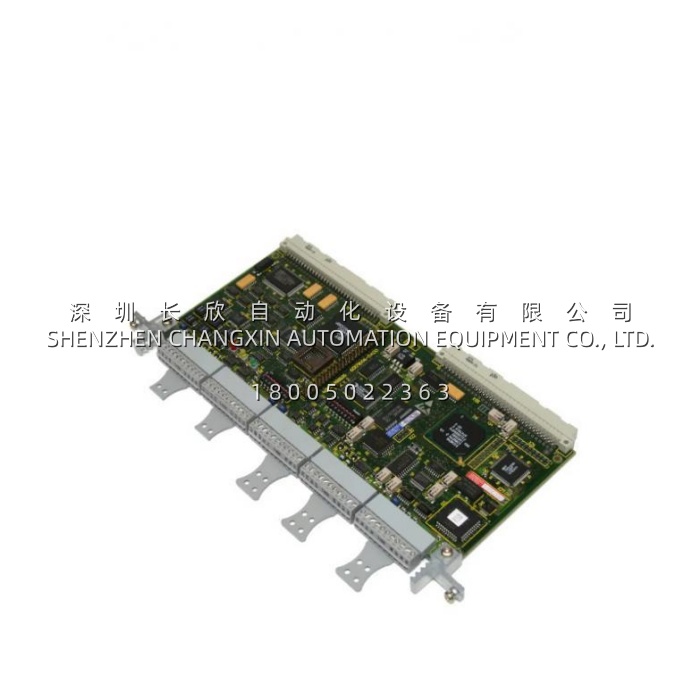
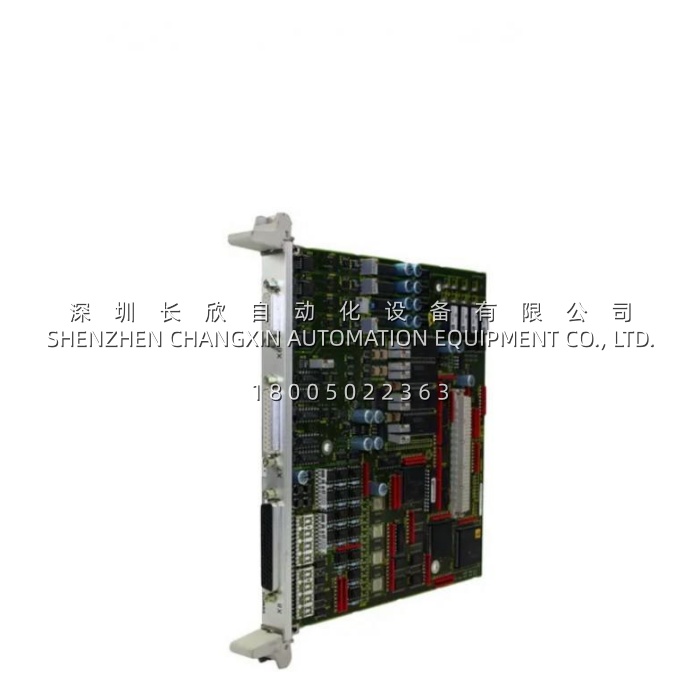
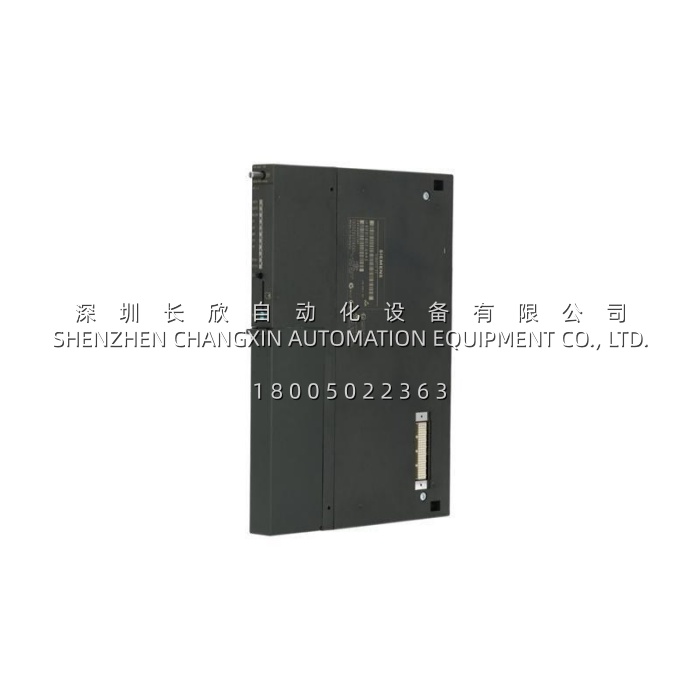
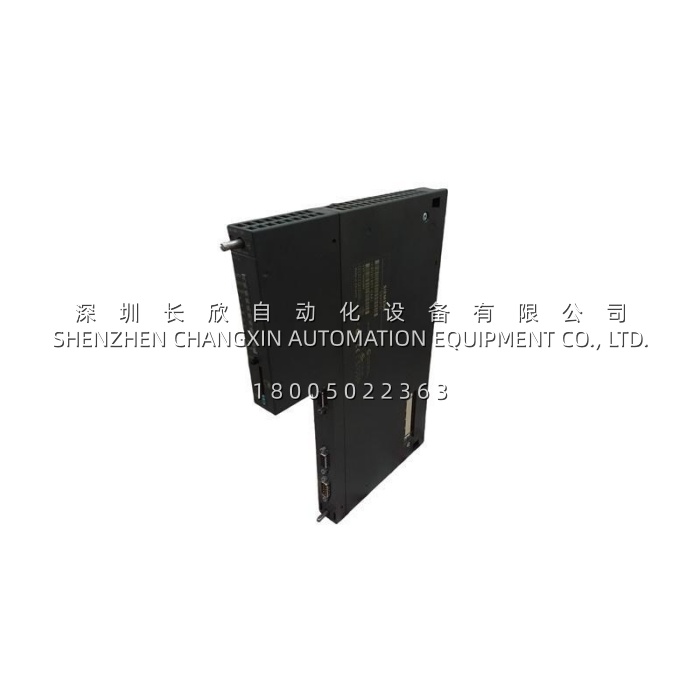
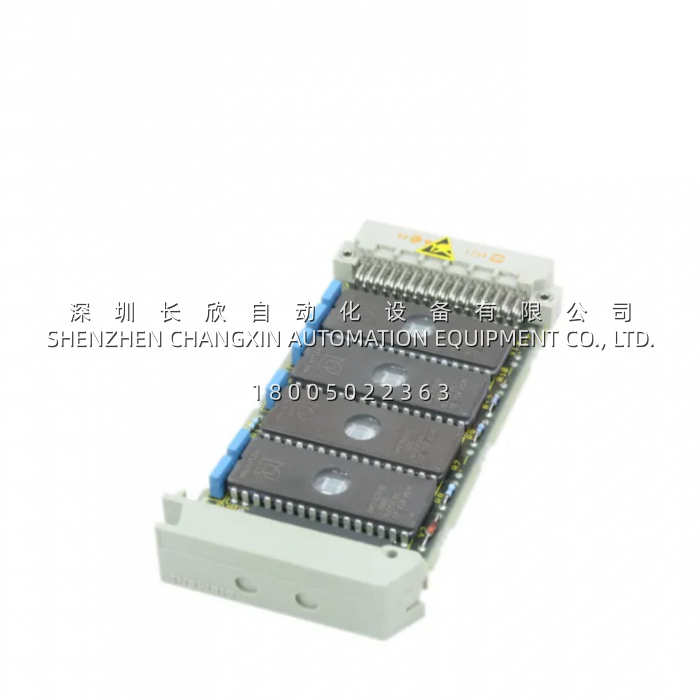
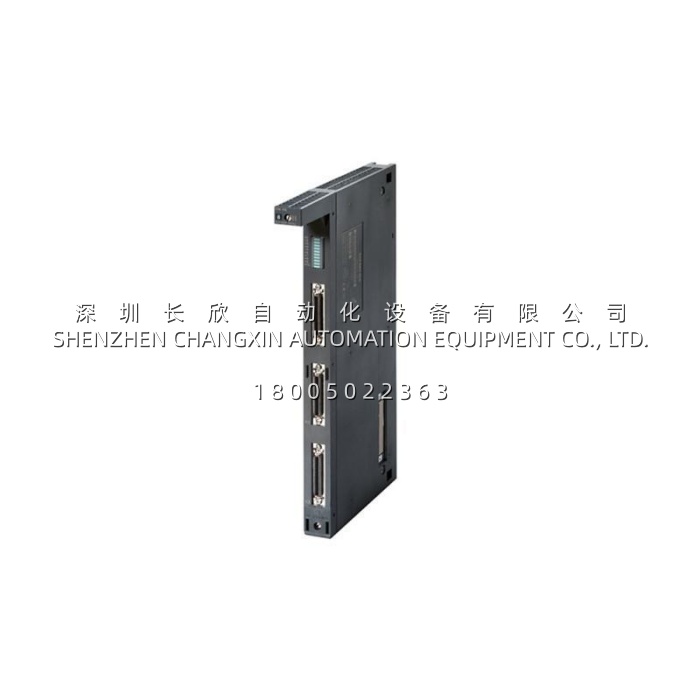
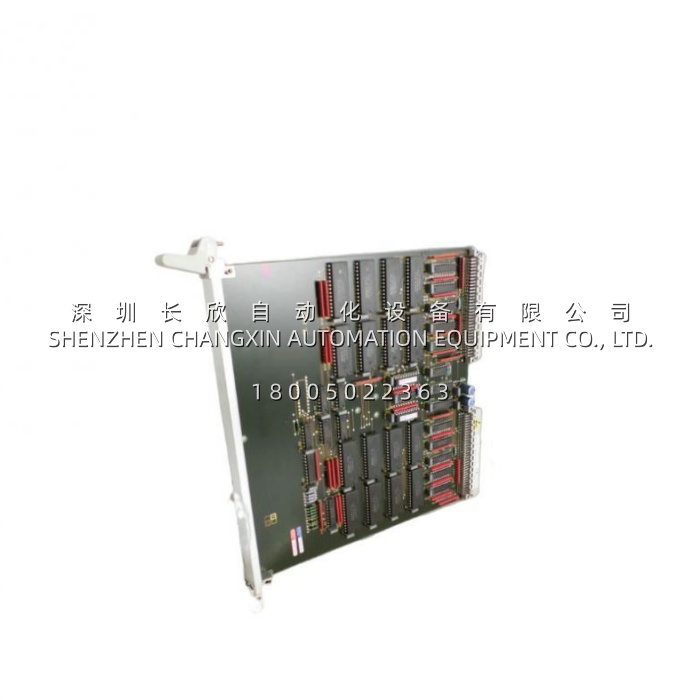
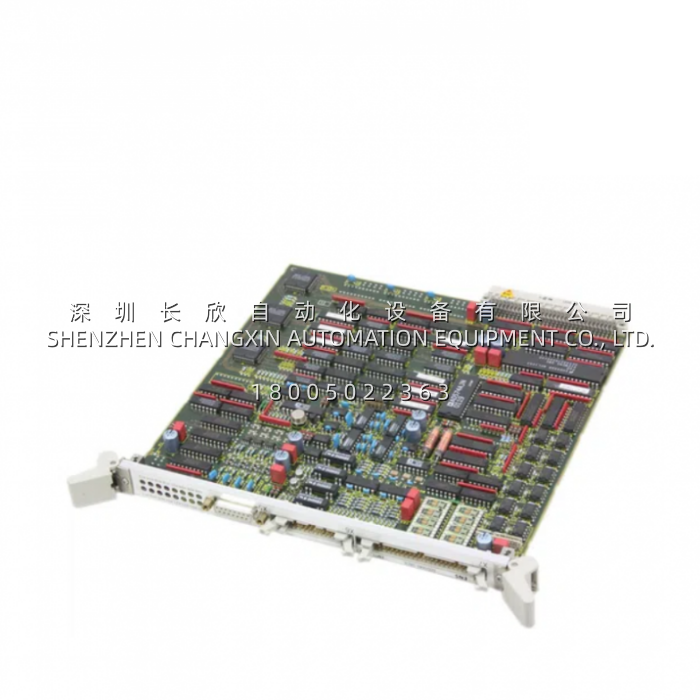
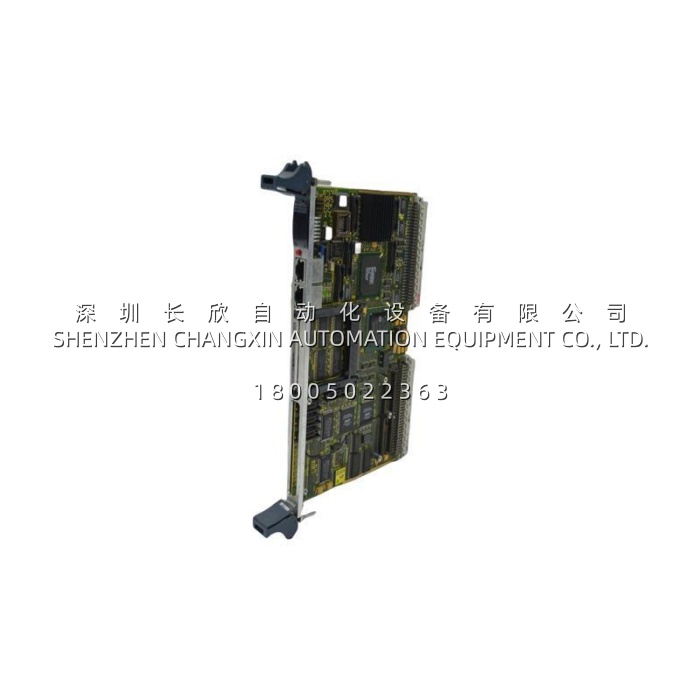
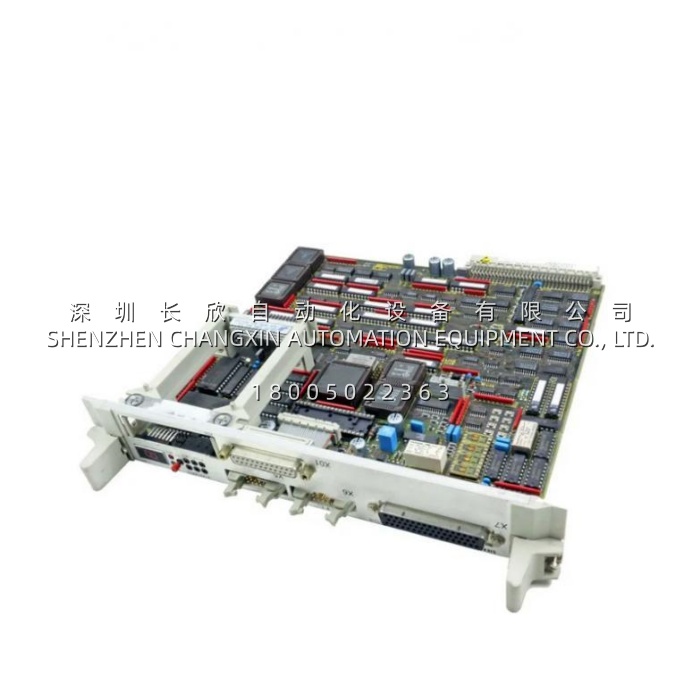
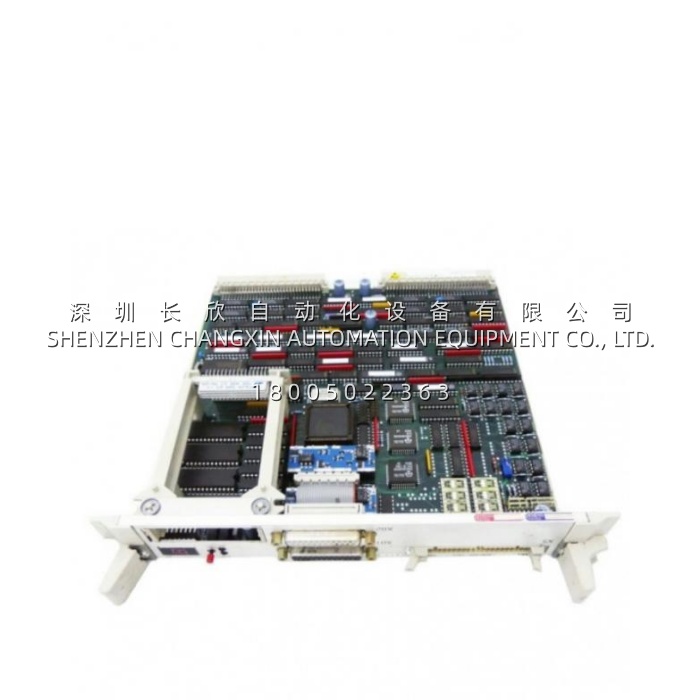
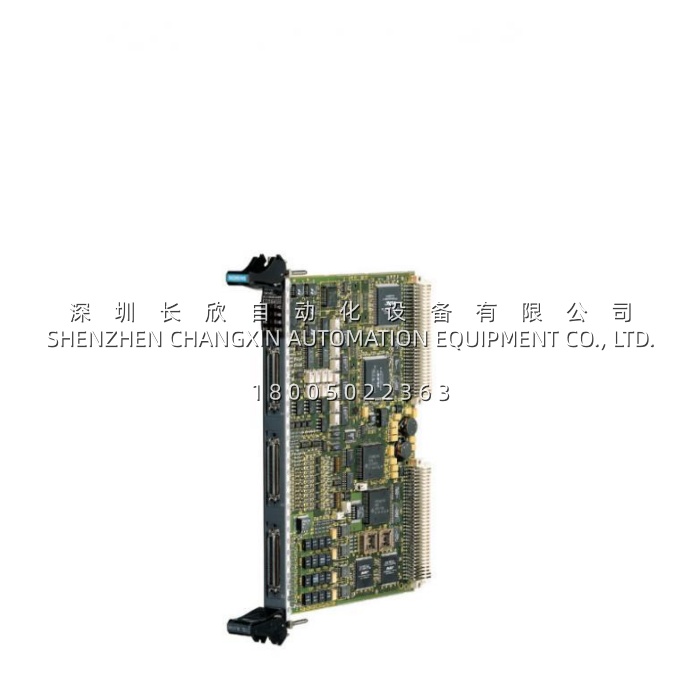
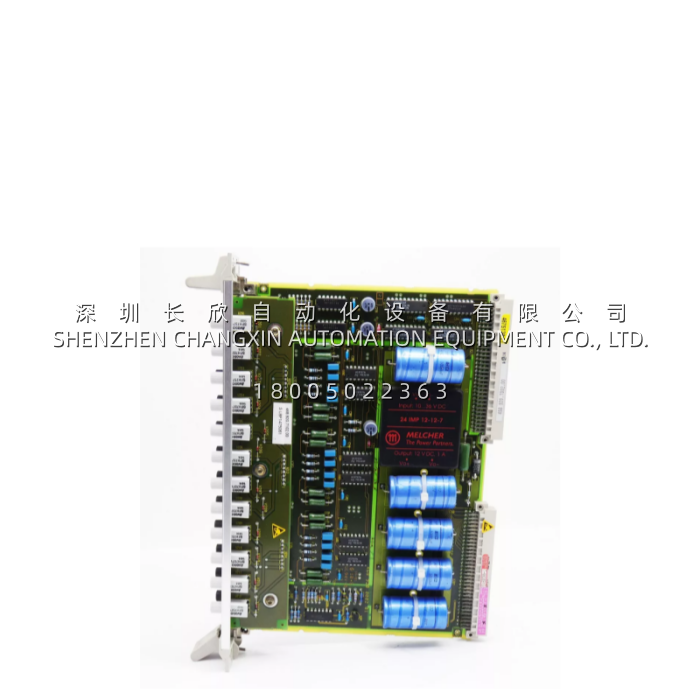
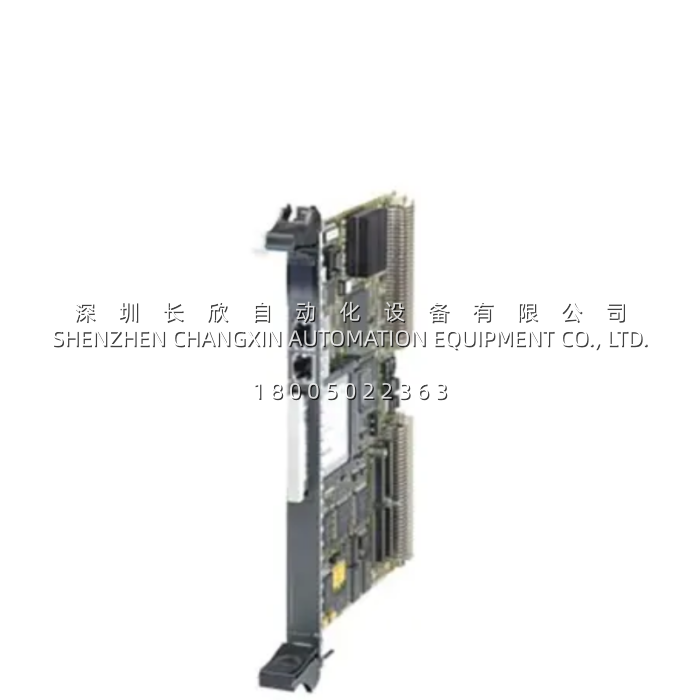
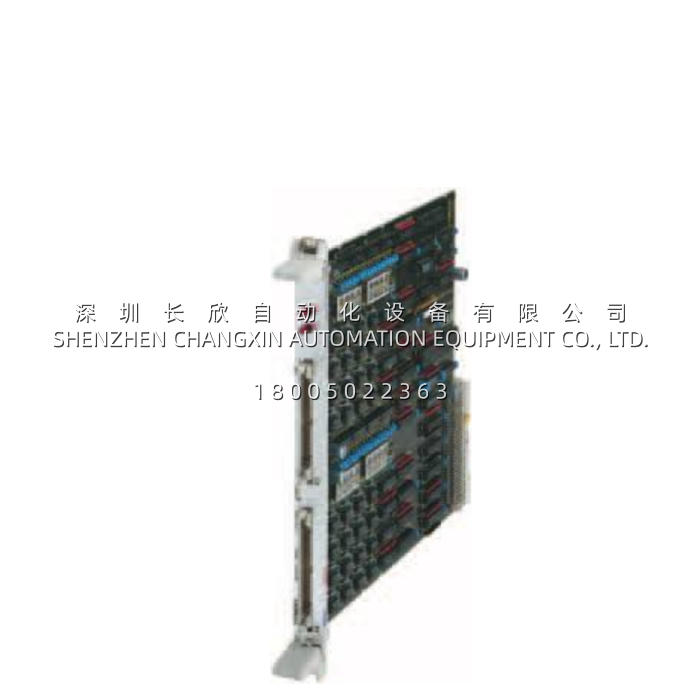
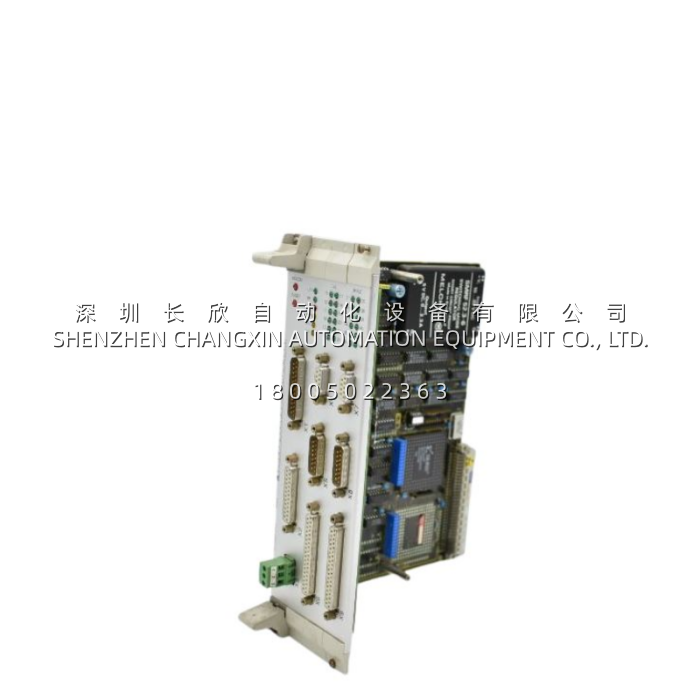
Bosch CL200 GG3 NT200: Compact PLC with Integrated I/O for Machine Control & Factory Automation缩略图

Bosch CL200 GG3 NT200: Compact PLC with Integrated I/O for Machine Control & Factory Automation

Bosch CL200 GG3 NT200: Compact PLC with Integrated I/O for Machine Control & Factory Automation插图
Description

The Bosch CL200 GG3 NT200 is a compact programmable logic controller (PLC) from Bosch Rexroth’s industrial automation portfolio, designed for small to mid-sized machine control applications. Combining integrated digital and analog I/O with flexible communication options, it delivers reliable, real-time control in space-constrained environments—ideal for OEMs and system integrators seeking robust, maintenance-free automation.

Engineered for simplicity and durability, the CL200 GG3 NT200 supports standard IEC 61131-3 programming languages and operates seamlessly in electrically noisy or thermally demanding settings, making it a trusted choice for packaging, material handling, and assembly automation worldwide.

Application Scenarios

In a high-speed bottling plant in the Netherlands, legacy relay-based control panels caused frequent line stoppages due to contact wear and timing drift. The engineering team replaced them with Bosch CL200 GG3 NT200 controllers—one per filling station—to manage bottle detection, valve sequencing, and reject gate actuation. Within weeks, unplanned downtime dropped by 65%. The CL200 GG3 NT200’s 1 ms input filter rejected false triggers from proximity sensors near variable-frequency drives, while its built-in RS485 port enabled direct communication with servo drives—eliminating the need for an external gateway. “This tiny PLC solved our biggest reliability bottleneck,” said the plant automation manager. For applications like this, the Bosch CL200 GG3 NT200 isn’t just a controller—it’s a production stabilizer.

Note: “GG3” denotes the hardware revision; “NT200” indicates firmware/base configuration variant.

Technical Principles and Innovative Values

Innovation Point 1: Unified Hardware Platform with Field-Proven Firmware Stability

The Bosch CL200 GG3 NT200 runs on Bosch Rexroth’s hardened real-time OS, validated across 50.000+ installations. Unlike commodity PLCs prone to watchdog resets under EMI stress, it maintains deterministic cycle times even during voltage sags or RF interference—critical for motion-coordinated tasks.

Innovation Point 2: Dual Communication Backbone (RS485 + CANopen)

While many compact PLCs offer only one protocol, the CL200 GG3 NT200 natively supports both Modbus RTU (for HMIs, VFDs) and CANopen (for servo axes, I/O nodes)—enabling mixed-vendor integration without protocol converters.

Innovation Point 3: Zero-Maintenance Design with Wide Voltage Tolerance

No batteries, fans, or moving parts. The Bosch CL200 GG3 NT200 retains program memory via supercapacitor (≥10 years data retention) and tolerates 18–30 V DC supply fluctuations—ideal for mobile machinery or unstable grids.

Innovation Point 4: Seamless Migration Path within CL200 Family

Programs developed for the NT200 can be reused on higher-end CL200 models (e.g., NT400 with Ethernet/IP), protecting software investment during future upgrades.

Application Cases and Industry Value

A German packaging OEM integrated the Bosch CL200 GG3 NT200 into its vertical form-fill-seal machines sold across Southeast Asia. Operating in high-humidity environments with frequent power cycling, the controller reliably managed film tension, sealing bars, and product indexing—without a single field failure over 18 months. The compact size allowed installation inside the machine frame, eliminating external control boxes. Customer feedback highlighted the intuitive programming environment and the ability to monitor I/O status via the built-in LED indicators during commissioning. Total cost of ownership was reduced by 30% compared to previous Allen-Bradley MicroLogix solutions.

In another case, a U.S. conveyor system integrator used the CL200 GG3 NT200 to retrofit aging sortation lines at a postal hub. The PLC read photoelectric sensors, controlled diverter gates via relay outputs, and reported jam events over Modbus to a central SCADA. Its fast response (<2 ms input-to-output) ensured accurate parcel routing at 2.5 m/s belt speeds. The project was completed 40% faster thanks to pre-tested function blocks provided by Bosch.

Related Product Combination Solutions

Bosch CL200 NT400: Enhanced version with built-in Ethernet (TCP/IP, Modbus TCP) and larger program memory

Bosch CL200 DI16/DO16 Modules: Digital I/O expansion units for scaling beyond base I/O count

Bosch CL200 AI4/AO2: Analog input/output modules for temperature, pressure, or speed control loops

Bosch IndraControl VPP 20: Higher-tier PLC platform for complex motion coordination—compatible with CL200 I/O

Bosch Rexroth MTX Pro Software: Official engineering tool for programming, simulation, and diagnostics

Bosch S20 I/O System: Decentralized I/O nodes that communicate via CANopen with CL200 GG3 NT200

Bosch HMI VT3F: Entry-level operator panel with native CL200 driver support

Bosch Power Supply LRP 24-2.5: DIN-rail 24V PSU optimized for CL200 series stability

Installation, Maintenance, and Full-Cycle Support

Installing the Bosch CL200 GG3 NT200 requires only a standard 35 mm DIN rail, 24 V DC power, and shielded cables for field wiring. The terminal blocks accept stranded wires with ferrules (0.14–2.5 mm²), and all I/O LEDs are visible from the front for quick status verification. Commissioning is accelerated by auto-detection of expansion modules and built-in diagnostic buffers that log the last 100 program cycles— invaluable for troubleshooting intermittent faults.

Maintenance is virtually nonexistent: no battery replacements, no firmware updates for basic operation, and no cooling requirements. Should a unit fail, program backup is automatic via microSD card slot (optional), and replacement takes under 10 minutes—thanks to plug-in design and parameter cloning via USB. Error codes (e.g., “E03: CANopen Timeout”) appear on the status display, guiding technicians to root causes without specialized tools.
Bosch CL200 GG3 NT200: Compact PLC with Integrated I/O for Machine Control & Factory Automation插图1

Bosch CL200 GG3 NT200: Compact PLC with Integrated I/O for Machine Control & Factory Automation插图2

ABB CSA463AE (HIEE400103R0001): High-Performance Serial Communication Module for AC 800M DCS缩略图

ABB CSA463AE (HIEE400103R0001): High-Performance Serial Communication Module for AC 800M DCS

ABB CSA463AE (HIEE400103R0001): High-Performance Serial Communication Module for AC 800M DCS插图
Description

The ABB CSA463AE (HIEE400103R0001) is a dual-channel serial communication interface module designed for the ABB AC 800M programmable automation controller (PAC) within the System 800xA distributed control system (DCS). It enables robust, point-to-point or multi-drop connectivity to legacy field devices such as smart meters, variable frequency drives (VFDs), remote terminal units (RTUs), and third-party PLCs using standard serial protocols. With full electrical isolation and support for multiple physical layers, the CSA463AE bridges modern DCS architecture with existing plant-floor equipment—ensuring data integrity, interoperability, and long-term system sustainability.

Application Scenarios

At a municipal wastewater treatment facility in Scandinavia, operators struggled to integrate aging flow meters and chemical dosing pumps into their new ABB System 800xA platform. These devices communicated only via RS-485 Modbus RTU—a protocol unsupported by the base AC 800M CPU. By installing the ABB CSA463AE (HIEE400103R0001) modules in redundant controller racks, engineers established real-time bidirectional communication without replacing field instruments. The CSA463AE’s galvanic isolation prevented ground loops from corroded conduit runs, while its dual ports allowed one channel for metering and another for pump control—all within a single I/O slot. This solution saved over €220.000 in capital expenditure and cut commissioning time by three weeks. In this context, the HIEE400103R0001 wasn’t just an interface—it was the key to future-proofing legacy infrastructure.

Technical Principles and Innovative Values

Innovation Point 1: Universal Physical Layer Selection Without Hardware Changes

Unlike fixed-interface modules, the CSA463AE allows each port to be independently configured via software for RS-232. RS-422. or RS-485—eliminating the need for external converters or rewiring during device upgrades. This flexibility is critical when integrating mixed-vendor equipment across decades of plant evolution.

Innovation Point 2: Deep Protocol Integration with Control Builder M

The HIEE400103R0001 is natively supported in ABB’s Control Builder M engineering suite. Pre-built function blocks for Modbus RTU enable drag-and-drop configuration of register maps, polling rates, and error handling—reducing programming errors and accelerating deployment.

Innovation Point 3: Galvanic Isolation for Ground Loop Elimination

Each serial channel features reinforced insulation rated at 500 V RMS, effectively breaking ground potential differences common in large facilities with separate power zones. Field data shows a 90% reduction in communication faults after replacing non-isolated third-party gateways with the CSA463AE.

Innovation Point 4: Redundancy-Aware Operation in High-Availability Systems

In redundant AC 800M setups, the CSA463AE automatically synchronizes port states during controller switchover, ensuring zero data loss during failover—a requirement in power generation and water supply applications where continuous monitoring is mandated.

Application Cases and Industry Value

A combined-cycle power plant in the Middle East retrofitted its turbine auxiliary systems with ABB CSA463AE (HIEE400103R0001) modules to connect legacy GE Mark V gas turbine controllers to the central System 800xA DCS. Previously, operators relied on manual logs for lube oil pressure and vibration data. With the CSA463AE, real-time parameters now stream via Modbus RTU into operator displays and alarm historians. During a recent bearing overheating event, the system triggered an automated cooldown sequence 12 minutes before human intervention would have occurred—preventing a potential $4M rotor replacement. Plant engineers reported 100% communication uptime over 18 months, even during desert sandstorms with high EMI from nearby HV switchyards.

Related Product Combination Solutions

ABB CI854A: Redundant optical fiber communication module—often used alongside CSA463AE for backbone networking

ABB AC 800M PM864A: Main CPU controller that hosts HIEE400103R0001 in I/O racks

ABB TB850: Terminal base for CSA-series modules with screw terminals and diagnostic LEDs

ABB CI871: Ethernet/IP and PROFINET communication module—complements CSA463AE for hybrid networks

ABB AO810: Analog output module for closed-loop control based on serial device feedback

ABB DI880: High-density digital input card for discrete status from serial-connected RTUs

ABB Control Builder M: Engineering software for configuring CSA463AE protocol parameters and data mapping

ABB TK801A: Configuration cable kit for local diagnostics and firmware updates

Installation, Maintenance, and Full-Cycle Support

Installing the ABB CSA463AE (HIEE400103R0001) requires mounting it in a compatible AC 800M I/O base (e.g., TB850 on a CI854A rack). No jumpers or DIP switches are needed—port settings are defined entirely in Control Builder M. Wiring uses standard shielded twisted-pair cables; the shield should be grounded at the controller end only to preserve noise immunity. After download, the module self-initializes, and port status LEDs indicate link activity and errors.

Maintenance is largely predictive: the CSA463AE logs CRC errors, timeouts, and buffer overflows in the controller’s diagnostic buffer, accessible via System 800xA or remote SSH. In redundant systems, failed modules can be replaced live after disabling the I/O station in software. ABB recommends verifying isolation resistance annually in corrosive or humid environments.

We supply every ABB CSA463AE (HIEE400103R0001) as new surplus or ABB-certified refurbished units, fully tested against original factory specifications. Each unit includes traceable batch codes and compatibility validation for your AC 800M firmware version. Our DCS-certified engineers provide lifetime remote support for protocol debugging, wiring validation, and redundancy setup—ensuring your serial ecosystem remains secure, stable, and scalable.
ABB CSA463AE (HIEE400103R0001): High-Performance Serial Communication Module for AC 800M DCS插图1

ABB CSA463AE (HIEE400103R0001): High-Performance Serial Communication Module for AC 800M DCS插图2

CR-GEN0-M6400R Machine Vision Camera: 6400×4800 Resolution, Camera Link Interface缩略图

CR-GEN0-M6400R Machine Vision Camera: 6400×4800 Resolution, Camera Link Interface

CR-GEN0-M6400R Machine Vision Camera: 6400×4800 Resolution, Camera Link Interface插图
Product Description

The CR-GEN0-M6400R​ is a high-resolution area scan industrial camera manufactured by DALSA (now part of Teledyne Technologies), a pioneer in digital imaging and machine vision. This camera belongs to the category of high-performance machine vision sensors, designed to capture extremely detailed images for applications where precision is paramount. It serves as the critical “eye” of an automated inspection system, transforming visual information into digital data for analysis, measurement, and decision-making.

Application Scenarios

In a flat panel display (FPD) manufacturing facility, detecting micron-level defects in the intricate transistor layers is a monumental challenge. Traditional cameras lacked the resolution to distinguish between a harmless particle and a catastrophic short circuit. This is where the CR-GEN0-M6400R​ proves its worth. Mounted on a high-precision motion stage, the camera captures a single, massive 30.7-megapixel image of a panel section. Its large 47.36mm sensor and 7.4-micron pixels provide such exceptional detail that advanced vision software can automatically identify and classify sub-pixel defects like micro-scratches, color inconsistencies, and pattern deformations. The CR-GEN0-M6400R​ directly addresses the core pain points of yield loss and quality assurance in high-value manufacturing, enabling 100% automated inspection at a resolution that was previously unattainable, ensuring that only flawless products proceed to assembly.

Technical Principles and Innovative Values

The CR-GEN0-M6400R​ is engineered not just for high pixel count, but for delivering measurable, reliable image data under industrial constraints.

Innovation Point 1: Large Sensor with Optimal Pixel Size for Metrology-Grade Accuracy.​ The camera’s defining feature is its massive 47.36mm diagonal sensor paired with a 7.4-micron pixel pitch. This combination provides a vast field of view while maintaining a high pixel density. For measurement applications, this translates directly into superior spatial resolution and lower sub-pixel error. A single image can cover a large area (e.g., an entire circuit board panel) while still resolving features down to a few microns, eliminating the need for complex image stitching in many cases and speeding up inspection cycles.

Innovation Point 2: Camera Link Interface for Uncompressed, High-Bandwidth Data Transfer.​ Utilizing the Camera Link​ standard, the CR-GEN0-M6400R​ ensures lossless, deterministic transfer of its massive 30+ megapixel images. This is critical for inspection integrity, as compression artifacts from interfaces like USB3 or GigE could be mistaken for defects. The dedicated hardware interface provides stable, high-speed communication with frame grabbers, essential for synchronized triggering in multi-camera setups or with precision motion stages, guaranteeing image capture at the exact moment required.

Innovation Point 3: Industrial Hardening for Consistent Performance in Challenging Environments.​ Built for the factory floor, the camera features a ruggedized metal housing designed to withstand vibration, dust, and variable temperatures. This ensures that the precise optical alignment between the sensor and lens mount remains stable over time and across environmental shifts. This reliability is a core innovation, as it guarantees that the calibration and measurement results produced on day one remain valid months later, reducing maintenance downtime and recalibration costs.

Application Cases and Industry Value

Case Study: Printed Circuit Board (PCB) Assembly Final Verification

A leading automotive electronics supplier faced escalating quality demands for engine control units (ECUs). The final inspection required verifying the presence, placement, and solder quality of over 500 components on a complex multi-layer PCB. Manual inspection was slow and error-prone, while existing vision systems could not reliably inspect the fine-pitch Ball Grid Array (BGA) packages.

The solution was a custom optical inspection station built around four DALSA CR-GEN0-M6400R​ cameras. Each camera, equipped with telecentric lenses, was responsible for a quadrant of the PCB. The high resolution allowed each camera to image its section in a single shot with enough detail to inspect BGA solder ball coplanarity and bridge defects. The Camera Link​ outputs fed into a powerful industrial PC running specialized inspection software.

The impact was transformative. Inspection time per board dropped from 5 minutes (manual) to under 30 seconds. The defect escape rate fell to near zero, with the system catching issues like tombstoning and insufficient solder that were previously missed. The production manager reported: “The CR-GEN0-M6400R​ gave us the ‘microscope’ we needed for automation. Its consistency is remarkable—we haven’t had to recalibrate the station in months, despite running three shifts. It has become the cornerstone of our zero-defect delivery promise to the OEM.”
CR-GEN0-M6400R Machine Vision Camera: 6400×4800 Resolution, Camera Link Interface插图1

Cognex CIO-1400: The Essential I/O Expansion Module for In-Sight 3400/5000 Series缩略图

Cognex CIO-1400: The Essential I/O Expansion Module for In-Sight 3400/5000 Series

Cognex CIO-1400: The Essential I/O Expansion Module for In-Sight 3400/5000 Series插图
Product Description

The Cognex CIO-1400​ is a dedicated I/O expansion module manufactured by Cognex Corporation, a global leader in machine vision and industrial barcode reading. This module serves as a critical interface bridge, designed specifically to extend the discrete input and output capabilities of Cognex In-Sight 3400 and 5000 series vision sensors. It transforms a vision system from a passive inspection tool into an active control node within a larger automation network.

Application Scenarios

In a high-speed pharmaceutical packaging line, a Cognex In-Sight 5400 vision sensor meticulously inspects every blister pack for missing pills. The system works perfectly until a reject is detected; the line cannot stop instantly, and the faulty pack continues down the conveyor, potentially mixing with good product. This is where the Cognex CIO-1400​ becomes indispensable. Upon a “fail” judgment from the vision sensor, the CIO-1400’s high-speed output instantly triggers a pneumatic reject arm, physically ejecting the defective pack with millisecond precision. Simultaneously, one of its general-purpose outputs sends a signal to the central PLC to log the defect and adjust batch counts. This real-world scenario highlights the module’s core value: it directly addresses the critical pain point of closed-loop control, enabling the vision system to not just “see” a problem but to “act” on it immediately, ensuring 100% quality control and seamless integration with the plant’s broader automation infrastructure.


Technical Principles and Innovative Values

The Cognex CIO-1400​ is engineered not as a generic I/O card, but as a vision-optimized peripheral that extends the sensor’s control domain with reliability and speed.

Innovation Point 1: Vision-Optimized I/O Architecture with Dedicated High-Speed Channels.​ Unlike standard PLC modules, the CIO-1400​ features a hybrid I/O design. It provides robust, optically isolated channels for reliable connection to various sensors (e.g., part presence) and actuators (e.g., indicator lamps, solenoids). Crucially, it includes two dedicated, non-isolated high-speed outputs. These are designed for ultra-low latency, enabling the vision system’s “pass/fail” decision to trigger a physical reject mechanism within the same machine cycle—a critical requirement in packaging and assembly lines running at hundreds of items per minute.

Innovation Point 2: Seamless Cognex Ecosystem Integration via Native Communication.​ The module connects directly to the vision sensor’s expansion port, appearing as a native component within the In-Sight spreadsheet or EasyBuilder software. Users can configure and map I/O points directly alongside their vision tools (like PatMax or OCR), without dealing with complex network protocols or driver issues. This tight integration drastically reduces programming and commissioning time, turning complex machine integration into a drag-and-drop operation.

Innovation Point 3: Ruggedized, DIN-Rail Design for Harsh Industrial Deployment.​ Recognizing that vision systems are deployed on the factory floor, the CIO-1400​ is built for durability. Its DIN-rail mounting allows for secure installation in standard control cabinets alongside PLCs and motor drives. The optically isolated circuits protect the sensitive vision electronics from voltage spikes and electrical noise commonly found in industrial environments, ensuring long-term system stability and reducing maintenance-induced downtime.

Application Cases and Industry Value

Case Study: Automotive Parts Assembly Verification and Traceability

A Tier-1 automotive supplier assembling complex transmission components implemented a Cognex In-Sight 5802 system to verify the presence and correct orientation of multiple gears and seals. The vision inspection was flawless, but the manual logging of serial numbers and defect counts was prone to error and delayed.

The solution was integrating the Cognex CIO-1400. The vision sensor was programmed to read a Data Matrix code on each part carrier for traceability. Upon a successful inspection, the CIO-1400’s RS-232 port transmitted the serial number and “OK” status directly to a nearby printer for a physical label. If a missing component was detected, a high-speed output from the CIO-1400​ immediately activated a diverter gate to route the assembly to a rework station, while a general-purpose output sent a signal to the plant’s MES (Manufacturing Execution System) via a PLC to decrement the good-part count and flag the station for attention.

The results were transformative. Rework loops were reduced by 95% as faulty parts were removed instantly. Traceability became 100% automated and accurate. The production supervisor noted: “The CIO-1400​ made our vision system intelligent. It’s no longer just a camera; it’s the quality gatekeeper and data logger for the entire cell. The integration was straightforward with Cognex software, and the reliability has been perfect over three shifts.”

Related Product Combination Solutions

Building a complete machine vision application around the Cognex CIO-1400​ often involves these key components:

Cognex In-Sight 5400/5800 Series Vision Sensors:​ The primary hosts for the CIO-1400. providing the imaging engine, processing power, and software platform for complex inspection tasks.

Cognex In-Sight 8400 Series Vision Systems:​ Higher-performance vision systems that also support the CIO-1400​ for applications requiring extreme speed or resolution.

Cognex PatMax® RedLine Tool:​ A high-speed geometric pattern matching tool often used in inspections where the CIO-1400​ then triggers actions based on its findings.

Cognex In-Sight Explorer / EasyBuilder Software:​ The essential configuration environment where I/O points on the CIO-1400​ are mapped to vision tool results and logic is built.

24VDC Industrial Power Supply (e.g., Siemens SITOP):​ A reliable, regulated power source required to operate the CIO-1400​ module.

Phoenix Contact or Weidmüller Terminal Blocks:​ High-quality terminal blocks and connectors for secure and reliable wiring to the CIO-1400’s I/O channels.

Managed Industrial Ethernet Switch (e.g., Cisco IE2000):​ To network the In-Sight sensor (with attached CIO-1400) to the plant’s PLC and supervisory systems for data aggregation.

Installation, Maintenance, and Full-Cycle Support

Installation and commissioning of the Cognex CIO-1400​ are designed for efficiency. Begin by mounting the module on a standard 35mm DIN rail inside your control panel, ensuring adequate clearance for wiring and ventilation. Connect the provided communication cable securely from the module to the expansion port on your In-Sight vision sensor. Next, wire your field devices—sensors, push buttons, and actuators—to the clearly labeled terminals on the CIO-1400. adhering to the voltage and current specifications for each channel. Finally, apply 24VDC power. The configuration is entirely software-based within Cognex’s In-Sight Explorer. Here, you simply enable the expansion module and assign its physical I/O points to software “tags,” which can then be used in your inspection logic to trigger outputs based on pass/fail conditions or to read external signals as inspection triggers.

Routine maintenance is minimal due to the module’s solid-state design. The primary focus is on ensuring clean, stable power and secure connections. Periodically check terminal tightness to prevent loosening from vibration. Should an issue arise, the module’s status LEDs (MODULE OK, COMM OK) provide immediate visual diagnostics. If a specific I/O channel fails, the modular nature of the system means you can often reconfigure your application to use a spare channel while sourcing a replacement, minimizing downtime.

We provide comprehensive support for the Cognex CIO-1400​ and the entire In-Sight ecosystem. From initial compatibility verification and system design assistance to supplying guaranteed, fully tested modules, we are your partner in machine vision integration. Our technical team can help troubleshoot integration challenges and optimize your I/O logic. We are committed to ensuring your vision-controlled automation cell achieves maximum uptime and performance. Contact us for a customized solution or to discuss your specific application requirements.
Cognex CIO-1400: The Essential I/O Expansion Module for In-Sight 3400/5000 Series插图1

Cognex CIO-1400: The Essential I/O Expansion Module for In-Sight 3400/5000 Series插图2

ABB UAC389 CPU Module: High-Integration PCB for Advant Series Distributed Control Systems

Description

The ABB UAC389​ (identified by part number HIEE410506P104) is a central processing unit (CPU) board designed as a core component for ABB’s legacy Advant Masterpiece​ and MOD 300​ Distributed Control System (DCS) platforms . This printed circuit board (PCB) serves as the system’s brain, executing deterministic control logic, managing system communication via a dedicated backplane bus, and coordinating the operation of field I/O modules. It is engineered for high reliability in continuous, mission-critical industrial processes.

Application Scenarios

In a large pharmaceutical manufacturing facility, a decades-old MOD 300 DCS was responsible for managing a critical fermentation process requiring precise pH and temperature control over extended batch cycles. The system’s heart was an ABB UAC389 HIEE410506P104​ CPU board. After over twenty years of uninterrupted service, one of these CPU boards failed, threatening a complete production halt and potential loss of a valuable batch. Because a pre-tested, compatible UAC389​ replacement was available in stock, maintenance engineers were able to perform a hot-swap of the board in under an hour. The system restored instantly, running the original, validated control application without any need for re-engineering or recipe recalibration. The plant manager noted, “The UAC389​ wasn’t just a component; it was the guardian of our process integrity. Having a reliable spare allowed us to recover in minutes, safeguarding both regulatory compliance and product quality.”


Technical Principles and Innovative Values

Innovation Point 1: Deterministic Control Execution in a Dedicated Environment. The core principle of the UAC389​ is its commitment to deterministic real-time control. Unlike general-purpose computing platforms, its dedicated operating environment guarantees that critical control loops, safety interlocks, and batch sequencing logic are executed within a precisely defined and consistent scan time. This predictability is fundamental for process stability, product quality, and operational safety in continuous industries like chemicals and pharmaceuticals .

Innovation Point 2: High-Density Component Integration for Enhanced Reliability. The ABB UAC389 HIEE410506P104​ integrates the core microprocessor, memory, and bus interface logic onto a single, compact PCB. This high level of integration was a significant design advancement, minimizing internal communication latency between subsystems and, more importantly, enhancing overall reliability by drastically reducing the number of discrete components and interconnects that could potentially fail in the harsh industrial environment .

Innovation Point 3: Strategic Backward Compatibility as a Platform Philosophy. A key innovation embedded in the UAC389’s design was its strict adherence to backward compatibility within the Advant/MOD 300 ecosystem. It ensured electrical and logical compatibility with the existing landscape of I/O modules, communication cards, and field wiring. This philosophy allowed plant operators to upgrade the central processing brain for improved performance or as a spare part replacement without forcing a prohibitively expensive and disruptive complete overhaul of the entire control system infrastructure .

Application Cases and Industry Value

Case Study: Lifecycle Extension in a Pulp & Paper Mill.​ A pulp and paper mill operating a large Advant Masterpiece system for its digesters and paper machines faced the challenge of maintaining a system beyond its official vendor support lifecycle. The ABB UAC389​ CPU boards were identified as critical spares. By sourcing and stocking tested UAC389 HIEE410506P104​ units, the mill implemented a robust sparing strategy. When a CPU fault occurred, the quick swap restored control within a single shift, avoiding a multi-day production outage. The mill’s engineering supervisor reported, “The value of the UAC389​ goes beyond its technical specs. It represents the ability to sustain our capital-intensive operations for decades, protecting our investment and ensuring operational continuity when modernizing the entire DCS is not immediately feasible.”

Related Product Combination Solutions

ABB UAC380 / UAC381 Modules: Associated communication or application modules that often share the same bus or housing as the UAC389. providing additional network connectivity or specialized computational functions .

ABB UDC Series I/O Modules (e.g., UDC220. UDC300): The various Digital and Analog Input/Output modules which interface directly with the UAC389​ CPU via the backplane bus to connect with field sensors and actuators .

ABB System Racks & Housings: The specific chassis or rack (e.g., Type R modular units) required to house the UAC389​ and provide the necessary power distribution and bus infrastructure .

ABB UAC360 / UAC370 Series: Older or alternative CPU/processor units within the Masterpiece or MOD 300 family, which can sometimes serve as functional spares or be used in less complex control applications .

ABB AC 800M Series (e.g., PM865. PM866): The current generation of ABB controllers that represent the modern upgrade and migration path for systems currently relying on the legacy UAC389​ .

Installation, Maintenance, and Full-Cycle Support

Installation​ of the ABB UAC389 HIEE410506P104​ is a specialized procedure due to its nature as a bare PCB. It requires careful anti-static handling and typically slides into a designated protective metal housing or a dedicated slot within the control system rack . A critical pre-installation step is verifying that the board has the correct firmware or application software loaded, which is often overlooked in legacy system maintenance .

Routine Maintenance​ focuses on the health of the host system. This includes regularly checking the stability and quality of the rack’s power supply and ensuring the cooling system is functioning adequately, as the UAC389​ is sensitive to overheating . The primary diagnostic tool is the board’s onboard LED status indicators (RUN, FAIL, COMM). A illuminated FAIL​ LED typically necessitates immediate board replacement .

We provide Full-Cycle Support​ for these legacy components. Our service begins with expert consultation to confirm the exact compatibility of the UAC389 HIEE410506P104​ with your specific Advant or MOD 300 system revision. We supply only genuine, functionally tested modules that have been validated under load to ensure they perform identically to the original. Our technical support can guide you through the replacement process to minimize system downtime. We understand the criticality of these components and maintain strategic inventory to support your long-term operational needs.

ABB UAC389 CPU Module: High-Integration PCB for Advant Series Distributed Control Systems插图

ABB UAC389 CPU Module: High-Integration PCB for Advant Series Distributed Control Systems插图1

Industrial Backbone: ABB 216VC62A/P1000 HESG324442R112 Enables High-Speed Data Exchange in Power & Process Control缩略图

Industrial Backbone: ABB 216VC62A/P1000 HESG324442R112 Enables High-Speed Data Exchange in Power & Process Control

Industrial Backbone: ABB 216VC62A/P1000 HESG324442R112 Enables High-Speed Data Exchange in Power & Process Control插图
Description

The ABB 216VC62A/P1000 HESG324442R112 is a high-reliability VMEbus carrier and communication module engineered for ABB’s AC 800M and legacy Symphony/Symphony+ distributed control systems. Serving as a critical backbone for I/O processing and inter-controller data exchange, it enables seamless integration of field devices, redundant networks, and safety-critical logic in power generation, oil & gas, and heavy industrial applications.

This module combines robust VME64 architecture with ABB-specific firmware to deliver deterministic performance, extensive diagnostics, and long-term interoperability—ensuring decades-old installations remain secure, supportable, and upgradeable.

Application Scenarios

At a Scandinavian hydroelectric plant undergoing digital life extension, engineers faced a dilemma: the original Symphony INFI 90 controllers were still functional, but spare parts for their proprietary communication backplanes were scarce. By installing the ABB 216VC62A/P1000 HESG324442R112 into upgraded VME racks, they created a hybrid control layer that preserved existing I/O while enabling integration with System 800xA for remote monitoring. The ABB 216VC62A/P1000 HESG324442R112’s dual Ethernet ports handled historian data streaming without impacting real-time turbine governor loops—extending the plant’s operational life by 15+ years at one-third the cost of full replacement.


Technical Principles and Innovative Values

Innovation Point 1: Hybrid Legacy-Modern Architecture – The ABB 216VC62A/P1000 HESG324442R112 acts as a “translation layer,” allowing INFI 90 I/O modules to coexist with AC 800M logic via shared VME backplane—eliminating costly rewiring during brownfield upgrades.

Innovation Point 2: Hardware-Accelerated Redundancy – Unlike software-based failover, this module uses dedicated state-mirroring circuitry to synchronize primary and backup units with <1 ms switchover—critical for boiler protection or generator synchronization.

Innovation Point 3: Embedded Cybersecurity Foundation – While supporting legacy protocols, the ABB 216VC62A/P1000 HESG324442R112 includes MAC address filtering, port lockdown, and secure boot options—aligning aging infrastructure with NERC CIP and IEC 62443 guidelines.

Innovation Point 4: Fanless, Conduction-Cooled Design – With no moving parts and wide thermal tolerance, the ABB 216VC62A/P1000 HESG324442R112 operates reliably in dusty turbine halls or offshore platforms where cooling fans would fail prematurely.

Application Cases and Industry Value

In a Middle Eastern combined-cycle power station, the ABB 216VC62A/P1000 HESG324442R112 was deployed as the central communication hub for a 32-rack AC 800M system controlling steam turbines, HRSGs, and grid synchronization. During a sudden grid fault, the module’s deterministic VME arbitration ensured all trip signals reached the protection relays within 8 ms—well under the 20 ms safety window. Post-event analysis confirmed zero packet loss across its dual Ethernet streams, validating its role in mission-critical response chains.

Another implementation at a North American nuclear facility used the ABB 216VC62A/P1000 HESG324442R112 to modernize reactor coolant pump monitoring. By retaining certified INFI 90 analog input cards while upgrading only the controller layer, the utility avoided requalification costs exceeding $4M. The module’s SIL 2 certification and audit-ready diagnostics satisfied stringent regulatory reviews.

Related Product Combination Solutions

ABB PM864: Primary AC 800M CPU that mounts on ABB 216VC62A/P1000 HESG324442R112-based VME racks

ABB TB840: Terminal base for field wiring—often used with I/O modules hosted on the same VME chassis

ABB CI854: Communication interface card that complements ABB 216VC62A/P1000 HESG324442R112 in distributed architectures

Symphony MFP (HESG442211): Legacy multi-function processor—ABB 216VC62A/P1000 HESG324442R112 enables its coexistence with modern CPUs

ABB COM0034: Profibus module that can be integrated via VME expansion when used with ABB 216VC62A/P1000 HESG324442R112

System 800xA: ABB’s unified automation platform—fully supports ABB 216VC62A/P1000 HESG324442R112 for asset visualization and alarm management

ABB AF 800M VME Chassis: Standard 19″ rack enclosure designed for ABB 216VC62A/P1000 HESG324442R112 and compatible modules

ABB UNS0884A-V1: Power supply module often deployed in the same VME system to ensure stable operation of ABB 216VC62A/P1000 HESG324442R112

Installation, Maintenance, and Full-Cycle Support

The ABB 216VC62A/P1000 HESG324442R112 installs into any standard 6U VME chassis compliant with IEEE 1014. Ensure proper slot addressing via rotary switches and verify backplane power (±12 V, 5 V, GND). For redundancy, install identical units in paired slots and configure mirroring in Control Builder M. Ethernet ports should connect to isolated control networks with managed switches supporting QoS for real-time traffic.

Maintenance involves periodic firmware validation and checking VME connector integrity—especially in high-vibration environments. The module reports internal health (temperature, memory errors, link status) to 800xA, enabling predictive replacement before failure. Failed units can be swapped in minutes with pre-loaded configuration backups.

Every ABB 216VC62A/P1000 HESG324442R112 we supply undergoes 72-hour burn-in testing at 70°C, full VME bus stress test, and protocol conformance verification. Units include matched firmware versions and are backed by a 24-month warranty. Our ABB-certified engineers provide migration roadmaps, cybersecurity hardening guides, and lifecycle extension planning.
Industrial Backbone: ABB 216VC62A/P1000 HESG324442R112 Enables High-Speed Data Exchange in Power & Process Control插图1

Industrial PLC Power Supply: SCHNEIDER AS-P120-000 – Redundant-Capable, DIN-Rail Mountable for Quantum Racks缩略图

Industrial PLC Power Supply: SCHNEIDER AS-P120-000 – Redundant-Capable, DIN-Rail Mountable for Quantum Racks

Industrial PLC Power Supply: SCHNEIDER AS-P120-000 – Redundant-Capable, DIN-Rail Mountable for Quantum Racks插图
Description

The SCHNEIDER AS-P120-000 is a high-reliability AC input power supply module designed specifically for the Modicon Quantum® programmable logic controller (PLC) platform—a cornerstone of Schneider Electric’s industrial automation portfolio. It converts 120 VAC line voltage into a tightly regulated 5 VDC / 4 A output to power the backplane of Quantum I/O racks, ensuring stable operation of CPUs, communication modules, and I/O cards in demanding continuous-process environments such as water treatment, power generation, oil & gas, and heavy manufacturing.

Engineered for robustness and serviceability, the AS-P120-000 features built-in protections, visual diagnostics, and optional redundancy support—making it a critical yet often overlooked component in system uptime and data integrity.

Application Scenarios

At a municipal wastewater plant in Texas, intermittent CPU resets plagued a Modicon Quantum system controlling aeration basins. Engineers traced the issue to an aging AS-P120-000 with degraded capacitors causing 5V rail droop under load. After replacing it with a new genuine unit, voltage stability improved from ±8% to ±1.2%, eliminating resets. The plant avoided $220K in potential EPA non-compliance fines due to process excursions. In another case, a Canadian hydroelectric dam deployed dual AS-P120-000 units in redundant mode—when lightning struck the substation, one supply failed safely while the other maintained control during grid recovery, preventing turbine overspeed. These examples underscore how the AS-P120-000 directly impacts safety, compliance, and operational continuity.


Technical Principles and Innovative Values

Innovation Point 1: Quantum-Specific Backplane Regulation – Unlike generic DIN-rail supplies, the AS-P120-000 is engineered to meet the Modicon Quantum’s strict ripple and noise specs (<50 mVpp), preventing communication errors on the high-speed backplane bus between CPU and I/O.

Innovation Point 2: Seamless Redundancy Without External Diodes – When paired with a redundancy module (e.g., AS-RDE-200), two AS-P120-000 units share load and auto-transfer on failure—eliminating single-point-of-failure in SIL2 applications.

Innovation Point 3: Field-Proven Thermal Design – Convection-cooled with no fans, the AS-P120-000 operates reliably in sealed cabinets at 60°C—critical for dusty or corrosive environments where fan filters would clog.

Innovation Point 4: Lifecycle Commitment – Despite being part of a legacy platform, Schneider continues to manufacture the AS-P120-000 under its Long-Term Availability Program, protecting billions in installed Quantum systems worldwide.

Application Cases and Industry Value

A European steel mill uses over 40 AS-P120-000 modules across rolling mill controls. With ambient temperatures exceeding 55°C and electrical noise from arc furnaces, third-party replacements failed within months. Switching to genuine Schneider units extended mean time between failures (MTBF) from 14 to 89 months. Similarly, a Chilean copper mine standardized on AS-P120-000 for all new Quantum racks after a counterfeit supply caused a $1.3M conveyor collapse—highlighting the hidden cost of non-genuine components in safety-critical infrastructure.

Related Product Combination Solutions

AS-P240-000: 240 VAC input version—for global installations outside North America.

AS-RDE-200: Redundancy module—enables hot-standby operation with two AS-P120-000 units.

Modicon Quantum CPU 140CPU65150: High-end controller—requires stable 5V from AS-P120-000 for real-time performance.

AS-BADU-202: 24 VDC field power supply—complements AS-P120-000 for full I/O power architecture.

Schneider EcoStruxure Control Expert: Engineering software—includes power budgeting tools for Quantum racks.

Phoenix Contact QUINT POWER: Alternative—but lacks native Quantum backplane compatibility and redundancy sync.

Legacy AS-P115-000: Older 3A version—AS-P120-000 is direct pin-compatible upgrade with higher current.

Installation, Maintenance, and Full-Cycle Support

Installing the SCHNEIDER AS-P120-000 is straightforward: slide it into an empty slot in a Modicon Quantum rack (typically far left), secure with the latch, and connect 120 VAC via terminal block or pre-wired pigtail. In redundant setups, link two units with the AS-RDE-200 cable. No configuration is needed—the module self-regulates and reports status via front LEDs.

For maintenance, monitor the red/green LEDs: a red light indicates overload, input loss, or internal fault. The unit can be replaced live in redundant systems; in single-supply systems, a brief shutdown is required. Due to its solid-state design and industrial-grade components, the AS-P120-000 typically lasts 10+ years in continuous service.

As an authorized Schneider Electric partner, we stock new, factory-sealed AS-P120-000 modules with full warranty, provide compatibility verification for your Quantum chassis (140/141 series), and offer technical guidance on power budgeting, redundancy setup, and counterfeit detection. We also support end-of-life planning with migration paths to Modicon M580 or EcoStruxure platforms when ready.
Industrial PLC Power Supply: SCHNEIDER AS-P120-000 – Redundant-Capable, DIN-Rail Mountable for Quantum Racks插图1

C2RPS-CHAS2 Redundant Power Chassis – Ensures Uptime for C2 Series Gigabit Ethernet Switches缩略图

C2RPS-CHAS2 Redundant Power Chassis – Ensures Uptime for C2 Series Gigabit Ethernet Switches

C2RPS-CHAS2 Redundant Power Chassis – Ensures Uptime for C2 Series Gigabit Ethernet Switches插图
Description

The ENTERASYS C2RPS-CHAS2 is a dedicated redundant power supply (RPS) chassis designed exclusively for the Enterasys C2 Series of managed Gigabit Ethernet switches—particularly the C2G124-2 and C2G124-4 models. As part of Enterasys’ (now Extreme Networks) industrial-grade networking portfolio, this 1U-high enclosure allows the installation of two hot-swappable power supplies (either AC or DC variants such as C2RPS-AC or C2RPS-DC) to deliver true 1+1 power redundancy, ensuring continuous network operation even during power supply failure or maintenance.

Engineered for reliability in demanding environments—including manufacturing floors, utility substations, and transportation systems—the C2RPS-CHAS2 provides automatic failover, load balancing, and simplified serviceability, making it essential for applications where network downtime equates to production loss or safety risk.

Application Scenarios

At a North American automotive stamping plant, the factory floor network—built on Enterasys C2G124-4 switches—suffered a 3-hour outage when a single internal power supply failed during peak shift. Root cause: no external redundancy. The IT/OT team deployed the ENTERASYS C2RPS-CHAS2 with dual C2RPS-AC units across all 12 critical switches. Within weeks, one power supply failed silently—but traffic remained uninterrupted due to seamless failover. Maintenance replaced the faulty unit during routine rounds without halting presses. Over two years, network availability rose from 98.7% to 99.995%, preventing an estimated $2.3M in potential downtime losses. This demonstrates how the C2RPS-CHAS2 transforms vulnerable edge switches into resilient infrastructure nodes.

Note: The C2RPS-CHAS2 does not include power supplies—they must be ordered separately (e.g., C2RPS-AC). The chassis connects to the C2 switch via a proprietary high-current cable that carries both power and status signals.

Technical Principles and Innovative Values

Innovation Point 1: True Hot-Swap Without Traffic Interruption – Unlike simple dual-corded switches, the C2RPS-CHAS2 uses a centralized power bus that maintains voltage stability during PSU replacement—critical for real-time protocols like PROFINET or EtherNet/IP.

Innovation Point 2: Intelligent Power Monitoring & Alerting – The chassis reports PSU health (input voltage, output current, temperature) to the C2 switch via management interface, enabling SNMP traps or Syslog alerts for predictive maintenance.

Innovation Point 3: Space-Efficient Redundancy for Edge Deployments – Instead of requiring two full switches for redundancy, the C2RPS-CHAS2 delivers power-level fault tolerance in a fraction of the space—ideal for DIN-rail cabinets or telecom closets.

Innovation Point 4: DC Power Option for Industrial Resilience – With C2RPS-DC, plants using 24/48 VDC control power can eliminate AC/DC conversion points, reducing failure modes in harsh electrical environments.

Application Cases and Industry Value

A European railway signaling system retrofitted legacy hubs with C2G124-4 + C2RPS-CHAS2 to meet EN 50121 EMC standards. The dual C2RPS-DC configuration ensured network survival during grid fluctuations common near traction lines. Meanwhile, a Chilean copper mine deployed the C2RPS-CHAS2 in dust-filled control rooms—its sealed PSU bays and front-access design prevented contamination-related failures that plagued earlier non-redundant units. Mean time between failures (MTBF) for powered switches increased from 42.000 to >150.000 hours.

Related Product Combination Solutions

C2RPS-AC: 100–240 VAC redundant power supply—for standard facility power.

C2RPS-DC: 24/48 VDC redundant power supply—for industrial DC grids.

C2G124-4: 24-port Gigabit managed switch—primary host for C2RPS-CHAS2.

Extreme Networks EXOS: Migration path—modern switches with built-in dual PSUs (e.g., EX2300-C).

Panduit CABL-RPS: Replacement RPS cable—if original is damaged.

Schneider APC Smart-UPS: For upstream AC protection—complements C2RPS-CHAS2 during outages.

OPC Router or Tofino Firewall: When integrating C2 networks into IIoT—ensures security without bypassing redundancy.
C2RPS-CHAS2 Redundant Power Chassis – Ensures Uptime for C2 Series Gigabit Ethernet Switches插图1

GE IC698CPE010-JU Reliable CPU Module with 10MB RAM and 10MB Flash Memory缩略图

GE IC698CPE010-JU Reliable CPU Module with 10MB RAM and 10MB Flash Memory

GE IC698CPE010-JU Reliable CPU Module with 10MB RAM and 10MB Flash Memory插图Description

The GE IC698CPE010-JU​ is a high-performance Central Processing Unit (CPU) module belonging to the PACSystem RX7i​ series (formerly under GE Intelligent Platforms, now part of Emerson Automation) . Designed as the core computational engine for large-scale and complex industrial automation applications, this robust controller module excels in real-time data processing, logic execution, and sophisticated communication management within Distributed Control Systems (DCS) and advanced PLC architectures .

Application Scenarios

In a major automotive manufacturing plant’s paint shop, precise control of oven temperatures across multiple zones was critical for paint curing quality and energy efficiency. The legacy control system, with its limited processing speed and memory, struggled to run advanced multi-variable predictive control algorithms, leading to temperature overshoots and inconsistent finish quality.

The plant engineers implemented a control system overhaul using the GE IC698CPE010-JU​ as the primary controller for the oven banks. The module’s 300 MHz processor efficiently executed complex PID and feedforward control algorithms for each zone simultaneously . Its dual embedded Ethernet ports facilitated high-speed data exchange with temperature sensors and actuator controllers via EGD (Ethernet Global Data), while an RS-485 serial port connected to legacy burner management systems . The maintenance lead reported, “The IC698CPE010-JU​ brought the computational power we needed. Zone temperature stability improved by 40%, which directly reduced paint rework. The built-in web server allows us to monitor key parameters remotely, and the module’s hot-swap capability meant we could replace a unit during a planned maintenance window without stopping production.” This directly addressed challenges of control precision, system integration, and operational availability in a continuous, high-value manufacturing process.

Parameter

Note on “-JU” Variant:​ Some sources indicate the IC698CPE010-JU​ may refer to a specific variant with potentially different specs (e.g., 24VDC operation, multi-core processor) . For critical applications, verifying the exact specifications against the product datasheet or manufacturer is recommended.

Technical Principles and Innovative Values

The GE IC698CPE010-JU​ integrates industrial computing reliability with an open architecture designed for demanding automation tasks.

Innovation Point 1: Balanced Processing Power with Deterministic Performance.​ Utilizing a 300 MHz Intel Celeron processor, the module is engineered not for raw speed but for reliable, deterministic execution of control logic in harsh environments . Its ability to execute Boolean logic at speeds as fast as 0.195 ms per 1000 contacts ensures predictable scan times, which is paramount for safety interlocks and precise sequential control in processes like batch chemical reactions or high-speed packaging .

Innovation Point 2: Open VME64 Architecture for Legacy and Future Integration.​ The CPU module is built on the VME64 open standard backplane, a key innovation that provides exceptional longevity and flexibility . This allows the IC698CPE010-JU​ to seamlessly communicate with a vast ecosystem of existing GE Fanuc Series 90-70 I/O modules, specialized communication cards, and third-party VME boards, protecting investments in legacy equipment while enabling system expansion .

Innovation Point 3: Integrated Industrial Networking and Remote Diagnostics.​ The module features not just connectivity but intelligent networking capabilities. The two embedded Ethernet ports can function as a switch, supporting linear and media-redundant topologies for robust network design . Coupled with the built-in web server and FTP functionality, this allows engineers to perform remote configuration, real-time data monitoring, and firmware updates without direct physical access to the control cabinet, significantly reducing downtime and maintenance costs .

ABB PM865K01 Controller: <100 ms Failover for Uninterrupted Operation in Oil & Gas Applications缩略图

ABB PM865K01 Controller: <100 ms Failover for Uninterrupted Operation in Oil & Gas Applications

ABB PM865K01 Controller: <100 ms Failover for Uninterrupted Operation in Oil & Gas Applications插图Description

The ABB PM865K01​ (order code 3BSE031151R1) is a high-performance, high-integrity programmable controller module from ABB’s renowned AC 800M series. It serves as the central processing unit (CPU) within the System 800xA Distributed Control System (DCS), engineered specifically for mission-critical process automation in industries where safety and reliability are paramount. This controller delivers deterministic real-time control, seamlessly integrates with IEC 61131-3 programming standards, and provides robust support for major industrial communication protocols.

Application Scenarios

At a liquefied natural gas (LNG) export terminal, where an unplanned shutdown could incur losses exceeding one million dollars per hour, engineers faced the critical challenge of ensuring absolute control system availability. They deployed a dual-redundant configuration using the ABB PM865K01​ controller to manage the cryogenic loading skids, integrating over 2.000 I/O points and complex safety interlocks. During a major external grid disturbance, a power supply anomaly caused the primary PM865K01​ to fault. The synchronized standby unit, continuously mirroring the system state, executed a seamless takeover in less than 100 milliseconds. This “bumpless” transfer occurred with zero process interruption or product loss, while operators received immediate diagnostic alerts via the System 800xA interface. The plant manager later stated, “The PM865K01​ redundancy isn’t just a feature; it’s our insurance policy. Its flawless failover protected both our assets and our reputation for reliability.”


Technical Principles and Innovative Values

Innovation Point 1: Seamless State Synchronization for True Zero-Bump Failover. The PM865K01​ implements a sophisticated hardware and software synchronization mechanism via a dedicated optical fiber link between primary and standby units. This ensures that all process variables, register states, and application logic are mirrored in real-time. During a failure, the switchover is not just fast (<100 ms) but also “bumpless,” meaning there is no disturbance to the controlled process—a critical requirement for continuous operations in chemical reactors or power generation turbines where even a minor bump can cause significant quality or safety issues.

Innovation Point 2: Unified Engineering Environment within System 800xA. A key differentiator of the PM865K01​ is its deep integration with ABB’s System 800xA. Control logic programmed in IEC 61131-3 languages (using Control Builder M), Human-Machine Interface (HMI) graphics, alarm management, and historical data logging are all managed within a single, unified engineering database. This integration slashes engineering effort by up to 30% compared to systems where these functions are handled by separate, loosely coupled tools, reducing configuration errors and simplifying lifecycle management.

Innovation Point 3: Cyber-Resilient Architecture for Modern Industrial Networks. Recognizing the growing threat landscape, the PM865K01​ is designed with foundational cybersecurity features. Its architecture supports secure boot processes, role-based access control, and the implementation of firewall rules and Virtual LANs (VLANs) at the controller level. This built-in resilience helps protect critical control logic from unauthorized access and malware, making the PM865K01​ a trustworthy component in increasingly connected Industrial Internet of Things (IIoT) environments.

Application Cases and Industry Value

Case Study: Modernization of a Nuclear Power Plant’s Turbine Control and Protection System. A utility company embarked on a life-extension project for its nuclear facility, requiring an upgrade of the aging turbine overspeed protection system to meet modern safety standards. The ABB PM865K01​ controller was selected as the core of the new digital protection system due to its SIL 3 certification​ and proven redundancy. It was configured to execute high-speed algorithms monitoring turbine shaft speed, with trip logic capable of reacting within a single millisecond. The system’s robust design met the stringent environmental qualifications for nuclear applications. Post-commissioning, the new system provided not only enhanced safety but also valuable diagnostic data for predictive maintenance, helping to avoid unplanned outages. The project lead confirmed, “The PM865K01​ gave us the deterministic performance and certified safety integrity we needed. It was more than an upgrade; it was a fundamental enhancement to our plant’s safety culture and operational reliability.”

Related Product Combination Solutions

ABB RM860 Redundancy Module: The essential companion module that enables the full hot-standby redundant configuration for the PM865K01. managing the high-speed state synchronization via an optical link.

ABB SM810. SM811. SM812 Safety Modules: These plug-in modules are required to unlock the PM865K01’s SIL 2 and SIL 3​ capabilities, providing the certified hardware environment for safety-critical applications per IEC 61508.

ABB S800 I/O Series (e.g., AI825. DI810. DO830): The primary family of high-density, high-availability I/O modules that connect directly to the PM865K01​ via the ModuleBus, providing analog and digital signal interfacing for field devices.

ABB CI854 Communication Interface: A Profibus DP/PA master module that allows the PM865K01​ to communicate with and manage extensive Profibus device networks.

ABB TB850 CEX-Bus Terminator & TB807 ModuleBus Terminator: Critical termination modules required for proper bus signaling and communication integrity within the AC 800M rack.

ABB TP830 Baseplate: The mounting and connection baseplate that provides power, data bus connectivity, and Ethernet/serial ports for the PM865K01​ CPU module.

ABB Control Builder M Engineering Software: The comprehensive IEC 61131-3 programming and configuration environment used to develop, test, and deploy control applications onto the PM865K01.

Installation, Maintenance, and Full-Cycle Support

Installation of the ABB PM865K01​ is designed for efficiency within a modular control cabinet. The process begins with mounting the TP830​ baseplate onto a standard DIN rail using its slide-and-lock mechanism. After ensuring system power is isolated, the PM865K01​ CPU module is carefully aligned and pressed into the baseplate connectors. Field wiring for the 24V DC power supply and any direct I/O connections is then terminated to the appropriate terminals. For redundant setups, the RM860​ module and fiber optic synchronization cable must be installed. Critical post-installation steps include verifying all bus terminators (like TB850) are in place and using Control Builder M to load the application software and configure network parameters.

Routine maintenance is minimal due to the controller’s solid-state, fanless design. Primary tasks involve periodic visual inspections for signs of physical damage or corrosion, ensuring adequate ventilation around the cabinet, and verifying that the status LEDs indicate normal operation. The controller’s built-in diagnostics and web server provide detailed health information accessible via engineering tools. The lithium backup battery for the real-time clock should be scheduled for replacement approximately every five years to maintain timekeeping accuracy during power loss. Firmware updates released by ABB should be applied during planned maintenance windows to benefit from security patches and functional enhancements.

We provide comprehensive, lifecycle-oriented support for your ABB PM865K01​ controllers and the broader System 800xA ecosystem. Our services begin with expert application engineering to ensure optimal system design and component selection. We supply genuine, factory-new ABB modules with full traceability and certification. Our technical team offers remote and on-site assistance for configuration, troubleshooting, and system integration challenges. Leveraging strategic global inventory partnerships, we ensure rapid availability of critical spare parts to minimize your operational downtime. We are committed to being your long-term partner, offering the expertise and resources needed to maximize the performance, safety, and longevity of your critical automation investments.

Back to Top

Search For Products

Product has been added to your cart