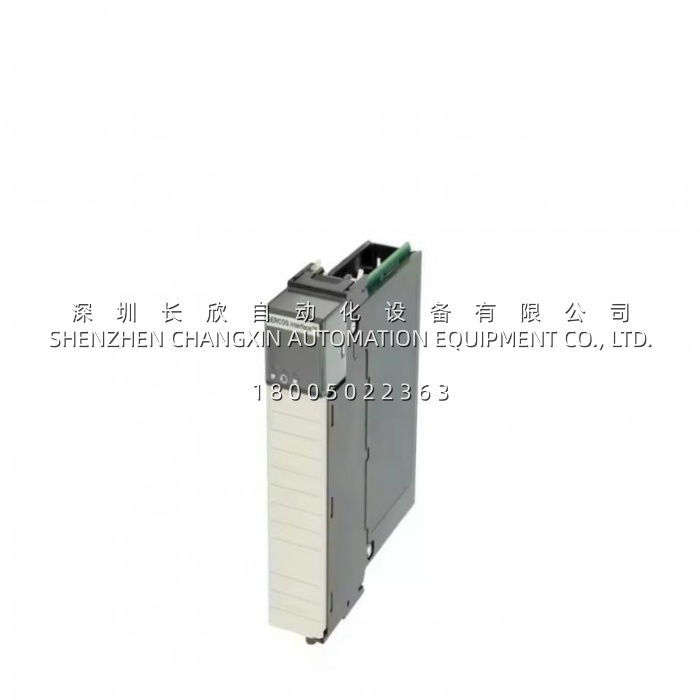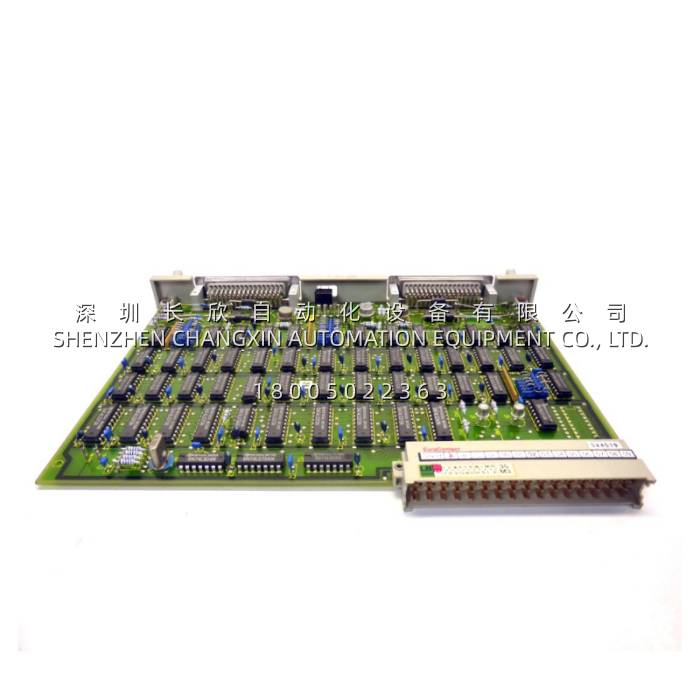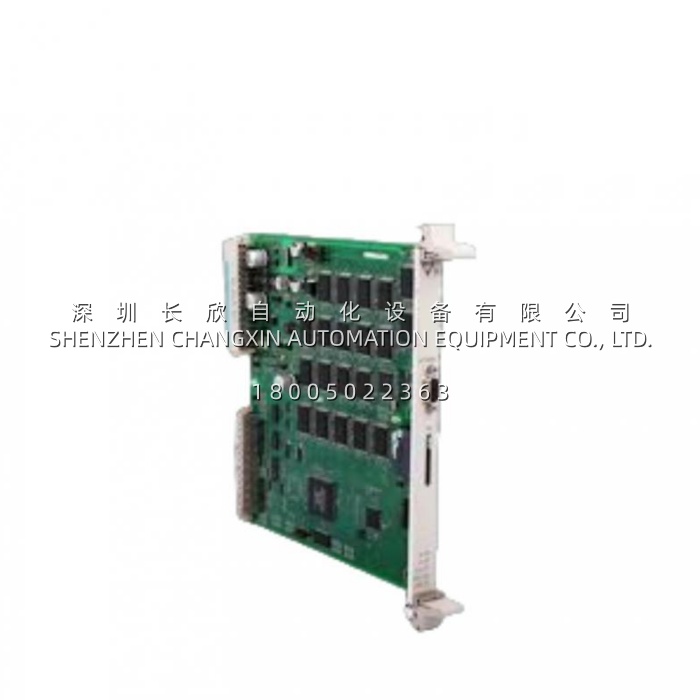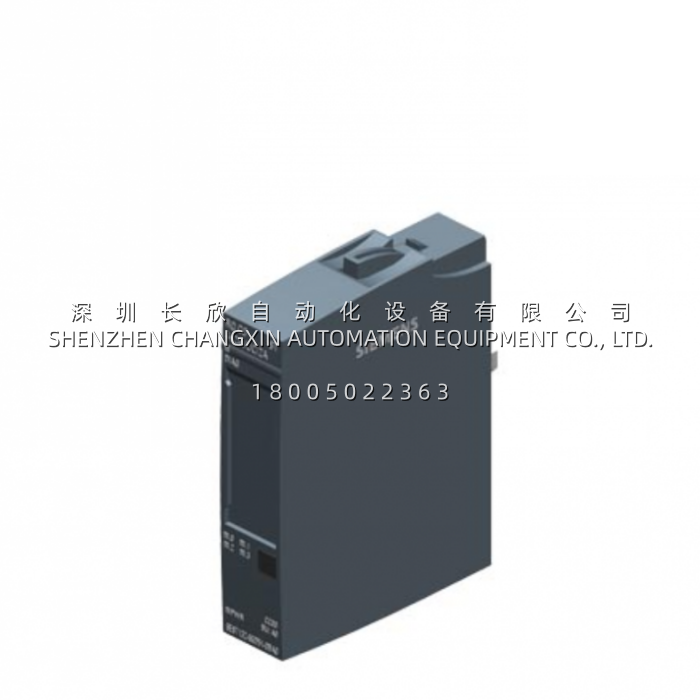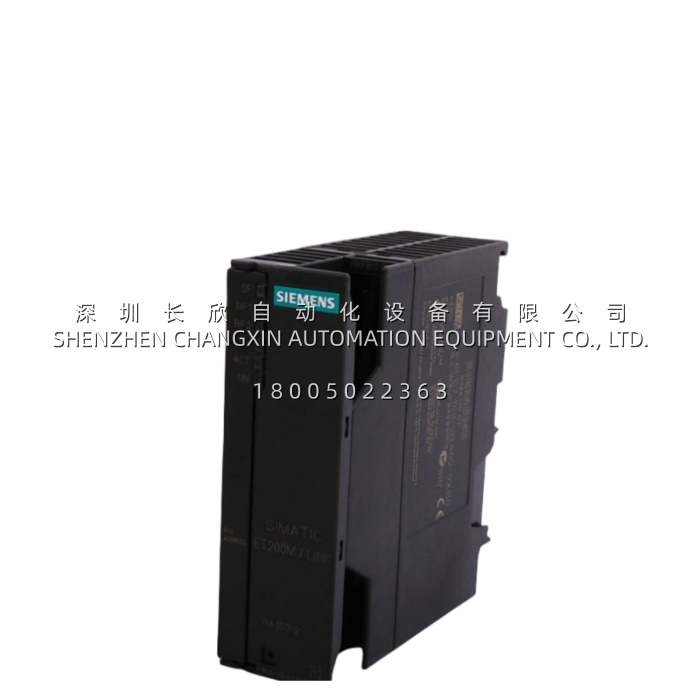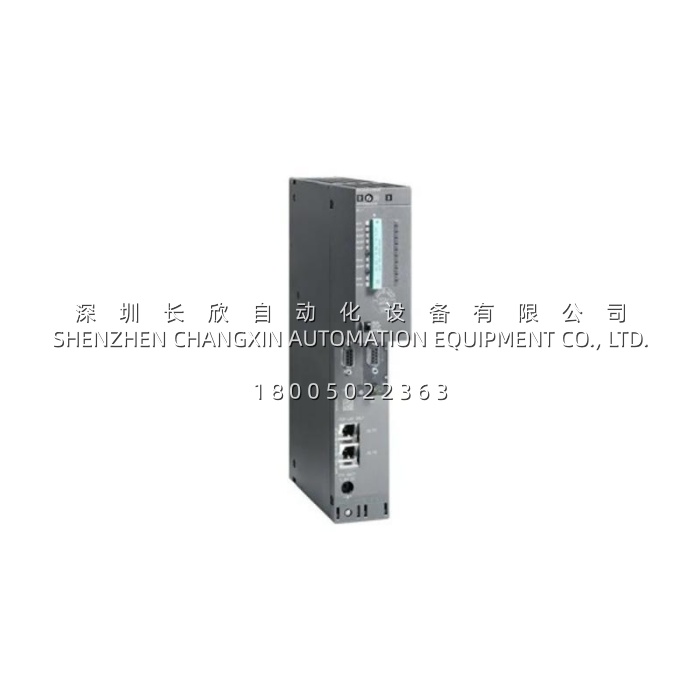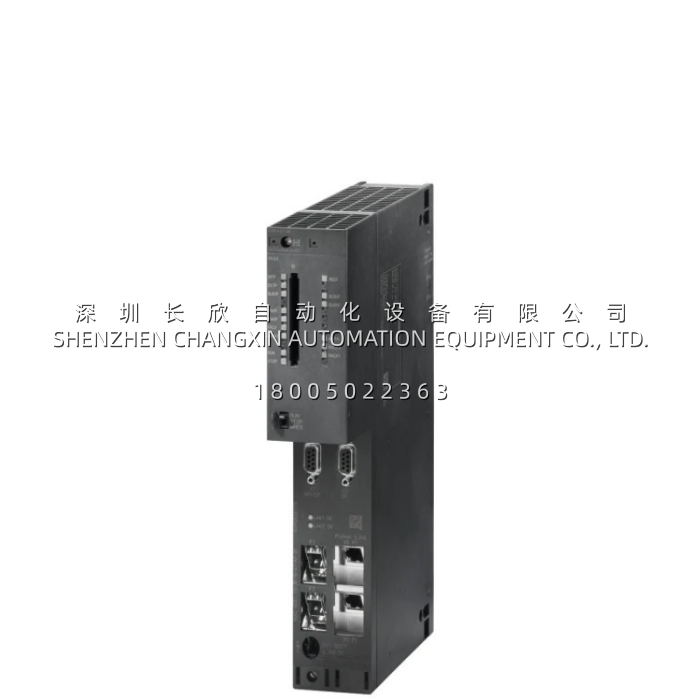
NI PXI-8186: Embedded Controller for High-Performance Test, Measurement, and Control Applications缩略图

NI PXI-8186: Embedded Controller for High-Performance Test, Measurement, and Control Applications

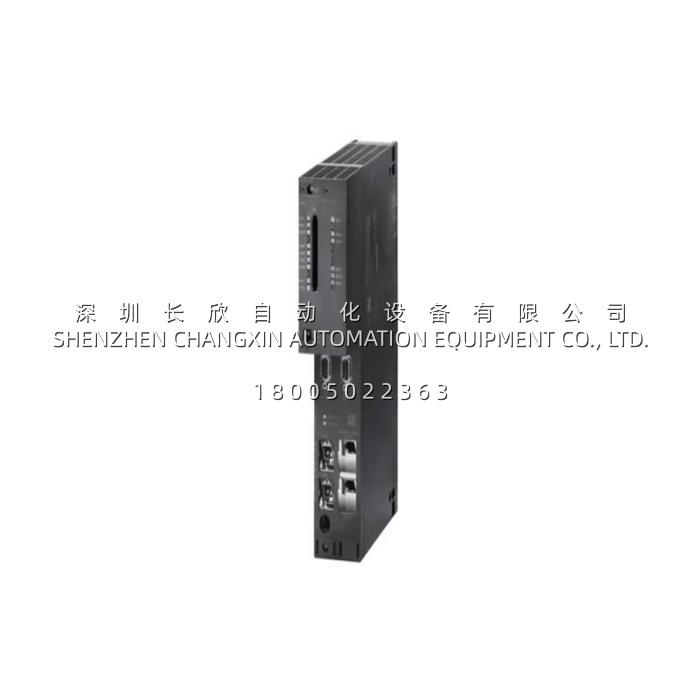
NI PXI-8186: Embedded Controller for High-Performance Test, Measurement, and Control Applications插图
In the world of automated test equipment (ATE), real-time control, and data-intensive measurement systems, the performance, reliability, and modularity of the embedded controller directly dictate system capability and scalability. The National Instruments (NI) PXI-8186—a rugged, fanless embedded controller based on the Intel Celeron M processor—has long served as a foundational computing engine within PXI (PCI eXtensions for Instrumentation) platforms across aerospace, defense, automotive, and industrial R&D environments. Despite being part of NI’s legacy product line, the PXI-8186 remains in active use due to its deterministic performance, compact form factor, and seamless integration with the broader NI software ecosystem. This article explores its architecture, application strengths, real-world deployment scenarios, and why it continues to support mission-critical systems—even as newer controllers emerge.

Purpose-Built for Deterministic Embedded Operation

Unlike commercial off-the-shelf (COTS) PCs, the PXI-8186 is engineered specifically for the PXI platform, which demands tight synchronization, low-latency communication, and mechanical robustness. Housed in a 3U PXI module form factor, it slots directly into a PXI chassis, sharing a common backplane with instrumentation modules such as digitizers, arbitrary waveform generators, and switch matrices.

Key hardware specifications include:

Intel Celeron M 600 MHz or 1.0 GHz processor (depending on variant),

256 MB or 512 MB DDR SDRAM,

Integrated 10/100 Ethernet, GPIB (via add-on), and serial ports,

Fanless design for silent, maintenance-free operation in dust-prone or sealed environments,

Direct MXI-Express or PCI bridge to PXI backplane, enabling high-bandwidth data streaming to and from I/O modules.

Critically, the PXI-8186 runs real-time operating systems such as NI Real-Time OS (based on Phar Lap ETS) or LabVIEW Real-Time, allowing deterministic loop execution down to sub-millisecond latencies—essential for closed-loop control, hardware-in-the-loop (HIL) simulation, and synchronized multi-channel acquisition.

“We’ve had PXI-8186 units running 24/7 in our avionics test rigs for over a decade,” says a test engineer at a European defense contractor. “Zero thermal failures, and timing jitter has never exceeded 50 µs—even under full CPU load.”

Seamless Integration with NI Software and Hardware Ecosystem

The enduring value of the PXI-8186 lies not just in its hardware, but in its deep integration with NI’s software stack, particularly LabVIEW, LabWindows/CVI, and Measurement Studio. This synergy enables rapid development of complex test sequences without low-level driver coding.

Key integration advantages include:

Automatic Hardware Discovery: Upon booting LabVIEW Real-Time, all PXI modules in the chassis are auto-detected and configured.

Timing and Synchronization APIs: Built-in support for PXI Trigger Bus, Star Trigger, and PXI_CLK10 allows microsecond-accurate coordination across dozens of instruments.

Data Streaming Optimization: The integrated PCI interface supports sustained throughput of up to 132 MB/s, sufficient for multi-channel analog capture at moderate sample rates.

Remote Deployment & Monitoring: Engineers can deploy applications remotely via NI MAX (Measurement & Automation Explorer) and monitor CPU, memory, and network usage in real time.

This ecosystem approach drastically reduces development time—turning what might take months in a generic embedded Linux environment into weeks in LabVIEW.

Real-World Applications Across Engineering Domains

Aerospace: Avionics Functional Testing

A major aircraft manufacturer uses PXI-8186-based systems to validate ARINC 429 and MIL-STD-1553 communication buses in flight control units. The controller’s deterministic timing ensures message scheduling adheres to protocol specs, while its fanless design meets clean-room requirements.

Automotive: ECU Validation and Durability Testing

In powertrain labs, the PXI-8186 orchestrates stimulus-response tests on engine control units (ECUs), commanding load banks, signal simulators, and CAN/LIN interfaces. One OEM reported that migrating from rack-mounted PCs to PXI-8186 reduced test cell footprint by 60% and improved uptime by eliminating fan-related failures.

Industrial R&D: Structural Health Monitoring Prototypes

Researchers at a national lab deployed PXI-8186 controllers in field-deployable systems for bridge vibration analysis. Its wide operating temperature range (0°C to 55°C) and shock resistance allowed continuous operation in uncontrolled outdoor environments for months at a time.

Lifecycle Considerations and Modern Relevance

Although NI has since introduced more powerful successors like the PXIe-8880 and PXIe-8840. the PXI-8186 remains relevant for several reasons:

Long-Term Stability: Many legacy ATE systems were qualified and certified with the PXI-8186; replacing the controller would require costly re-validation.

Sufficient Performance for Mid-Tier Tasks: For applications not requiring gigasample-per-second data rates or AI inference, the 8186’s performance is still adequate.

Software Backward Compatibility: LabVIEW versions as recent as 2020 continue to support the PXI-8186. ensuring code portability.

However, users should note limitations: no USB 3.0. limited RAM expandability, and lack of PCIe Gen 2+ bandwidth. For new designs demanding high-speed streaming or FPGA co-processing, newer PXI Express controllers are recommended.

Best Practices for Deployment and Maintenance

To maximize reliability in long-duration deployments:

Use Industrial-Grade Storage: Replace the default DOM (Disk-On-Module) with a high-endurance SLC NAND drive if frequent writes occur.

Enable Watchdog Timers: Configure the real-time OS watchdog to reboot the system automatically after a hang.

Minimize Background Services: Disable unused network protocols and file-sharing features to reduce attack surface and CPU load.

Monitor Thermal Margins: Even though fanless, ensure chassis airflow prevents localized hot spots—especially when adjacent to high-power RF modules.

Expert Insight: “The PXI-8186 isn’t fast by today’s standards, but it’s predictable,” notes an NI-certified architect. “In test systems, repeatability beats raw speed every time.”

Conclusion: A Legacy of Reliability in Embedded Test

The NI PXI-8186 may no longer headline product catalogs, but its legacy endures in thousands of operational test systems worldwide. By delivering deterministic real-time performance, mechanical ruggedness, and deep software integration in a compact PXI form factor, it set a benchmark for embedded instrumentation controllers. For organizations maintaining proven ATE infrastructure—or developing cost-sensitive, mid-performance test solutions—the PXI-8186 remains a dependable, field-validated choice. In engineering, where trust is earned through years of uninterrupted service, this controller has more than paid its dues.
NI PXI-8186: Embedded Controller for High-Performance Test, Measurement, and Control Applications插图1

GE IS230SNIDH1A MRP689579: Hot-Swappable Digital Input Module for GE Speedtronic™ Mark VIe缩略图

GE IS230SNIDH1A MRP689579: Hot-Swappable Digital Input Module for GE Speedtronic™ Mark VIe

GE IS230SNIDH1A MRP689579: Hot-Swappable Digital Input Module for GE Speedtronic™ Mark VIe插图
Description

The GE IS230SNIDH1A MRP689579 is a 16-channel digital input (DI) module engineered by General Electric for its Mark VIe turbine control system—a cornerstone of gas, steam, and combined-cycle power plant automation. Designed to interface with dry-contact field devices such as limit switches, relay contacts, emergency pushbuttons, and auxiliary status signals, this module delivers high-noise immunity, galvanic isolation, and real-time diagnostics critical for safe and reliable turbine operation.

As part of the Smart Distributed I/O (SDI) architecture within the Mark VIe platform, the IS230SNIDH1A communicates over a redundant Ethernet-based IONet network and supports hot swapping—ensuring continuous availability even during maintenance or component replacement. The official GE part number MRP689579 guarantees authenticity and full compatibility with GE’s lifecycle support programs.

Application Scenarios

At a 1.200 MW combined-cycle facility in California, repeated false trips during grid frequency fluctuations were traced to signal noise on legacy turbine stop-valve position feedback circuits. After replacing aging I/O cards with genuine GE IS230SNIDH1A MRP689579 modules, engineers leveraged the card’s 2.5 kV channel-to-backplane isolation and built-in signal filtering to eliminate spurious inputs. Each channel’s front-panel LED enabled rapid visual validation during startup sequences, while integrated diagnostics in ToolboxST® software alerted operators to a failing proximity switch weeks before mechanical failure occurred. Over two years, forced outage rates dropped by 45%—proving that in turbine control, signal integrity isn’t optional; it’s existential.

Technical Principles and Innovative Values

Innovation Point 1: Passive Contact Sensing with Active Diagnostics – Unlike active voltage-sensing DI cards, the IS230SNIDH1A uses low-energy interrogation to detect dry contact states—eliminating risk of arcing in hazardous areas while still providing real-time diagnostics for open-circuit or shorted conditions.

Innovation Point 2: Distributed I/O Architecture (SDI) – Each IS230SNIDH1A operates as an intelligent node on the IONet, reducing central controller load and enabling localized decision-making—critical for fast turbine protection logic (e.g., <10 ms trip response).

Innovation Point 3: True Hot-Swap in Safety-Critical Systems – The module can be replaced during live operation without triggering a controller fault or process interruption—enabled by GE’s patented IONet protocol and redundancy management.

Innovation Point 4: Lifecycle Assurance for Power Assets – With GE’s long-term commitment to Mark VIe (support through 2040+), the IS230SNIDH1A MRP689579 ensures spare parts availability and firmware compatibility for decades-old installations undergoing digital modernization.

Application Cases and Industry Value

A European utility upgraded its 1980s-era steam turbine using a full Mark VIe retrofit, including 12 GE IS230SNIDH1A MRP689579 modules for boiler interlocks, lube oil pressure switches, and turning gear status. The result: a 60% reduction in wiring complexity, full integration with the plant’s PI System for performance trending, and compliance with IEC 61511 SIL2 requirements. “This wasn’t just a control upgrade—it was a reliability transformation,” noted the chief engineer.

In another case, an LNG export terminal in Australia deployed IS230SNIDH1A modules across five gas turbines to standardize spare parts and simplify technician training. Using ToolboxST®, they created automated test routines that validate all DI channels during monthly drills—reducing human error and ensuring regulatory readiness.

Related Product Combination Solutions

GE IS230SNDOH1A: Complementary 16-channel digital output module (MRP689580)

GE IS230TBCIH1A: Terminal Board Carrier Interface for mounting IS230SNIDH1A

GE IC698CPE040: Mark VIe CPU module (central controller)

GE IS230PAICH1A: Analog input module for temperature/pressure signals

GE ToolboxST® Software: Configuration, diagnostics, and tuning suite for Mark VIe systems

GE VMIVME-7750: VME carrier board for legacy Mark VIe I/O integration

GE IS230SVAIH1A: Servo valve analog output module for fuel control

MRP689579 Replacement Kits: Includes module, terminal board, and gasket set from GE-approved vendors

Installation, Maintenance, and Full-Cycle Support

Installing the GE IS230SNIDH1A MRP689579 requires mounting it onto a compatible terminal board (e.g., TBCIH1A) within a Mark VIe I/O rack. Field wiring must use shielded, twisted-pair cables grounded at the controller end only. Configuration is performed via ToolboxST®, where each channel can be labeled, filtered, and assigned to protection or monitoring logic.

Maintenance is predictive: ToolboxST® continuously monitors input state consistency and reports anomalies like “chattering contacts” or “unexpected opens.” During outages, hot-swap capability allows replacement without powering down the turbine control panel—critical for plants operating under NERC reliability standards.

We supply only genuine GE IS230SNIDH1A MRP689579 modules—either new from GE or professionally refurbished to OEM specifications with full diagnostic test reports and firmware verification. Our team includes ex-GE field engineers who provide lifetime technical support for integration, troubleshooting, and compliance documentation. Contact us for a solution that ensures your turbine runs safely, efficiently, and reliably for decades to come.
GE IS230SNIDH1A MRP689579: Hot-Swappable Digital Input Module for GE Speedtronic™ Mark VIe插图1

GE IS230SNIDH1A MRP689579: Hot-Swappable Digital Input Module for GE Speedtronic™ Mark VIe插图2

SCHNEIDER 416NHM30030A: Quantum Ethernet Communication Module for Modbus TCP/IP & I/O Scanning缩略图

SCHNEIDER 416NHM30030A: Quantum Ethernet Communication Module for Modbus TCP/IP & I/O Scanning

SCHNEIDER 416NHM30030A: Quantum Ethernet Communication Module for Modbus TCP/IP & I/O Scanning插图
Description

The SCHNEIDER 416NHM30030A is a high-performance Ethernet communication module designed for the Modicon Quantum programmable logic controller (PLC) platform by Schneider Electric. Officially known as the NOE 771 01 (Network Option Ethernet), this module enables Modbus TCP/IP, I/O scanning, global data exchange, and web-based diagnostics over standard 10/100 Mbps Ethernet networks.

As a cornerstone of industrial networking in water treatment, power generation, oil & gas, and manufacturing, the 416NHM30030A allows Quantum PLCs to communicate seamlessly with SCADA systems, HMIs, engineering workstations, and other controllers—while supporting redundancy, cybersecurity best practices, and remote troubleshooting via an embedded web server.

Application Scenarios

At a municipal water utility in California, aging serial networks caused delays in pump station coordination during peak demand. Engineers upgraded to the SCHNEIDER 416NHM30030A across 12 remote sites, enabling real-time Modbus TCP communication between Quantum PLCs and the central SCADA system. The built-in I/O scanner eliminated the need for custom ladder logic to poll remote racks, reducing CPU load by 35%. More importantly, operators used the module’s web interface to diagnose a failing VFD at 2 a.m. without dispatching a technician—saving over $8.000 in emergency callouts. For them, the 416NHM30030A transformed reactive maintenance into proactive asset management.

Technical Principles and Innovative Values

Innovation Point 1: Integrated I/O Scanner Without Extra Programming – Unlike generic Ethernet cards, the 416NHM30030A includes a hardware-accelerated I/O scanner that automatically exchanges data with remote I/O drops (e.g., Momentum, Premium, or third-party Modbus TCP devices)—freeing CPU cycles for control logic.

Innovation Point 2: Embedded Web Diagnostics – Accessible via any browser, the onboard web server displays module status, IP settings, error counters, and connected clients—enabling rapid troubleshooting without specialized software like Unity Pro.

Innovation Point 3: Seamless Quantum Hot Standby Integration – In redundant PLC pairs, the 416NHM30030A supports synchronized IP takeover (<1 sec failover), ensuring uninterrupted communication during primary CPU failure.

Innovation Point 4: Cybersecurity-Ready Architecture – While not a firewall, the module supports static IP assignment, MAC filtering (via switch policies), and VLAN tagging when used with managed industrial switches—aligning with IEC 62443 principles.

Application Cases and Industry Value

A European steel mill retrofitted its annealing line with SCHNEIDER 416NHM30030A modules to replace obsolete Fipio networks. The new Modbus TCP infrastructure reduced network latency from 120 ms to <10 ms, enabling tighter temperature control in the cooling zone. Yield improved by 4.2%, translating to €1.2M annual savings. Maintenance teams now use the web interface to monitor network health during production—eliminating weekend shutdowns for diagnostics.

In another case, a Canadian hydroelectric dam deployed 416NHM30030A units to connect spillway gate controllers to a centralized HMI. The global data feature allowed all Quantum CPUs to share reservoir level and gate position in real time, preventing conflicting commands during flood events. “It’s not just faster—it’s safer,” noted the control engineer.

Related Product Combination Solutions

SCHNEIDER 140CPU67160: Quantum CPU with integrated Ethernet (alternative to using 416NHM30030A)

SCHNEIDER 140NOE77111: Enhanced NOE module with dual Ethernet ports (successor model)

SCHNEIDER 140CPS11420: Quantum power supply for local/remote racks hosting 416NHM30030A

SCHNEIDER 140DDI35300: 32-channel discrete input module commonly networked via 416NHM30030A

SCHNEIDER Unity Pro XL: Engineering software for configuring I/O scanning and global data

MOXA EDS-510E: Managed industrial Ethernet switch with VLAN support for secure 416NHM30030A networks

SCHNEIDER ETG3020: Quantum remote I/O adapter for legacy Modbus Plus devices

ABB AC 800M CI854A: Competing PROFIBUS/Modbus gateway—but not interchangeable

Installation, Maintenance, and Full-Cycle Support

Installing the SCHNEIDER 416NHM30030A requires slotting it into a Modicon Quantum backplane (local or remote) and connecting it via shielded Cat5e cable to an industrial Ethernet switch. Initial IP configuration can be done via BOOTP, DHCP, or the front-panel rotary switch (if supported). In Unity Pro, users define I/O scanner tables to map remote device registers to local %MW addresses—no custom code needed.

Maintenance is simplified by the module’s self-diagnostics: green/yellow LEDs indicate link status and activity, while the web interface logs CRC errors, collision rates, and connection timeouts. In redundant systems, firmware versions must match between primary and standby units to ensure seamless failover.

We supply only genuine SCHNEIDER 416NHM30030A modules—either new surplus or professionally refurbished with full functional testing, including I/O scan validation and web server access. Each unit comes with a certificate of conformance and compatibility verification for your Quantum rack configuration. Our technical team provides free lifetime support for network topology design, IP planning, and Unity Pro configuration. Contact us for a customized solution that keeps your Modicon Quantum system connected, secure, and future-ready.
SCHNEIDER 416NHM30030A: Quantum Ethernet Communication Module for Modbus TCP/IP & I/O Scanning插图1

OVATION 1B30035H01: 2-Slot I/O Base Assembly for Emerson Ovation DCS缩略图

OVATION 1B30035H01: 2-Slot I/O Base Assembly for Emerson Ovation DCS

OVATION 1B30035H01: 2-Slot I/O Base Assembly for Emerson Ovation DCS插图Description:

The OVATION 1B30035H01​ is a 2-slot standard I/O base assembly manufactured by Emerson for its Ovation Distributed Control System (DCS). It serves as the fundamental physical and electrical interface platform, designed to securely mount and interconnect various Ovation I/O modules within a control cabinet. This robust base unit forms the critical backbone that ensures reliable signal routing, power distribution, and communication between field devices and the central controller, enabling precise and stable process control.

Application Scenarios:

In a large coal-fired power plant undergoing a control system modernization, engineers faced a significant challenge: the existing control cabinets were cramped, wiring was chaotic, and adding new measurement points for enhanced emissions monitoring seemed nearly impossible without a major cabinet overhaul. The solution was to strategically deploy new remote I/O nodes using the OVATION 1B30035H01​ as the foundational building block. These compact 2-slot bases were installed in new, smaller enclosures closer to the boiler and scrubber areas. Each 1B30035H01​ base could host a combination of analog input (for new NOx/SO2 analyzers) and digital output modules (for actuator control). This modular approach drastically reduced long, costly field cable runs, simplified wiring, and created a clean, scalable architecture. The project lead noted, “The 1B30035H01​ bases turned a wiring nightmare into a plug-and-play dream. We added over 50 new I/O points without touching the main control room cabinet, saving weeks of labor and minimizing outage time.” This highlights the product’s core value in solving space constraints, reducing installation complexity, and enabling flexible system expansion.

Technical Principles and Innovative Values:

Innovation Point 1: Unified Interconnection Architecture.​ Unlike traditional bases that require separate wiring for module power and communication, the 1B30035H01​ incorporates a patented backplane-style interconnection scheme within its compact design. This integrated bus provides both power and high-speed data communication to the plugged-in I/O modules through the base’s internal connectors. This innovation eliminates dozens of point-to-point wires, drastically reducing cabinet clutter, potential wiring errors, and maintenance time, while improving overall system reliability.

Innovation Point 2: Universal, Modular Foundation for Signal Conditioning.​ The base is engineered as a universal host for the entire spectrum of Ovation Standard I/O modules—Analog Input (AI), Analog Output (AO), Digital Input (DI), and Digital Output (DO). It provides the essential signal conditioning infrastructure: dedicated terminals for field wiring, built-in fuse holders for protection, and test points for diagnostics. This universality simplifies engineering design, reduces spare parts inventory (one base type for many functions), and accelerates deployment, as any module can be plugged into any slot.

Innovation Point 3: Ruggedized Design for Extreme Industrial Deployment.​ The 1B30035H01​ is built to survive, not just operate. Its construction features industrial-grade materials, conformal coating on internal circuits for protection against humidity and corrosive atmospheres, and a design rated for a wide -40°C to +70°C temperature range. This ruggedness ensures dependable performance in the harsh environments typical of power generation (turbine halls), oil & gas (offshore platforms), and heavy industrial sites, where vibration, dust, and thermal cycling are constant challenges.

Application Cases and Industry Value:

Case Study: Wastewater Treatment Plant Expansion.​ A municipal wastewater treatment plant needed to expand its capacity and integrate a new nutrient removal process. The existing Ovation DCS had limited spare I/O capacity in the main control room. Instead of installing a costly new controller cabinet, engineers utilized the OVATION 1B30035H01​ base units to create a distributed I/O drop in the new process building. Several bases were mounted on DIN rails in a local enclosure, hosting modules for pH sensors, dissolved oxygen probes, and pump control relays. The bases connected back to the main controller via redundant fiber-optic cable. This approach cut project wiring costs by an estimated 40%, allowed the new process to be commissioned independently, and provided a template for future expansions. The plant superintendent reported, “Using the 1B30035H01​ bases gave us a future-proof, modular architecture. We now have a clear, cost-effective path to add any sensor or valve in that area by simply plugging in a new module.”

Related Product Combination Solutions:

The OVATION 1B30035H01​ base is the anchor point for a complete I/O channel. Key synergistic components include:

OVATION 1C31116G04:​ Analog Input Module (Voltage w/ Temp Sensor) – A common module plugged into the 1B30035H01​ for precise measurement of 4-20mA signals from transmitters.

OVATION 1C31125G02:​ Digital Output Module – Used for controlling motor starters, solenoid valves, and alarms, powered and communicated through the 1B30035H01​ base.

OVATION 1C31124G01:​ Digital Input/Output Module – Provides versatile discrete control and status monitoring capabilities when hosted on the base.

OVATION 1C31181G02:​ Media Attachment Unit (MAU) Module – A communication module that can be installed in a 1B30035H01​ base to provide fiber-optic network connectivity for the remote I/O node.

OVATION 1C31166G02:​ Link Controller Module (R1120 CPU) – A controller module that can be mounted on a compatible base to create a full remote controller node, with 1B30035H01​ bases used for its local I/O.

OVATION 1B30023H01:​ Another variant I/O base assembly, often used in similar configurations alongside the 1B30035H01.

OVATION System Power Supplies & Chassis:​ The cabinet-level components that provide the primary 24V DC power and physical mounting for the racks containing the 1B30035H01​ bases.

Installation, Maintenance, and Full-Cycle Support:

Installation of the OVATION 1B30035H01​ is designed for efficiency and reliability. The base unit snaps securely onto a standard TS35 DIN rail within the Ovation system chassis or a remote enclosure. Prior to installation, ensure the DIN rail is properly grounded and has sufficient clearance for module insertion and airflow. Field wiring is terminated to the base’s clearly labeled screw terminals, following the wiring schematic labels provided on the personality modules. The unique interconnection scheme means no additional wiring is required between the base and the I/O modules for power and communication—simply align and firmly press the module into the base slot until it clicks into place.

Routine maintenance is straightforward. Primarily, it involves periodic visual inspections to check for dust accumulation, secure terminal connections, and any signs of physical damage or corrosion. The built-in test points allow for quick signal verification with a multimeter without disturbing field wiring. If a module needs replacement, the system supports hot-swapping in many configurations: de-energize the specific channel if possible, release the module’s locking lever, extract it, and insert the new one. The base itself rarely fails but can be replaced during a planned outage by disconnecting field wires and unsnapping it from the DIN rail.

We provide comprehensive lifecycle support for the OVATION 1B30035H01​ and the entire Ovation ecosystem. From initial system design and legacy migration consulting to 24/7 technical support and guaranteed supply of genuine, factory-tested components, our expertise ensures your control system’s integrity and longevity. We assist with obsolescence management, system health audits, and spare parts optimization to maximize your operational uptime and return on investment.

GE Speedtronic IS200VTCCH1CBB: 24-Channel VTCC Terminal Board缩略图

GE Speedtronic IS200VTCCH1CBB: 24-Channel VTCC Terminal Board

Description:

The GE IS200VTCCH1CBB​ is a high-precision thermocouple input terminal board (VTCC) manufactured by General Electric for its renowned Mark VI Speedtronic turbine control system. As a critical interface component, it is engineered to reliably acquire, condition, and digitize low-voltage signals from up to 24 thermocouples, translating critical metal temperatures into actionable data for the control processor. Designed with industrial ruggedness, it forms the sensory foundation for protection, efficiency, and safe operation in the world’s most demanding power generation assets.

Application Scenarios:

At a 750MW combined-cycle power plant, control engineers were plagued by intermittent, unexplained turbine exhaust temperature alarms that triggered costly, unnecessary trips. The root cause was traced to electrical noise and ground loops corrupting the microvolt-level signals from Type K thermocouples as they traveled through long cable runs to the legacy interface cards. The plant embarked on a control system upgrade, integrating the GE IS200VTCCH1CBB​ boards into new Mark VI racks. The IS200VTCCH1CBB’s advanced design, featuring integrated filtering, cold-junction compensation, and robust shielding, completely eliminated the signal integrity issues. For the first time, operators had access to rock-solid, drift-free temperature readings. This allowed them to safely optimize the combustion trim closer to limits, improving heat rate efficiency by 1.2% and eliminating all spurious temperature-related trips. This case underscores the IS200VTCCH1CBB’s pivotal role in solving the core industrial challenges of measurement reliability, operational safety, and asset optimization in high-value rotating machinery.

GE Speedtronic IS200VTCCH1CBB: 24-Channel VTCC Terminal Board插图 GE Speedtronic IS200VTCCH1CBB: 24-Channel VTCC Terminal Board插图1

Technical Principles and Innovative Values:

Innovation Point 1: Advanced Signal Integrity Architecture.​ The GE IS200VTCCH1CBB​ is not a simple passive terminal block; it incorporates an active signal conditioning layer. Each channel features precision instrumentation amplifiers, dedicated analog-to-digital converters (ADCs), and sophisticated digital filtering algorithms. This architecture amplifies the fragile thermocouple signal (in the millivolt range) while actively rejecting common-mode noise and electromagnetic interference (EMI) prevalent in turbine halls. The result is a clean, high-fidelity digital representation of temperature, enabling control logic to make decisions with confidence, not guesswork.

Innovation Point 2: Universal Thermocouple Compatibility & Intelligent Diagnostics.​ A single IS200VTCCH1CBB​ board supports five major thermocouple types (E, J, K, S, T), eliminating the need for plant-specific variants and simplifying spare parts inventory. Beyond measurement, it performs continuous, per-channel diagnostics. It can detect open thermocouple circuits, short circuits, and signal out-of-range conditions in real-time. These diagnostics are reported directly to the control system, enabling predictive maintenance—alerting technicians to a failing sensor before it causes a process deviation or a missed protection event.

Innovation Point 3: Seamless Integration within Triple Modular Redundancy (TMR).​ The board is designed from the ground up for critical safety applications. It seamlessly integrates into the Mark VI’s TMR architecture, where three identical control channels operate in parallel. The IS200VTCCH1CBB​ ensures that temperature signals are acquired and processed identically across all three channels. This design is crucial for high-integrity protection systems, such as turbine overspeed or overtemperature trips, where voting between redundant channels is required to prevent both nuisance trips and dangerous failures.

Application Cases and Industry Value:

Case Study: Mid-Atlantic Natural Gas-Fired Power Plant.​ This facility was undergoing a life-extension program for its aging gas turbines. A key requirement was upgrading the temperature monitoring system to meet modern accuracy and reliability standards for emissions compliance and peak efficiency. The plant selected the GE IS200VTCCH1CBB​ as the new thermocouple interface standard. During the outage, technicians replaced dozens of obsolete cards with the new VTCC boards. The most significant improvement was observed in the combustion control loops. With the superior accuracy and stability of the IS200VTCCH1CBB, the advanced gas turbine controller could maintain a tighter fuel-air ratio, reducing NOx emissions by 15% and improving turndown capability. The plant manager stated, “The data quality from the IS200VTCCH1CBB​ boards was transformative. We’re not just meeting emissions limits; we’re operating with a margin that gives us tremendous flexibility. The investment paid for itself in avoided compliance costs within the first year.”

Related Product Combination Solutions:

A complete Mark VI thermocouple measurement loop involves several synergistic components. Essential partners for the GE IS200VTCCH1CBB​ include:

GE IS200TBTCH1CBB:​ The Thermocouple Terminal Board (TBTC) that provides the physical screw terminals for field wiring, directly connecting to the IS200VTCCH1CBB​ .

GE IS200DTCH1C​ or similar DTTC Board: An alternative terminal board style for different cabinet wiring preferences, also fully compatible with the IS200VTCCH1CBB.

GE Mark VI Controller (e.g., IS200/IS215 series CPU):​ The central processor that receives the digitized temperature data from the IS200VTCCH1CBB​ via the VME backplane to execute protection and control algorithms.

GE IS200VAICH1CBR:​ Analog Input Board, often used in the same rack for other process measurements (pressure, vibration), complementing the temperature data from the IS200VTCCH1CBB.

GE IS200VR0CH1BBR:​ Resolver Input Board, for critical speed and position feedback, working alongside temperature data for comprehensive turbine health monitoring.

GE Mark VI I/O Pack (e.g., PTCC for Mark VIe):​ The modern, modular I/O system that represents the evolutionary path from boards like the IS200VTCCH1CBB, used in system expansion or new builds.

GE Speedtronic System Software & HMIs:​ The engineering and operator interface software required to configure, calibrate, and visualize the data provided by the IS200VTCCH1CBB.

Installation, Maintenance, and Full-Cycle Support:

Installation of the GE IS200VTCCH1CBB​ begins with careful electrostatic discharge (ESD) handling. The board is inserted into its designated slot on the Mark VI system’s VME backplane within the control rack, secured with the appropriate guides and fasteners. Critical pre-commissioning steps include verifying the integrity of connections to the associated DTTC or TBTC terminal boards, ensuring proper shield grounding for all thermocouple cables, and confirming the rack’s power supply is stable. Configuration is performed using the GE ToolboxST or Mark VI engineering software, where thermocouple types, scaling, and alarm setpoints are defined for each channel.

Routine maintenance is primarily condition-based. Technicians should periodically review the board’s diagnostic status via the HMI, checking for any channel fault indications. The front-panel LEDs (Run, Fail, Status) provide immediate visual health checks. Physical maintenance involves ensuring the rack’s cooling airflow is unobstructed and the board is free of excessive dust. In the event of a channel failure indicated by diagnostics, the entire IS200VTCCH1CBB​ board is typically replaced as a unit. In simplex systems, this requires a planned outage. In TMR systems, a single channel can often be replaced online, maintaining 2-out-of-3 voting protection.

We provide comprehensive lifecycle support for the GE IS200VTCCH1CBB. From initial system design and legacy migration planning to 24/7 technical support and guaranteed supply of genuine, factory-tested spare parts, our expertise ensures your turbine control system’s integrity and longevity. We assist with obsolescence management, system health assessments, and optimization of your temperature monitoring strategies for maximum reliability and performance.

FOXBORO P0916JQ: High-Reliability I/O Module for Mission-Critical Process Control缩略图

FOXBORO P0916JQ: High-Reliability I/O Module for Mission-Critical Process Control

FOXBORO P0916JQ: High-Reliability I/O Module for Mission-Critical Process Control插图
In the demanding landscape of continuous process automation—where refineries, power plants, and chemical facilities operate around the clock under stringent safety and efficiency mandates—the integrity of input/output (I/O) signals forms the bedrock of reliable control. Among the trusted components ensuring this foundational layer is the FOXBORO P0916JQ, a robust analog output module engineered for Schneider Electric’s I/A Series® distributed control system (DCS). Designed for high-density, fault-tolerant applications, the P0916JQ delivers precise 4–20 mA signal transmission to final control elements such as control valves, variable frequency drives (VFDs), and positioners—ensuring that setpoints from the controller are faithfully executed in the field. This article explores its technical specifications, redundancy capabilities, real-world deployment advantages, and why it remains a staple in some of the world’s most critical industrial infrastructures.

Precision Analog Output with Built-In Diagnostics

The P0916JQ is an 8-channel analog output module that converts digital control commands from the DCS into industry-standard 4–20 mA current loops, with optional HART communication support. Each channel is independently configurable for range (e.g., 4–20 mA, 0–20 mA) and scaling, allowing seamless integration with diverse field devices.

Key performance characteristics include:

±0.1% Full-Scale Accuracy: Ensures tight control over valve position or motor speed, minimizing process variability.

Galvanic Isolation: Each channel is isolated from the backplane and adjacent channels (≥ 500 VAC), preventing ground loops and containing faults.

Open-Circuit and Short-Circuit Detection: The module continuously monitors loop integrity, reporting wiring faults or failed transmitters to the operator console in real time.

HART Transparent Mode: Allows HART-enabled devices (e.g., smart positioners) to communicate diagnostic data over the same 4–20 mA line without interference.

This combination of precision and diagnostics transforms the P0916JQ from a passive signal converter into an intelligent node in the control network—enabling predictive maintenance and reducing unplanned downtime.

“After upgrading our boiler feedwater control loops to P0916JQ modules, we saw a 30% reduction in level oscillation,” notes a controls engineer at a combined-cycle power plant. “The tighter output accuracy let us run closer to setpoint without triggering alarms.”

Redundancy and Fault Tolerance in Critical Loops

While standalone reliability is valuable, true resilience comes from system-level redundancy. The P0916JQ supports dual-redundant I/O configuration when paired with FOXBORO’s FIM (Fieldbus Interface Module) or COM (Controller/Operator Module) chassis:

In a redundant setup, two P0916JQ modules—one active, one standby—are installed in separate I/O racks.

Both modules receive identical output commands from the redundant controllers.

If the active module fails (e.g., due to power loss or internal fault), the standby assumes control without interruption to the field device.

Failover is managed at the controller level, typically completing within < 100 ms—well within the response window of most actuators.

This architecture is essential for SIL-rated safety instrumented functions (SIFs) or regulatory-critical loops, such as reactor temperature control or flare gas recovery, where even momentary signal loss could trigger a trip or environmental release.

Seamless Integration Within the I/A Series Ecosystem

The P0916JQ is not a generic I/O card—it is a native component of the FOXBORO I/A Series platform, designed for plug-and-play compatibility with minimal engineering overhead:

Unified Configuration: Channels are configured graphically in Control Builder, with automatic assignment of engineering units, alarm limits, and fail-safe states (e.g., “output to 0 mA on fault”).

Real-Time Diagnostics: The System Management Station (SMS) displays live status for each channel—current output value, loop resistance, fault flags—enabling rapid troubleshooting.

Hot-Swappable Design: Modules can be replaced during operation without powering down the I/O rack, minimizing maintenance impact.

Long Lifecycle Support: Schneider Electric maintains firmware and hardware compatibility for over 15 years, protecting brownfield investments.

This deep ecosystem integration ensures that the P0916JQ delivers not just signal fidelity, but also operational transparency and lifecycle continuity.

Real-World Applications Across Process Industries

Oil & Gas: Crude Distillation Column Control

In a Gulf Coast refinery, P0916JQ modules drive reflux pump VFDs and reboiler steam control valves. Their stable 4–20 mA output has eliminated drift issues previously seen with older analog cards, improving product cut consistency by over 12%.

Chemical Manufacturing: pH Neutralization Systems

A specialty chemical plant uses the module to control acid/base dosing pumps in wastewater treatment. The open-circuit detection feature recently identified a corroded terminal block before pH excursions could violate EPA discharge limits.

Power Generation: Turbine Bypass Valve Positioning

During grid disturbances, precise bypass valve control is critical to protect HRSG drums. The P0916JQ’s fast update rate (< 100 ms per scan) ensures responsive pressure regulation, contributing to zero drum trips over three years of operation.

Best Practices for Optimal Performance and Longevity

To maximize the service life and reliability of the P0916JQ, experienced users recommend:

Loop Resistance Management: Ensure total loop resistance (including cable and device) stays below 600 Ω at 24 VDC to maintain full 20 mA capability.

Environmental Monitoring: Install cabinet temperature sensors; sustained operation above 60°C may require derating or forced ventilation.

Regular Diagnostic Audits: Review SMS logs monthly for “near-fault” conditions (e.g., rising loop resistance) that indicate impending failures.

Redundant Power Supplies: Always power I/O racks from dual, redundant 24 VDC sources to prevent single-point power failures.

Expert Advice: “Never ignore a ‘loop impedance high’ warning,” says a Schneider Electric DCS specialist. “It’s often the first sign of moisture ingress or terminal corrosion—fix it before it becomes an open circuit during a critical upset.”

User Feedback and Industry Endorsement

“The P0916JQ is the workhorse of our analog output strategy,” states a plant automation manager at a global petrochemical facility. “It’s boringly reliable—which is exactly what you want when controlling $2 million/hour processes.”

Users consistently praise its long-term stability, comprehensive diagnostics, and backward compatibility with legacy I/A Series installations—making it a low-risk choice for both greenfield and modernization projects.

Conclusion: The Quiet Enforcer of Process Fidelity

The FOXBORO P0916JQ may not command headlines, but in the world of process control, it plays a vital role: translating digital intent into precise physical action—reliably, safely, and consistently. By combining high-accuracy analog output, intelligent diagnostics, and seamless redundancy, it ensures that the final link in the control chain remains unbroken, even under stress. For engineers tasked with maintaining uptime, safety, and product quality in continuous operations, the P0916JQ is more than a module—it’s a guarantee of executional integrity.
FOXBORO P0916JQ: High-Reliability I/O Module for Mission-Critical Process Control插图1

ABB 3ASC25H214 DATX130: High-Density Digital I/O Module for ABB AC 800M & System 800xA DCS缩略图

ABB 3ASC25H214 DATX130: High-Density Digital I/O Module for ABB AC 800M & System 800xA DCS

ABB 3ASC25H214 DATX130: High-Density Digital I/O Module for ABB AC 800M & System 800xA DCS插图
Description

The ABB 3ASC25H214 DATX130 is a 16-channel digital input (DI) module designed for the ABB AC 800M programmable logic controller (PLC) system and integrated within the ABB System 800xA distributed control system (DCS). As part of the S800 I/O family, this module provides high-density, galvanically isolated signal acquisition from field devices such as limit switches, pushbuttons, relay contacts, and proximity sensors—ensuring reliable data capture in demanding industrial environments.

Engineered for safety, longevity, and ease of integration, the ABB 3ASC25H214 DATX130 supports hot swapping, real-time diagnostics, and redundant communication over the MasterBus 300 backplane, making it a cornerstone of modern process automation in power generation, oil & gas, water treatment, and heavy manufacturing.

Application Scenarios

At a combined-cycle power plant in Texas, nuisance turbine trips were traced to intermittent signal loss from boiler flame scanners during monsoon season. Moisture ingress and ground loops corrupted signals entering legacy I/O modules. After upgrading to the ABB 3ASC25H214 DATX130. engineers leveraged its 500 Vrms channel-to-channel isolation and built-in surge suppression to eliminate false flame-loss indications. Each channel’s front-panel LED allowed instant visual verification during startup sequences, reducing troubleshooting time by 70%. Over 18 months, unplanned outages dropped to zero—proving that in critical infrastructure, the ABB 3ASC25H214 DATX130 isn’t just an interface; it’s a guardian of operational integrity.


Technical Principles and Innovative Values

Innovation Point 1: True Channel-Level Isolation – Each input on the ABB 3ASC25H214 DATX130 is optically isolated from both neighboring channels and the system backplane. This prevents ground loops and cross-channel interference—critical in plants with long cable runs or mixed-voltage equipment.

Innovation Point 2: Hot-Swap Without System Interruption – Unlike many competitors, ABB’s S800 architecture allows replacement of the ABB 3ASC25H214 DATX130 during live operation. The controller automatically reinitializes the module, minimizing downtime in continuous-process industries.

Innovation Point 3: Integrated Diagnostics for Predictive Maintenance – Beyond basic LEDs, the module reports detailed status (e.g., “low signal,” “open circuit”) to System 800xA, enabling predictive alerts before failures cascade into shutdowns.

Innovation Point 4: Unified Engineering Across PLC & DCS – Whether used in a standalone AC 800M PLC or fully integrated into System 800xA, the ABB 3ASC25H214 DATX130 shares the same hardware, firmware, and configuration tools—reducing training costs and spare parts inventory.

Application Cases and Industry Value

In a Middle Eastern desalination facility, inconsistent pump sequencing caused pressure surges in reverse osmosis membranes. Root cause analysis revealed aging DI modules with degraded noise immunity. After deploying ABB 3ASC25H214 DATX130 units across all skids, the plant achieved 100% signal fidelity—even during VFD switching transients. Maintenance teams now use System 800xA dashboards to monitor input health remotely, cutting site visits by 50%.

Similarly, a European chemical plant retrofitted its batch reactor interlocks with ABB 3ASC25H214 DATX130 modules to meet SIL2 requirements under IEC 61511. The module’s certified architecture and diagnostic coverage ratio (>90%) simplified compliance audits, while its long-term availability commitment (through 2035+) gave asset owners confidence in lifecycle cost planning.

Related Product Combination Solutions

ABB TB840A: Base unit for mounting ABB 3ASC25H214 DATX130 with screw terminals

ABB 3BSE022460R1: DATX140 – 16-channel digital output module (complementary to DATX130)

ABB CI854A: AC 800M communication module for PROFIBUS/Modbus integration

ABB 3BSE041484R1: AO810 – 8-channel analog output module for full I/O coverage

ABB PM864AK01: AC 800M CPU – primary controller for racks hosting 3ASC25H214 DATX130

ABB TK801V001: Optical link module for redundant MasterBus 300 networks

ABB 3BSE020492R1: TU847 – termination unit for S800 I/O redundancy

ABB 3BSE038680R1: DI880 – high-speed digital input module (for pulse counting applications)

Installation, Maintenance, and Full-Cycle Support

Installing the ABB 3ASC25H214 DATX130 requires mounting it onto a compatible S800 base unit (e.g., TB840A) and securing it to a DIN rail within an IP54-rated cabinet. Field wiring should use shielded twisted-pair cables with single-point grounding at the controller end to maximize noise immunity. Configuration is performed via ABB’s Control Builder M software, where channel parameters (e.g., filter time, diagnostic thresholds) can be fine-tuned per application needs.

Routine maintenance involves visual inspection of LEDs and periodic verification of signal integrity during scheduled outages. Thanks to hot-swap capability, failed modules can be replaced without powering down the rack—ideal for 24/7 operations. Should deeper diagnostics be needed, System 800xA logs provide timestamped event history, including voltage levels and fault codes.

We supply only genuine ABB 3ASC25H214 DATX130 modules—either new from ABB or professionally refurbished to OEM specifications with full functional test reports. Our engineering team offers lifetime support for configuration validation, firmware matching, and integration into existing ABB architectures. Contact us for a customized solution that ensures signal reliability, regulatory compliance, and decades of dependable service.
ABB 3ASC25H214 DATX130: High-Density Digital I/O Module for ABB AC 800M & System 800xA DCS插图1

FOXBORO FCM10EF: High-Density Fieldbus Communication Module for I/A Series DCS Systems缩略图

FOXBORO FCM10EF: High-Density Fieldbus Communication Module for I/A Series DCS Systems

FOXBORO FCM10EF: High-Density Fieldbus Communication Module for I/A Series DCS Systems插图
Description

The FOXBORO FCM10EF is a FOUNDATION Fieldbus H1 communication module developed by Schneider Electric (formerly Invensys Foxboro) for its I/A Series® distributed control system (DCS). Designed to serve as the digital gateway between field instruments and the DCS backbone, this module enables high-integrity, two-way communication with up to 32 smart devices—such as transmitters, valve positioners, and analyzers—over a single twisted-pair cable segment.

As a core component of Foxboro’s digital field architecture, the FOXBORO FCM10EF supports both redundant and non-redundant configurations, intrinsic safety standards (Entity and FISCO), and seamless integration with asset management platforms like Emerson AMS or Foxboro’s own Smart Plant Instrumentation suite.

Application Scenarios

At a major LNG facility in Qatar, engineers faced escalating maintenance costs due to analog 4–20 mA wiring across thousands of field devices. During a brownfield expansion, they deployed FOXBORO FCM10EF modules to connect new Coriolis flowmeters, pressure transmitters, and digital valve controllers via FOUNDATION Fieldbus. The result? A 55% reduction in marshalling cabinet space, 70% fewer termination points, and real-time access to device diagnostics—including valve stiction alerts and sensor calibration drift. One reliability engineer noted, “Before FOXBORO FCM10EF, we fixed devices when they failed. Now, we fix them before they break.” This shift from reactive to predictive maintenance slashed unplanned downtime by 38% in the first year alone.

Technical Principles and Innovative Values

Innovation Point 1: Integrated Link Active Scheduler (LAS) – The FOXBORO FCM10EF embeds a full LAS function, enabling deterministic token-passing control without requiring an external host. This ensures precise timing for critical control loops—even on standalone segments.

Innovation Point 2: Dual Redundancy Architecture – In redundant mode, two FOXBORO FCM10EF units operate in hot-standby with automatic failover (<100 ms), ensuring uninterrupted field communication during module replacement or power glitches—critical for SIL2/SIL3 applications.

Innovation Point 3: Native Asset Management Integration – The module passes full device description (DD) and parameter data to the I/A Series engineering station, enabling seamless use of AMS Suite, SmartPlant, or PRM tools for calibration scheduling, performance trending, and remote configuration.

Innovation Point 4: Power Conditioning Flexibility – Works with both Foxboro’s FPB10 and third-party Fieldbus power conditioners, supporting both Entity (barrier-based) and FISCO (higher-power) topologies—giving designers freedom in hazardous area planning.

Application Cases and Industry Value

A European pharmaceutical plant upgraded its sterile water distribution system using FOXBORO FCM10EF modules to connect 120+ temperature and conductivity sensors across cleanrooms. The digital architecture eliminated analog signal degradation over long cable runs and enabled automated calibration workflows via AMS. Regulatory audits became faster, as all instrument records were digitally traceable. “The FOXBORO FCM10EF didn’t just modernize our wiring—it future-proofed our compliance,” said the validation manager.

In another case, a North American refinery retrofitted its crude distillation unit with FOXBORO FCM10EF-based Fieldbus segments during a turnaround. By replacing analog I/O cards with a single FCM10EF per skid, they reduced I/O cabinet count by 60% and cut commissioning time from 6 weeks to 10 days. Post-startup, operators used real-time valve diagnostics to identify a failing control valve before it caused a column upset—preventing a potential $2M/hour production loss.

Related Product Combination Solutions

FOXBORO FBM242: Fieldbus I/O module carrier that hosts up to four FOXBORO FCM10EF cards

FOXBORO FPB10: Fieldbus Power Conditioner for intrinsically safe H1 segments

EMERSON 3144P: FOUNDATION Fieldbus temperature transmitter commonly connected via FCM10EF

YAMATAKE YTA70: Smart pressure transmitter with DD support for I/A Series integration

SCHNEIDER ELECTRIC IAS DCS: Full platform where FOXBORO FCM10EF serves as field communication backbone

FOXBORO FCM10E: Non-intrinsically safe variant (for general-purpose areas)

HART MUX: Alternative for hybrid HART/Fieldbus migration strategies

ABB AC 800F: Competing DCS with similar Fieldbus capabilities—but not interchangeable

Installation, Maintenance, and Full-Cycle Support

Installing the FOXBORO FCM10EF begins with proper segment design: limit cable length to 1.900 m (with repeaters if needed), ensure terminators are installed at both ends, and verify power conditioner compatibility for hazardous areas. The module snaps into an FBM242 or FBM244 carrier, and the I/A Series Engineering Tool automatically detects it during network scan.

Maintenance is largely proactive: monitor segment health via the DCS alarm summary (e.g., “Fieldbus Comm Fault – Segment 3”) and use built-in diagnostics to isolate issues like short circuits, unterminated lines, or device dropouts. Thanks to hot-swap capability (in supported chassis), failed modules can be replaced without powering down the entire I/O rack.

We supply every FOXBORO FCM10EF as genuine Schneider Electric inventory—either new surplus or fully tested reconditioned units with functional verification reports. Our team provides free support for segment topology review, device DD loading, and redundancy configuration. With Foxboro I/A Series systems expected to operate into the 2030s, the FOXBORO FCM10EF remains a vital enabler of digital field intelligence. Contact us for a customized solution that maximizes uptime, safety, and operational insight in your process plant.
FOXBORO FCM10EF: High-Density Fieldbus Communication Module for I/A Series DCS Systems插图1

ABB Power Supply Module DYPS154C: 10A Output for Harsh Environments缩略图

ABB Power Supply Module DYPS154C: 10A Output for Harsh Environments

ABB Power Supply Module DYPS154C: 10A Output for Harsh Environments插图
Description:

The ABB DYPS154C 61430001-YP​ is a high-reliability DC power supply module engineered by ABB for demanding industrial automation systems. It serves as a critical power distribution unit, converting a wide-range DC input into a stable, regulated 24V DC output to power controllers, I/O modules, sensors, and other field devices. Designed for maximum uptime, this module combines robust protection features, hot-swap capability, and support for redundant configurations to ensure uninterrupted operation in the most challenging industrial environments.

Application Scenarios:

In a sprawling automotive manufacturing plant, production managers faced recurring, unexplained shutdowns on a critical robotic welding line. Each stoppage resulted in significant financial losses and delayed deliveries. The root cause was traced to voltage sags and transients on the plant’s power grid, which caused sensitive PLCs and servo drives to reset. The solution was to upgrade the power distribution in each control cabinet with the ABB DYPS154C 61430001-YP​ module. Its wide input voltage range (19.2-30V DC) effortlessly handled the grid fluctuations, while its advanced filtering provided a clean, stable 24V DC output to the vulnerable electronics. Furthermore, the module’s hot-swap capability allowed maintenance teams to replace a unit during a scheduled break without stopping the line. Post-implementation, the welding line experienced zero power-related faults for over six months, translating to a direct recovery of hundreds of thousands in lost production. This case highlights the DYPS154C 61430001-YP’s role as the silent guardian of automation systems, solving the core industrial pain points of unplanned downtime, sensitive equipment protection, and maintenance flexibility.

Technical Principles and Innovative Values:

Innovation Point 1: Wide-Range Input with Advanced Transient Protection.​ Unlike standard power supplies that fail or derate with input fluctuations, the DYPS154C 61430001-YP​ is built to thrive on unstable power. Its sophisticated input circuitry can accept voltages from 19.2V to 30V DC, absorbing typical plant voltage sags and surges. Combined with robust filtering and transient voltage suppression (TVS) devices, it ensures that downstream sensitive control electronics like CPU modules and analog input cards receive only clean, stable power, dramatically reducing nuisance faults and resets.

Innovation Point 2: True Hot-Swap for Zero Downtime Maintenance.​ The module is engineered with true hot-swap functionality. This is achieved through internal current limiting, soft-start circuits, and back-feed protection. In a redundant configuration (N+1), a technician can simply unlock and extract a faulty DYPS154C 61430001-YP​ module and insert a new one while the system remains fully operational. The new module seamlessly synchronizes its output and shares the load, eliminating the need for a planned production stoppage for power supply maintenance, which can save tens of thousands of dollars per hour in critical processes.

Innovation Point 3: Intelligent Diagnostics and Predictive Health Monitoring.​ Beyond basic LED status indicators, the module incorporates intelligent monitoring circuits. It continuously tracks key parameters such as output voltage accuracy, load current, internal temperature, and efficiency. This data can be accessed via a communication interface (often supported through companion modules) and integrated into the plant’s asset management system. This enables predictive maintenance—alerting engineers to a rising temperature trend or decreasing efficiency beforea hard failure occurs, transforming maintenance from reactive to proactive.

Application Cases and Industry Value:

Case Study 1: Food & Beverage Processing Plant.​ A major beverage bottling plant integrated the ABB DYPS154C 61430001-YP​ into the control systems of its high-speed filling and capping lines. The environment presented a challenge with washdown procedures creating high humidity and temperature variations. The module’s rugged design and wide operating temperature range (-40°C to +70°C) ensured reliable performance. More significantly, by implementing the modules in a redundant configuration, the plant achieved its goal of “zero electrical downtime” during a quarterly maintenance window where power supplies were proactively replaced. The plant manager reported, “The DYPS154C 61430001-YP​ gave us the confidence to perform maintenance without fear of triggering a line-wide shutdown. Our overall equipment effectiveness (OEE) improved by 8% simply by eliminating these small, planned stoppages.”

Case Study 2: Offshore Oil & Gas Platform.​ On a remote offshore platform, a critical safety instrumented system (SIS) required an ultra-reliable power source for its controllers and isolated safety relays. Failure was not an option. The ABB DYPS154C 61430001-YP​ was selected for its high MTBF (exceeding 200.000 hours) and robust environmental specs. The modules were installed in a 1:1 redundant configuration. During a severe storm that caused wild fluctuations in the platform’s generator output, the power modules maintained perfect output stability, ensuring the SIS remained fully operational. The chief engineer noted, “In our world, reliability is measured by survival in the worst conditions. The DYPS154C​ modules passed that test without a flicker.”

Related Product Combination Solutions:

A robust power system is built on complementary components. Key partners for the ABB DYPS154C 61430001-YP​ include:

ABB DYNR150 Module:​ The dedicated redundancy module that enables two or more DYPS154C 61430001-YP​ units to operate in parallel, providing N+1 or N+m redundancy for critical loads .

ABB AC 800M Controller Family:​ A premier process controller series that relies on clean, stable power from modules like the DYPS154C 61430001-YP​ for deterministic performance .

ABB S800 I/O Modules:​ High-density, distributed I/O units that are typically powered by 24V DC from central power supplies like the DYPS154C 61430001-YP.

ABB Bailey INFI 90 System Components:​ For legacy system upgrades or expansions, the DYPS154C 61430001-YP​ provides a modern, reliable power source compatible with this established DCS platform .

ABB PLCnext MB510 Controller:​ This next-generation automation controller pairs perfectly with the DYPS154C 61430001-YP​ for open, future-proof systems.

ABB System Power Distribution Units (PDUs):​ For rack-level power distribution, these units often aggregate the output of multiple DYPS154C 61430001-YP​ modules.

ABB DIN Rail Mounted Circuit Breakers & Fuses:​ Essential protective devices installed upstream and downstream of the DYPS154C 61430001-YP​ to safeguard the module and the connected loads.

Installation, Maintenance, and Full-Cycle Support:

Installation of the ABB DYPS154C 61430001-YP​ is designed for efficiency. The module snaps securely onto a standard TS35 DIN rail within the control cabinet. Critical pre-commissioning steps include verifying the input DC voltage is within the 19.2-30V range, ensuring proper cabinet grounding (PE connection), and leaving adequate clearance (minimum 50mm above and below) for convection cooling. For redundant setups, the DYNR150​ module must be installed and correctly configured first. Wiring should use stranded copper cables with a cross-section of at least 1.5 mm², and all connections must be torqued to specification to prevent overheating.

Routine maintenance is minimal but vital. Primarily, it involves visual inspection of status LEDs (Power OK, Load Share, Fault) and periodic cleaning of air vents to prevent dust buildup. In systems with asset management integration, reviewing the module’s reported health parameters (voltage, temperature, efficiency) is the best practice. Should a fault occur, the module’s comprehensive protection will typically shut it down safely. Replacement in a redundant system is the straightforward hot-swap procedure. In a single-module system, power must be removed before replacement. Always reload the correct configuration if applicable.

We provide comprehensive lifecycle support for the ABB DYPS154C 61430001-YP. From initial system design and power budget calculations to 24/7 technical support and guaranteed supply of authentic spare parts, our expertise ensures your automation infrastructure has a rock-solid power foundation. We assist with migration from obsolete power systems, optimization of redundant configurations, and all aspects of predictive maintenance planning.
ABB Power Supply Module DYPS154C: 10A Output for Harsh Environments插图1

ABB Power Supply Module DYPS154C: 10A Output for Harsh Environments插图2

A631206 Technical Specifications: High-reliability redundant design, suitable for the oil, gas, and power industries.缩略图

A631206 Technical Specifications: High-reliability redundant design, suitable for the oil, gas, and power industries.

A631206 Technical Specifications: High-reliability redundant design, suitable for the oil, gas, and power industries.插图
Product Description:

The EMERSON A631206 (also listed as A6312/06) is a high-reliability Speed ​​and Keyphasor Monitor module manufactured by Emerson Automation Solutions. It is a critical component within Emerson’s AMS 6500 Machinery Health Monitoring and Protection System. This module is specifically designed to monitor the rotational speed, phase reference (keyphasor), and direction of critical rotating equipment such as compressors, turbines, pumps, and fans. Its primary function is to provide essential data for machinery protection, preventing catastrophic failures due to overspeed, underspeed, or phase-related issues by triggering alarms or initiating safe shutdowns. Application Scenarios: In a large natural gas compression station, multiple centrifugal compressors operate continuously, powering pipeline transport. These compressor rotors rotate at thousands of revolutions per minute; any unexpected speed fluctuations or shaft misalignment can lead to serious mechanical failures, resulting in millions of dollars in lost production and safety incidents. Operators need real-time, precise knowledge of the rotational speed, direction of rotation, and a fixed phase reference point (for vibration analysis) for each shaft. This is where the EMERSON A631206 comes in. Installed in the compressor’s control cabinet, this module connects to eddy current sensors (such as the Emerson PR642x series) mounted on the shafts. The A631206 continuously processes the pulse signals from the sensors, accurately calculates the rotational speed, and generates a keyphase signal aligned with a specific physical marker (such as a keyphase slot) for each rotation. When the rotational speed exceeds a safety threshold or reverse rotation is detected, it immediately sends a trip signal to the Safety Instrumented System (SIS) or Distributed Control System (DCS). This scenario highlights the core value of the A631206: it directly addresses the pain point of lacking reliable speed protection for critical equipment, providing precise phase and speed data to lay the foundation for predictive maintenance and interlocking protection, ensuring the safe and continuous operation of the entire production facility.

Technical Parameters

Main Parameter

Value / Description

Product Model

A631206 (also A6312/06)

Manufacturer

Emerson Automation Solutions

Product Category

Speed ​​and Key Phase Monitor / Machine Protection Module

System

AMS 6500 Machine Health Monitoring and Protection System

Monitored Parameters

Speed ​​(RPM), Key Phase, Direction of Rotation

Input Signals

Accepts pulse signals from eddy current sensors (e.g., PR6423)

Output Signals

Relay alarm/trip output, 4-20mA analog output, digital communication signal

Communication Interface

Integrated into the AMS 6500 framework, supports internal data bus and communication with DCS (e.g., Modbus, Ethernet)

Redundancy Configuration

Supports (configurable automatic switching between primary and backup speed probes)

Configuration Software

AMS 6500 Mechanical Protection Configuration Software

Main Certifications

Complies with API 670 and other mechanical protection standards (inferred)

Typical Application Equipment

Centrifugal/reciprocating compressors, steam/gas turbines, large pumps, fans

Technical Principles and Innovative Values

The EMERSON A631206 is engineered not merely as a tachometer, but as an intelligent protection node that converts raw sensor signals into actionable machine health intelligence.

Innovation Point 1: Integrated keyphasor measurement and direction determination, providing core data for advanced diagnostics. Unlike a simple tachometer, the A631206 not only measures rotational speed but also accurately generates a keyphasor signal. This signal provides a synchronization pulse for each rotation of the shaft, serving as the absolute reference for vibration phase analysis, order tracking, and dynamic balancing. Simultaneously, the module can determine the direction of rotation, which is crucial for preventing dangerous conditions such as compressor reversal. This integrated design eliminates the need for an additional independent keyphasor monitoring module, simplifying the system architecture and improving data synchronization.

Innovation Point 2: Redundant design and high reliability meet Safety Instrumented System (SIS) requirements. This module supports redundant configuration, allowing connection to both primary and backup speed probes. In the event of a primary probe failure, the system seamlessly switches to the backup probe, providing continuous protection and significantly improving system availability and safety. This design philosophy enables its application in demanding safety-critical environments, ensuring continuous protection of machinery even in the event of partial sensor failure.

Innovation Point 3: Seamless integration into the AMS 6500 ecosystem enables unified configuration and diagnostics. The A631206 is a native module of the Emerson AMS 6500 platform. Through dedicated AMS 6500 configuration software, engineers can complete all parameter settings (such as alarm values, trip values, and filter times) within a unified interface. The software also displays real-time data (such as gap voltage and waveforms) during configuration to verify the correctness of sensor wiring and settings, greatly simplifying commissioning and maintenance processes and reducing human error.

Application Cases and Industry Value

Case Study: Upgrade of Main Blower Protection System for Catalytic Cracking Unit in an Oil Refinery

The main blower of a catalytic cracking unit in a large oil refinery is a core piece of equipment; its unexpected shutdown would lead to a complete unit shutdown and significant economic losses. The existing mechanical protection system was outdated, with a high failure rate in the speed monitoring module and a lack of reliable key phase signals, resulting in inaccurate vibration analysis and an inability to perform predictive maintenance.

The refinery decided to upgrade the main blower protection system, adopting the Emerson AMS 6500 system and selecting the A631206 as the core speed and key phase monitoring module. During installation, an eddy current sensor was installed on both the drive and non-drive ends of the blower, connected to redundantly configured A631206 modules. The configuration software was pre-set with overspeed, underspeed, and zero-speed alarm and trip values.

Shortly after the system was put into operation, during one run, the A631206 module detected periodic minor fluctuations in the fan speed (approximately ±2 RPM). Simultaneously, the vibration analysis system, utilizing its precise key phase signal, identified the specific order relationship between the vibration components and the speed. The system issued an early warning, suggesting possible rotor scaling or minor blade damage. The factory utilized a planned shutdown for inspection and indeed found minor corrosion on the blades. Timely intervention prevented a potential catastrophic failure due to blade breakage. The equipment manager stated, “The A631206 provides more than just speed figures; it delivers reliable key phase and status data. Its integration with the AMS 6500 system has allowed us to shift from ‘reactive maintenance’ to ‘predictive maintenance.’ This early warning system saved us at least two weeks of production downtime and losses amounting to tens of millions of yuan.”

Related Product Combination Solutions

A complete machine protection and monitoring solution based on the Emerson A631206 typically includes the following complementary components:

Emerson AMS 6500 rack and power supply: Provides the mounting platform and stable power supply for monitoring modules such as the A631206.

Emerson eddy current sensors (such as PR6423/000-031): Used for non-contact measurement of shaft displacement and speed, generating the raw pulse signals required by the A631206.

Emerson Vibration Monitoring Modules (e.g., A6500-UM Universal Measurement Card): Installed in the same AMS 6500 rack as the A631206. they receive vibration sensor signals and, in conjunction with the key phase signals provided by the A631206. perform vibration monitoring with phase analysis.

Emerson Relay Output Modules (e.g., A6500-RR Redundant Relay Rack or A6740-10): Receive alarm and trip signals generated by the A631206. driving field relays to execute shutdown or audible and visual alarms.

Emerson AMS 6500 Configuration Software: Used for unified configuration, calibration, and diagnostics of the A631206 and all other modules within the system.

Emerson Mechanical Protection System (MMS) Series Compatible Products: Such as the MMS6312. belonging to the same series or previous generation products, allowing for compatibility or upgrade evaluation with existing systems.

System integration interface (e.g., Modbus TCP/IP gateway): Integrates data from the AMS 6500 system (including A631206 data) into the factory’s DCS (e.g., Emerson DeltaV) or PLC system for centralized monitoring.

Installation, Maintenance, and Full-Cycle Support: Installation of the EMERSON A631206 module is part of the AMS 6500 system integration. First, insert the module into the designated AMS 6500 rack slot and tighten it. On the sensor side, mount the eddy current probe (e.g., PR6423) on the bracket near the shaft speed measuring gear or key phase mark, and adjust the probe gap to the specified value (usually determined by measuring the gap voltage with a multimeter). Connect the probe to the corresponding input terminal on the A631206 module backplane using shielded twisted-pair cable. Power supply and communication are automatically handled via the rack backplane. Configuration is entirely completed within the AMS 6500 configuration software. Engineers need to set parameters such as channel type (speed/key phase), measurement range, alarm/trip settings, and filtering time, and can verify signal quality using the software’s real-time display function.

Daily maintenance is relatively simple. Regularly check for loose sensor probes, dirt buildup, and intact cable connectors. The AMS 6500 software’s diagnostic page allows viewing module status, channel health indicators, and event logs. The module itself uses a solid-state design, resulting in an extremely high mean time between failures (MTBF). In case of failure, thanks to the modular design, it can be hot-swapped without power interruption (system support must be confirmed). After replacement, the original configuration can be downloaded from the software, minimizing downtime.
A631206 Technical Specifications: High-reliability redundant design, suitable for the oil, gas, and power industries.插图1

A631206 Technical Specifications: High-reliability redundant design, suitable for the oil, gas, and power industries.插图2

Back to Top

Search For Products

Product has been added to your cart