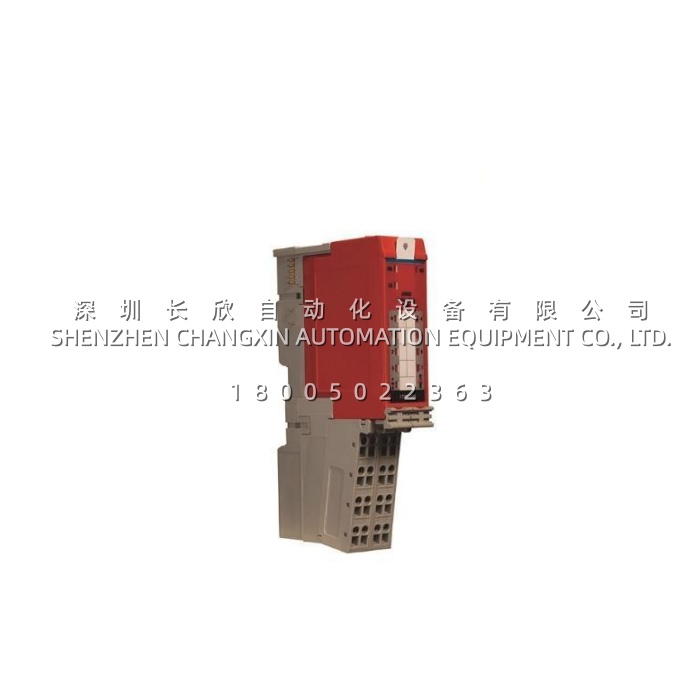
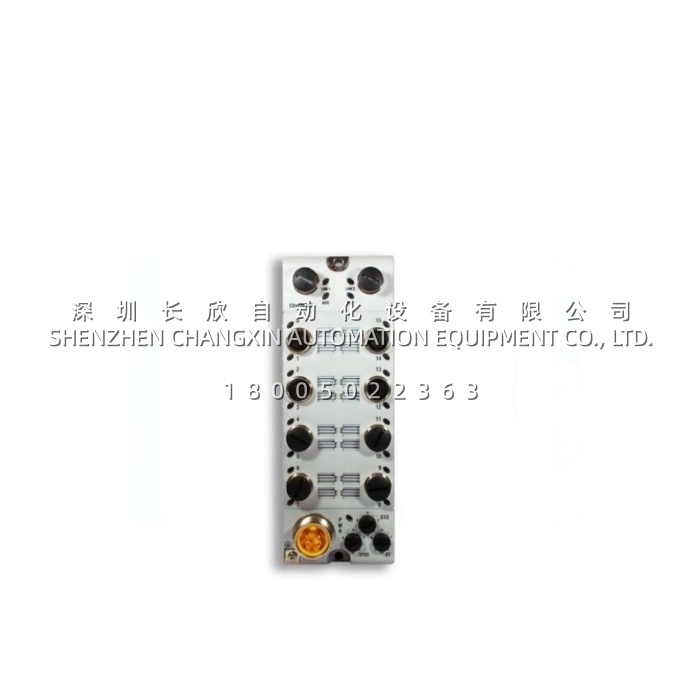
Honeywell 620-0088 Rev E Module: Critical Interface for TDC 3000/TPS Systems缩略图

Honeywell 620-0088 Rev E Module: Critical Interface for TDC 3000/TPS Systems

Honeywell 620-0088 Rev E Module: Critical Interface for TDC 3000/TPS Systems插图


Product Overview

The Honeywell 620-0088 Rev E​ is a sophisticated and robust Parallel Link Driver Module, a critical communication interface component within Honeywell’s legacy and foundational distributed control system (DCS) architectures, most notably the TDC 3000 and TPS (TotalPlant Solution) systems. This module serves as the essential hardware gateway that facilitates high-speed, deterministic data exchange between the system’s high-level process management components, such as the Universal Control Network (UCN) via Network Interface Modules (NIMs) or High Performance Process Managers (HPMs), and the lower-level process control hardware, including the Multifunction Controller (MC) and Advanced Multifunction Controller (AMC) boxes. Its core function is to manage the parallel data highway, a proprietary, high-speed communication channel that ensures reliable and timely transfer of critical process variables, control outputs, and diagnostic information between various system nodes. The Honeywell 620-0088 Rev E​ is engineered to handle the demanding real-time data traffic required for continuous process control, making it an indispensable component for system integrity and performance.Operating within a fault-tolerant and redundant system design philosophy, the 620-0088 Rev E​ module is designed for high availability. It is typically deployed in redundant pairs to eliminate any single point of failure in the communication path, a crucial consideration for mission-critical processes in industries like oil refining, petrochemicals, and power generation. The “Rev E” designation indicates a specific hardware revision, often incorporating design improvements, component updates, and enhanced reliability features over previous versions. By implementing the Honeywell 620-0088 Rev E, plant engineers ensure that the vital communication backbone of their control system operates with the high level of determinism and redundancy required for safe, stable, and efficient plant operations, thereby protecting the longevity and functionality of their significant automation investment.

Technical Specifications

Parameter Name Parameter Value
Product Model 620-0088 Rev E
Manufacturer Honeywell
Product Type Parallel Link Driver Module (PLD)
Compatible System TDC 3000, TPS (TotalPlant Solution)
Primary Function Interface for Parallel Data Highway communication
Target Interface Interfaces NIM/HPM to MC/AMC chassis
Communication Protocol Honeywell Parallel Data Highway
Redundancy Support Designed for installation in redundant pairs
Hardware Revision Revision E (Component and reliability enhancements)
Form Factor Printed Circuit Board (PCB) for specific Honeywell chassis slot
Operating Temperature 0°C to 60°C (Typical for control room environment)
Power Requirements Derived from the host chassis backplane
Diagnostic Indicators Status LEDs for power, activity, and fault conditions
MTBF (Mean Time Between Failures) High reliability design for continuous operation


Main Features and Advantages

High-speed deterministic communication: The Honeywell 620-0088 Rev E​ is engineered for performance-critical data transfer. It manages the parallel data highway, a high-bandwidth communication channel designed for low-latency, deterministic exchange of process data. This ensures that control commands, setpoints, and process variable updates are transmitted between controllers and process managers with minimal and predictable delay, which is absolutely essential for maintaining tight control over fast-moving or safety-critical loops. The module handles the complex timing and data framing protocols required for this highway, offloading this task from the main controllers.Enhanced system reliability and redundancy: A cornerstone of its design is enabling system fault tolerance. The 620-0088 Rev E​ module is a key component in implementing redundant communication paths. Systems are typically configured with dual parallel data highways, each served by a redundant pair of Honeywell 620-0088 Rev E​ drivers. This architecture guarantees that a failure in any single driver module, cable, or power supply does not interrupt the flow of control information. The module supports hot-swap capabilities in properly configured systems, allowing for maintenance or replacement without requiring a process shutdown, thereby maximizing overall system availability and uptime.

Honeywell 620-0059 VR 2.2: Redundancy and Fault Tolerance Module缩略图

Honeywell 620-0059 VR 2.2: Redundancy and Fault Tolerance Module

Honeywell 620-0059 VR 2.2: Redundancy and Fault Tolerance Module插图


Product Overview

The Honeywell 620-0059 VR 2.2​ is a critical Voter Redundancy control module, a fundamental component within Honeywell’s high-availability and fault-tolerant control system architectures, most notably associated with the older Honeywell VDC 3000 and similar distributed control system (DCS) platforms. This module embodies the principle of Triple Modular Redundancy (TMR), a hardware-based design philosophy aimed at achieving exceptional system availability and safety. The core function of the Honeywell 620-0059 VR 2.2​ is to act as a “voter” or decision-making unit that continuously compares the outputs from three separate, synchronized processor channels. In a TMR configuration, three identical controller modules execute the same control logic in parallel. The VR 2.2​ module receives the output from each of these three channels, performs a majority vote (typically 2-out-of-3), and passes the correct output forward to the field while simultaneously isolating and reporting any channel that has failed or deviated from the others.This sophisticated redundancy mechanism ensures that a single random hardware failure in one processor channel does not cause a system shutdown or produce an erroneous output, thereby guaranteeing both high availability for continuous process operation and enhanced safety integrity. The module is a key element in systems where unplanned downtime is prohibitively expensive or where control failure could have serious safety consequences. The Honeywell 620-0059 VR 2.2​ is more than a simple relay; it is an intelligent hardware unit that manages channel synchronization, performs diagnostics, and facilitates online maintenance. It allows a faulty controller channel to be replaced while the remaining two channels maintain uninterrupted control, with the voter seamlessly re-integrating the repaired or replaced channel back into the system. The value of this module lies in its ability to provide near-zero downtime and fail-safe control, which is paramount in critical industries like oil refining, petrochemicals, and power generation.

Technical Specifications

Parameter Name Parameter Value
Product Model / Part Number 620-0059 VR 2.2
Manufacturer Honeywell
Product Type Voter Redundancy Control Module
Redundancy Architecture Triple Modular Redundancy (TMR)
Function Majority Voter (2-out-of-3) for fault-tolerant control
Compatible System Honeywell VDC 3000, TDC 3000 Redundant Components, or similar legacy DCS
Form Factor Typically a card/module for installation in a specific controller chassis
Input Channels 3 (for three independent processor outputs)
Voting Logic Continuous hardware-based comparison and selection
Fault Response Isolates faulty channel, signals alarm, continues operation with remaining channels
Diagnostics Continuous self-test and channel health monitoring
Status Indication LEDs for Power, Channel Status, Fault, Voter Activity
Communication Via proprietary backplane to controller channels and I/O
Operating Temperature 0 to 60°C (typical for control room hardware)
Power Requirement Derived from the system chassis backplane
Safety/Reliability Target Designed to support high system availability (>99.99%) and safety integrity


Main Features and Advantages

Fault Tolerance and High Availability: The defining feature of the Honeywell 620-0059 VR 2.2​ is its implementation of Triple Modular Redundancy. This design ensures that the system can suffer a failure in any one of its three controller channels and continue to operate correctly without interruption, data loss, or a process shutdown. The hardware-based voter makes this decision deterministically and within microseconds, far faster than any software-based solution could manage. This leads to exceptionally high system availability, measured in “nines” (e.g., 99.999%), which is essential for continuous process industries where downtime costs tens of thousands of dollars per hour. The module enables true online maintenance, allowing technicians to diagnose, remove, and replace a failed controller card while the process remains under the control of the other two healthy channels, a capability known as “hot swapping” in this context.

Honeywell Safety Manager 620-0036 Processor Power Module缩略图

Honeywell Safety Manager 620-0036 Processor Power Module

Honeywell Safety Manager 620-0036 Processor Power Module插图


Product Overview

The Honeywell 620-0036​ is a high-integrity, triple modular redundant (TMR) processor power supply module, serving as the critical power source for the central processing units within Honeywell’s flagship Safety Manager safety instrumented system (SIS) and Experion Process Knowledge System (PKS). This module is far more than a simple power converter; it is engineered to provide the utmost level of power availability and fault tolerance required for systems protecting human life, the environment, and high-value industrial assets. The Honeywell 620-0036​ supplies clean, regulated, and isolated DC power to the triple redundant processor modules of the Safety Manager, ensuring that even in the event of a failure within one of its own internal power channels, the control processors remain fully powered and operational without interruption. Its design is a cornerstone of the system’s high availability, directly supporting the achievement of stringent Safety Integrity Levels (SIL 3 as per IEC 61508/61511) by eliminating the power supply as a single point of failure.Functioning within a fault-tolerant architecture, the 620-0036​ module incorporates three independent, isolated power conversion channels. These channels operate in parallel, sharing the load and continuously monitoring each other’s status. This TMR design ensures that the failure of any single channel is automatically masked, with the remaining two channels seamlessly taking up the full load without any disruption to the downstream processors. The module includes comprehensive diagnostic capabilities that report its health status back to the control processors and the system’s engineering workstation, enabling predictive maintenance. The integration of the Honeywell 620-0036​ into a control cabinet is a statement of commitment to system resilience. In critical applications such as emergency shutdown (ESD), fire and gas (F&G) detection, and turbine control, where a loss of control system power is not an option, the reliability of this power supply is paramount. It provides the stable electrical foundation upon which the entire safety or critical control logic executes, making it an indispensable component for industries where operational uptime and safety are non-negotiable.

Technical Specifications

Parameter Name Parameter Value
Product Model 620-0036
Manufacturer Honeywell
Product Type Triple Modular Redundant (TMR) Processor Power Supply Module
Redundancy Triple Modular Redundant (3 independent channels)
Input Voltage 24 VDC (Nominal), with a specified operating range (e.g., 18-32 VDC)
Output Voltage +5 VDC (Primary logic power for processors)
Output Current Sufficient to power multiple TMR processor modules (e.g., 20A total)
Output Power High wattage (e.g., 100W or greater per channel)
Isolation 1500 VAC (channel-to-channel and input-to-output)
Efficiency High efficiency (>85%) to minimize heat dissipation
Operating Temperature 0°C to 60°C (32°F to 140°F)
Monitoring & Diagnostics Comprehensive: output voltage/current monitoring, channel status, fault reporting
Communication Status communicated via backplane to control processors
Physical Form Factor Module for installation in Safety Manager or Experion C-series chassis


Main Features and Advantages

Triple Modular Redundancy (TMR) for fault-tolerant power: The defining feature of the Honeywell 620-0036​ is its triple redundant internal architecture. Unlike a simplex or even dual-redundant supply, the TMR design provides an unparalleled level of fault tolerance. The three independent power channels work in perfect synchronization. Should one channel fail due to a component fault, the other two channels instantly and transparently assume the entire load. This “fault-masking” capability means the connected processor modules experience zero power disturbance, glitch, or brownout condition. This is critical because even a momentary power dip could cause a processor to reset or behave unpredictably, potentially triggering a spurious shutdown in a safety system. The 620-0036​ ensures the processors have a continuous, clean power source, which is the absolute bedrock of high-availability control.Advanced diagnostics and hot-swap capability: The module is equipped with sophisticated self-diagnostics that monitor the health of each internal power channel, including parameters like output voltage, current, and temperature. This diagnostic information is reported in real-time to the system, allowing operators and maintenance personnel to see the status of the Honeywell 620-0036​ from the control room. Alerts can be generated for early warning of a degrading channel, enabling proactive replacement during a planned maintenance window rather than an emergency response after a failure. Furthermore, the module is designed for true hot-swap replacement. This means a faulty (or pre-emptively maintained) 620-0036​ power supply module can be safely removed from its slot in the chassis and replaced with a new one without needing to power down the entire safety controller or the process it is protecting. This feature is instrumental in achieving the system’s goal of maximum availability and minimizing mean time to repair (MTTR).High reliability and robust industrial design: Built to withstand the harsh electrical and environmental conditions of industrial plants, the 620-0036​ incorporates high-quality components and conservative design margins. It features input protection against transients, reverse polarity, and over-voltage conditions commonly found on plant 24VDC bus systems. The high level of isolation (1500VAC) between channels and from input to output prevents fault propagation and protects sensitive processor electronics from ground loops and noise. The module’s high conversion efficiency minimizes heat generation, contributing to its long-term reliability and reducing the thermal load on the control cabinet. This focus on robustness and quality ensures the Honeywell 620-0036​ delivers years of dependable service, directly supporting the longevity and integrity of the critical control system it powers.

Honeywell 620-0027: Reliable Memory for Process Control Applications缩略图

Honeywell 620-0027: Reliable Memory for Process Control Applications

Honeywell 620-0027: Reliable Memory for Process Control Applications插图


Product Overview

The Honeywell 620-0027​ is a specialized Non-Volatile Memory (NVM) module, a critical firmware and data storage component designed for controllers and application modules operating on the Universal Control Network (UCN) within the Honeywell TDC 3000 distributed control system. This module serves as the persistent memory heart for key hardware such as the High-Performance Process Manager (HPM) and the Advanced Process Manager (APM). Its primary function is to securely retain the controller’s executable firmware, control strategy configuration (points, loops, logic), and critical operational parameters when system power is removed. Unlike volatile RAM, the Honeywell 620-0027​ ensures that the complex control algorithms, tuning parameters, and point databases are not lost during a power cycle or shutdown, enabling the process controller to resume full operation immediately upon restoration of power without requiring a time-consuming download from a host computer.Within the hierarchical TDC 3000 architecture, the UCN is the high-speed data highway connecting powerful process managers with the system’s universal stations. The 620-0027​ module is integral to the autonomy and reliability of these controllers. It is typically installed on the controller’s main processor board or in a dedicated memory slot. During normal operation, the controller runs its control strategies from this local, fast non-volatile memory. The value of the Honeywell 620-0027​ lies in its role in ensuring system integrity and high availability. By storing the essential “personality” of the controller locally, it decouples the controller’s runtime operation from the health of the higher-level network or host computers. This design is fundamental for critical continuous processes in industries like refining, petrochemicals, and power generation, where even a brief interruption in control logic can lead to significant safety risks or production losses. The Honeywell 620-0027 UCN Memory Module​ is, therefore, not just a storage device but a cornerstone of control persistence and operational resilience in one of the industry’s most enduring and trusted DCS platforms.

Technical Specifications

Parameter Name Parameter Value
Product Model 620-0027
Manufacturer Honeywell
Product Type Non-Volatile Memory (NVM) Module
Compatible System Honeywell TDC 3000
Target Hardware Universal Control Network (UCN) based controllers (e.g., HPM, APM)
Memory Technology Likely battery-backed static RAM (SRAM) or early flash
Memory Function Stores controller firmware, configuration, and point database
Form Factor Proprietary printed circuit board (PCB) with edge connector
Voltage Requirements Powered by the host controller (e.g., +5V DC)
Data Retention Maintains data without external power for a specified period (reliant on internal battery for SRAM types)
Operating Temperature Designed for industrial control cabinet environments (0-60°C typical)
Mounting Installs into a dedicated socket or slot on the controller’s CPU card
Battery (if applicable) Integrated lithium battery for data retention in SRAM-based versions
Diagnostics Status may be indicated by the host controller’s health LEDs


Main Features and Advantages

The Honeywell 620-0027​ module delivers essential features focused on data integrity, controller autonomy, and system reliability. Its defining characteristic is non-volatile storage. This ensures that the controller’s complete operational blueprint—from complex regulatory and batch control strategies to all configured process variables (points)—is permanently resident. This eliminates the risk of a control outage caused by a failure in the communication path to a centralized data historian or engineering station, allowing the Honeywell 620-0027-equipped controller to operate as a standalone, intelligent unit.A key advantage is the facilitation of rapid recovery and restart. Following a plant-wide power outage, controllers utilizing the 620-0027​ can reboot and resume automatic control within minutes, as all necessary software and configuration are stored locally. This is a significant operational benefit compared to systems that require a full database download from a network source. The module also enhances maintenance and upgrade procedures. A spare controller can be pre-configured with a Honeywell 620-0027​ module containing the specific process unit’s control strategy, allowing for a swift and prepared hot-swap replacement if a controller fails, drastically reducing mean time to repair (MTTR). For technology that originated in the 1980s, the use of battery-backed SRAM (a common technology for this era and part number) provided a robust and sufficiently fast storage solution. The integration of this memory directly onto the control hardware minimizes points of failure and contributes to the legendary uptime and durability of the TDC 3000 system. The Honeywell 620-0027​ is thus a critical enabler of the TDC 3000’s distributed intelligence architecture, where reliable, local storage is synonymous with continuous, fault-tolerant process control.

Application Field

The Honeywell 620-0027​ UCN Memory Module is exclusively applied within the Honeywell TDC 3000 distributed control system, a platform that has been a cornerstone of large-scale process automation for decades. Its application is therefore found in capital-intensive, continuous-process industries where the TDC 3000 system is installed. The primary application is in oil refineries and petrochemical plants, where the module is an integral part of HPM and APM controllers managing complex, interconnected units such as crude distillation columns, catalytic crackers, reformers, and ethylene crackers. The Honeywell 620-0027​ ensures that the advanced regulatory control, complex interlocks, and safety sequences for these high-value processes are permanently retained and instantly available.Similarly, in chemical production facilities, the module is vital for controllers running batch reactors, distillation trains, and polymerization processes, where precise recipe management and phase logic must be preserved. In power generation, particularly in large thermal and combined-cycle power plants, the 620-0027​ provides the memory backbone for controllers that manage boiler control, turbine sequencing, and burner management systems, where loss of control strategy could lead to a catastrophic trip. Natural gas processing and liquefied natural gas (LNG) plants also rely on these controllers and their memory modules for cryogenic process control. The Honeywell 620-0027​ is a critical spare part for the maintenance and lifecycle support of these legacy, yet often still mission-critical, control systems. Its function supports the entire philosophy of the TDC 3000: distributing control intelligence to dedicated process managers, with the 620-0027​ ensuring that intelligence is both persistent and immediately accessible, safeguarding processes that run 24/7/365.

Graco 527-003-250: Engineered for Automated Lubrication System Feedback缩略图

Graco 527-003-250: Engineered for Automated Lubrication System Feedback

Graco 527-003-250: Engineered for Automated Lubrication System Feedback插图


Product Overview

The Graco/Lubriquip 527-003-250​ is a high-quality inductive proximity switch, a critical sensor component specifically designed for integration into Graco’s Lubriquip centralized automatic lubrication systems. This device plays a fundamental role in providing reliable machine state feedback by detecting the presence or absence of metallic targets, typically a moving part of the machinery being lubricated, such as a shaft, cam, or gear tooth. The core function of the Graco/Lubriquip 527-003-250​ is to generate a precise electrical signal that informs the lubrication system controller about the operating status (running or stopped) of the monitored equipment. This information is essential for implementing “on-demand” or cycle-based lubrication strategies, ensuring lubricant is dispensed only when the machine is in operation, which optimizes lubricant usage, reduces waste, and prevents under or over-lubrication.As a dedicated component within the Lubriquip ecosystem, the 527-003-250​ proximity switch is engineered for the demanding conditions of industrial environments. Its design prioritizes durability, sensing accuracy, and seamless compatibility with Lubriquip pump and control units. By providing a dependable binary signal (on/off), this switch enables the lubrication system to operate intelligently, synchronizing lube cycles with actual machine runtime. This not only enhances the precision of the lubrication process but also contributes directly to machinery health, reducing wear, preventing bearing failures, and extending the service life of critical assets. The Graco/Lubriquip 527-003-250​ is therefore more than just a sensor; it is an enabler of predictive and condition-based maintenance practices, forming a vital feedback link in a closed-loop lubrication control strategy.

Technical Specifications

Parameter Name Parameter Value
Product Model 527-003-250
Manufacturer Graco / Lubriquip
Product Type Inductive Proximity Sensor / Switch
Sensing Type Non-contact, Inductive
Sensing Distance Approximately 2.5mm to 5mm (0.1″ to 0.2″) – Target dependent
Output Type Typically PNP (Sourcing) or NPN (Sinking) DC switching signal (Confirm from datasheet)
Output Configuration Normally Open (NO) or Normally Closed (NC)
Supply Voltage Commonly 10-30V DC
Current Rating Typically up to 200mA
Housing Material Nickel-plated brass or stainless steel
Sensing Face Material PBT or similar engineering plastic
IP Rating Typically IP67 (Dust-tight and protected against temporary immersion)
Operating Temperature -25°C to 70°C (-13°F to 158°F)
Connection Integrated 2-meter cable or quick-disconnect style


Main Features and Advantages

Robust construction for harsh environments: The Graco/Lubriquip 527-003-250​ is built to withstand the challenging conditions found in industrial settings such as manufacturing plants, mines, and mills. Its housing is typically constructed from rugged, corrosion-resistant metals like nickel-plated brass, offering excellent durability against physical impact, vibration, and exposure to lubricants, coolants, and washdown procedures. The high IP67 ingress protection rating ensures reliable operation even in dusty, damp, or oily environments, making it a dependable choice for long-term service.Precision and reliability in detection: This inductive proximity switch provides non-contact, wear-free sensing. Unlike mechanical limit switches, it has no moving parts to wear out, resulting in a much longer operational lifespan and maintenance-free operation. Its sensing characteristics are stable and repeatable, ensuring that the Graco/Lubriquip 527-003-250​ consistently provides an accurate signal to the controller every time the target metal object passes within its sensing range. This reliability is paramount for preventing missed lubrication cycles.

DCS Memory Expansion: Honeywell 620-0024 24K EEPROM Module缩略图

DCS Memory Expansion: Honeywell 620-0024 24K EEPROM Module

DCS Memory Expansion: Honeywell 620-0024 24K EEPROM Module插图


Product Overview

The Honeywell 620-0024​ is a specialized 24-kilobyte (24K) EEPROM (Electrically Erasable Programmable Read-Only Memory) exchange module, a critical firmware and data storage component for Honeywell’s historic TDC 3000 Distributed Control System (DCS) and related legacy controllers. This memory module is not a standard RAM chip but a non-volatile storage device used to hold the foundational system software, control algorithms, configuration parameters, and application-specific logic for key TDC 3000 hardware, such as the High-Performance Process Manager (HPM) and Advanced Process Manager (APM). The Honeywell 620-0024​ serves as the essential “personality” module for these controllers; without it, the hardware is an inert chassis. Its core value lies in its role as a robust, non-volatile repository that retains critical system intelligence even during a complete loss of power, ensuring that the control processor can boot up, initialize, and execute its designated control functions reliably upon restoration.As an exchange module, the 620-0024​ is designed for secure installation into a dedicated slot on the controller’s main processor card. It represents a specific generation of Honeywell’s memory technology, where 24K of storage was significant for holding optimized real-time control code. The module is often part of a pair or set, with specific modules designated for primary and redundant controller pairs. The data contained on a Honeywell 620-0024​ module is typically created and burned (programmed) using Honeywell’s proprietary engineering tools and is specific to the process application. In the ecosystem of a TDC 3000 system, this module is as crucial as the processor itself. Its reliability ensures the continuity of complex process control strategies in industries like oil refining, petrochemicals, and power generation, where the TDC 3000 platform formed the automation backbone for decades. Supporting these legacy systems often hinges on the availability of tested and functional memory modules like the 620-0024.

Technical Specifications

Parameter Name Parameter Value
Product Model 620-0024
Manufacturer Honeywell
Product Type 24K EEPROM Exchange Memory Module
Compatible System Honeywell TDC 3000 DCS
Target Hardware High-Performance Process Manager (HPM), Advanced Process Manager (APM)
Memory Capacity 24 Kilobytes (24K)
Memory Type EEPROM (Electrically Erasable Programmable Read-Only Memory)
Volatility Non-Volatile (retains data without power)
Data Retention Minimum 10 years (typical for industrial EEPROM)
Interface Proprietary parallel bus, module-specific edge connector
Programming Method Programmed offline with Honeywell proprietary hardware/software
Physical Form Factor Custom PCB with protective carrier or casing
Operating Temperature 0°C to 70°C (typical for control room hardware)
Primary Function Stores controller firmware, application code, and configuration


Main Features and Advantages

The Honeywell 620-0024​ is defined by its reliability and specialized purpose within a closed, high-reliability ecosystem. Its primary advantage is providing guaranteed non-volatile storage for mission-critical control system software. Unlike volatile RAM, the EEPROM technology ensures that all control logic, tuning parameters, and system configuration are permanently retained, safeguarding against data loss from power failures or system resets. This is paramount in continuous process industries where restarting a controller with a blank or corrupted memory could lead to significant process upsets, safety incidents, or prolonged downtime. The module is designed for physical and electrical robustness, with a form factor that ensures secure connection and protection from static discharge or environmental contaminants within the controller chassis.A key operational feature is its role in system redundancy and maintenance. In a redundant HPM/APM pair, each controller has its own 620-0024​ module, typically containing identical software images. This allows for seamless switchover between primary and backup controllers. The “exchange” nature of the module facilitates easier maintenance and upgrades; a spare, pre-programmed 620-0024​ can be kept on hand for quick replacement if a module fails or if a controller needs to be repurposed for a different application. The module’s data integrity is typically verified by checksums, and the TDC 3000 system includes diagnostics to alert operators to memory failures. For support engineers, the existence of these physical memory modules provides a tangible backup and recovery method—a known-good Honeywell 620-0024​ can be used to restore a failed controller, a simpler process than attempting a software download to a non-booting unit.

Reliance Electric 586-501-109 Component: High-Quality OEM Spare Part缩略图

Reliance Electric 586-501-109 Component: High-Quality OEM Spare Part

Reliance Electric 586-501-109 Component: High-Quality OEM Spare Part插图


Product Overview

The Reliance Electric 586-501-109​ is a genuine factory original equipment manufacturer (OEM) spare part, designed and produced to maintain the operational integrity and performance of Reliance Electric industrial drive systems. As a critical component within a larger drive assembly, the 586-501-109​ is engineered to exacting specifications to ensure seamless compatibility and reliable function within its intended application. In the context of Reliance Electric’s comprehensive portfolio of AC/DC drives, motors, and control systems, this spare part likely serves a vital role in the power, control, or feedback circuitry. Its precise function—whether as a control board, interface card, power supply module, feedback device, or other specialized component—is to ensure the precise regulation of motor speed, torque, and direction, which is fundamental to process control, material handling, and manufacturing automation.The value of the Reliance Electric 586-501-109​ spare part lies in its role as a direct, form-fit-function replacement for a component that has reached the end of its service life or has failed. Using a genuine OEM part like the 586-501-109​ guarantees that the repaired drive system will restore its original performance characteristics, including efficiency, control accuracy, and reliability. This part is manufactured with the same high-quality materials, rigorous testing standards, and design pedigree as the original component installed in the drive at the factory. For maintenance engineers and plant managers, sourcing the authentic 586-501-109​ is crucial for minimizing unplanned downtime, preserving the drive’s warranty and safety certifications, and avoiding the potential risks associated with non-OEM or counterfeit components, which can lead to premature failure, system instability, or even safety hazards. It represents a commitment to maintaining the long-term health and productivity of critical motion control assets.

Technical Specifications

Parameter Name Parameter Value
Product Model 586-501-109
Manufacturer Reliance Electric (An ABB Group Company)
Product Type OEM Spare Part / Drive System Component
Compatible Systems Designed for specific Reliance Electric Drive Models (e.g., within the FlexPak, MaxPak, SP500, GV3000, or other series)
Function Varies – Typically a specialized internal component (e.g., Control Board, Regulator Card, Gate Drive Board, Feedback Card)
Physical Form Factor Specific to the drive chassis and slot for which it is designed
Electrical Interfaces Designed to mate directly with the drive’s internal backplane or connectors
Operating Specifications Performance parameters (voltage, current, speed) match the original drive’s design
Environmental Rating Typically suited for the standard industrial operating environment of the host drive (e.g., 0-50°C)
Quality Standards Manufactured to Reliance Electric’s OEM quality and testing protocols
Replaces The original component with part number 586-501-109 in the drive’s bill of materials

Note: The specific technical parameters (voltage, current, etc.) are intrinsic to the part’s undisclosed, specific function within a Reliance drive system. The above table reflects the key identifying and sourcing metadata.

Main Features and Advantages

The primary feature and advantage of the Reliance Electric 586-501-109​ is its guaranteed OEM compatibility and reliability. As a factory-original part, it is designed to be a perfect mechanical and electrical match for the component it replaces. This eliminates the guesswork, modification, and potential for error associated with aftermarket alternatives. The part is built with the same component grade, PCB layout, and firmware (if applicable) as the original, ensuring identical electrical characteristics and control behavior. This preserves the drive’s tuned performance, communication capabilities, and diagnostic accuracy. Utilizing the 586-501-109​ helps maintain the system’s designed mean time between failures (MTBF) and overall lifecycle cost.Another significant advantage is the preservation of system integrity and safety. Reliance Electric designs its drives as cohesive systems where all internal components are validated to work together safely. Installing a genuine 586-501-109​ spare part ensures that all protective functions—such as overcurrent protection, thermal management, and fault diagnostics—operate as intended. This is critical for safeguarding both the drive hardware and the larger process. Furthermore, using an OEM part like the 586-501-109​ often simplifies the repair process. It comes ready to install, typically without the need for recalibration or complex configuration, assuming it is a like-for-like replacement. This reduces repair time and gets equipment back online faster. For the maintenance team, the confidence that comes with installing a verified Reliance Electric 586-501-109​ component is invaluable, reducing troubleshooting ambiguity and supporting a proactive, reliable maintenance strategy.

Bettis 585C EEI Quarter-Turn Actuator with Double-Acting Spring Return缩略图

Bettis 585C EEI Quarter-Turn Actuator with Double-Acting Spring Return

Bettis 585C EEI Quarter-Turn Actuator with Double-Acting Spring Return插图


Product Overview

The Emerson Bettis 585C EEI​ is a high-performance, double-acting electric actuator engineered for the automated operation of quarter-turn valves such as ball, plug, and butterfly valves in critical industrial applications. This actuator series is designed to deliver reliable and robust rotary motion, converting electrical power into precise mechanical torque to open, close, and modulate valve position. The “double-acting” designation, often associated with pneumatic actuators, refers here to the actuator’s internal spring pack mechanism; in the Emerson Bettis 585C EEI, it signifies a fail-safe design where two sets of springs provide the power to drive the valve to a predefined safe position (either open or closed) upon loss of electrical power or upon receiving a trip signal. This ensures process safety and compliance with safety instrumented system (SIS) requirements in industries like oil and gas, petrochemicals, and power generation.As a key product within Emerson’s comprehensive valve automation portfolio, the 585C EEI​ is built for durability in harsh environments. It features a sealed, corrosion-resistant housing typically rated to IP66/67 or NEMA 4X, protecting the internal gearing, motor, and spring pack from moisture, dust, and corrosive atmospheres. The actuator incorporates a powerful, thermally protected electric motor and a highly efficient worm gear set to generate high output torque in a compact footprint. The Emerson Bettis 585C EEI​ is equipped with advanced controls, including integral torque and position sensing switches, which allow for precise limit settings and provide protection against valve stem overload. Its modular design often allows for the integration of a variety of feedback devices (potentiometers, switches) and communication modules (e.g., for Foundation Fieldbus, PROFIBUS) to seamlessly integrate into modern distributed control systems (DCS). The value of the 585C EEI​ lies in its combination of assured fail-safe action, high torque output, environmental robustness, and intelligent control, making it a trusted solution for automating isolation, emergency shutdown (ESD), and critical process control valves where reliability cannot be compromised.


Technical Specifications

Parameter Name Parameter Value
Product Model 585C EEI (Series designation; specific torque/speed is in suffix, e.g., 585C-EEI-060-20-00)
Manufacturer Emerson (Bettis Actuator Line)
Product Type Electric Quarter-Turn Actuator with Double-Acting Spring Return
Fail-Safe Action Spring-return to a predefined safe position (Open or Closed) on power loss
Output Torque Range Available in multiple torque classes (e.g., 60 Nm, 100 Nm, 250 Nm, etc., as per suffix)
Output Speed Variable speed options (e.g., 8, 20, 40 seconds/90° as per suffix)
Motor Power Three-phase or single-phase AC motor, depending on configuration
Supply Voltage Common ratings: 24V DC, 110V AC, 120V AC, 220V AC, 240V AC, 480V AC
Enclosure Rating Typically IP66/67, NEMA 4X (weatherproof, dust-tight, hose-proof)
Duty Cycle S2 – Short time duty (typically 15 or 30 minutes), suitable for quarter-turn operation
Ambient Temperature Range Standard: -20°C to 70°C (-4°F to 158°F); optional low/high-temp versions available
Position Indication Mechanical position indicator, auxiliary limit switches
Torque Sensing Integral torque switch for overload protection
Control Interface Multi-conduit openings for power and control wiring
Mounting ISO 5211 direct mounting interface to quarter-turn valves


Main Features and Advantages

The Emerson Bettis 585C EEI​ electric actuator is distinguished by its highly reliable fail-safe mechanism and robust industrial construction. The core feature is its double-acting spring-return system. Unlike a single-acting spring which provides force in one direction only, the double-acting design uses two opposing spring sets. This configuration allows the actuator to be configured to drive the valve to either the fully open or fully closed position upon de-energization, with the springs providing the full rated torque for the safety stroke. This ensures a positive, guaranteed safe state without relying on external power, a critical advantage for emergency shutdown (ESD) and safety-critical applications. The actuator is designed for high cycle life, with precision-machined gearing and high-grade spring materials that maintain calibration over thousands of operations.Integration and control flexibility are significant advantages. The Emerson Bettis 585C EEI​ comes as a complete, self-contained package with an integrated control unit. It features independently adjustable mechanical torque and limit switches, allowing for precise setup to match the valve’s requirements and prevent damage from over-torquing. The design allows for easy field reversibility of the fail-safe action (open or closed) and rotation direction. The sealed enclosure and corrosion-resistant materials ensure long-term operation in offshore, coastal, and chemically aggressive environments. Furthermore, the actuator supports a wide range of optional feedback and communication devices, such as potentiometers for 4-20mA position feedback, solenoid valves for emergency trip, and digital protocol cards, enabling seamless integration into both legacy and modern smart factory networks. The combination of a trustworthy safety function, durable construction, precise adjustability, and communication readiness makes the 585C EEI​ a versatile and dependable solution for automating critical valves where safety, reliability, and low lifecycle cost are paramount.

SIMATIC S5-155U Compatible Siemens 562-001 Processor Module缩略图

SIMATIC S5-155U Compatible Siemens 562-001 Processor Module

SIMATIC S5-155U Compatible Siemens 562-001 Processor Module插图Product Overview

The Siemens 562-001​ is a high-performance, 32-bit central processing unit (CPU) module, famously known as the “Power Open Processor,” designed for the top-tier models of the Siemens Simatic S5 series, specifically the S5-135U and S5-155U programmable logic controllers. This processor represented a significant technological leap in its era, incorporating a powerful 32-bit architecture and a dedicated floating-point co-processor to handle complex computational tasks that were beyond the capability of standard 16-bit PLC CPUs. The Siemens 562-001​ serves as the core computational and control unit of the PLC system, executing the user-programmed automation logic, managing the system’s comprehensive I/O structure, handling communication with programming devices and networks, and providing system diagnostics. It is designed to manage large, complex automation projects that require fast processing speeds, extensive memory, and the ability to execute sophisticated mathematical and data handling operations, such as those found in process control, material handling, and large manufacturing lines.As the heart of the S5-135U/155U rack, the Siemens 562-001​ operates on a multi-processor backplane bus, allowing it to coordinate with additional co-processor modules for specialized functions like communications or additional calculation power. Its “Power Open” designation underscores its capability for “open” programming, supporting not only the standard STEP 5 languages (Statement List, Ladder Diagram, Function Block Diagram) but also high-level language programming in C or Pascal for particularly complex or algorithmically intensive functions. This made the Siemens 562-001​ uniquely suited for applications that blended classic sequential control with advanced computational tasks, such as recipe management, statistical process control, and complex closed-loop control. Its value was in providing a scalable, powerful, and versatile control platform that could serve as the central nervous system for the most demanding industrial automation systems of its time, offering a bridge between traditional PLC reliability and the power of a mini-computer.

Technical Specifications

Parameter Name Parameter Value
Product Model 562-001
Manufacturer Siemens AG
Product Type 32-bit Central Processing Unit (Power Open Processor)
Compatible Rack Siemens Simatic S5-135U / S5-155U
Word Length 32-bit CPU with integrated Floating-Point Unit (FPU)
Memory Extensive work memory for program and data; expandable via memory submodules
Processing Speed High performance for its generation, with fast bit operation and word processing times
Programming Languages STEP 5 (STL, LAD, CSF), plus optional high-level languages (C, Pascal)
Integrated Communication MPI (Multi-Point Interface) for programming device/OP connection; support for various network protocols via communication processors
I/O Addressing Capacity Capable of managing a very large number of digital and analog I/O points (several thousand)
Number of Integrated Functions Timers, counters, comparators, complex math functions (floating-point)
Operating System Firmware-based real-time operating system
Backplane Interface S5-135U/155U multi-processor bus
Power Supply Powered via the system rack’s power supply unit
Diagnostics Comprehensive self-diagnostics with status and error LEDs; diagnostic buffer


Main Features and Advantages

The Siemens 562-001​ is distinguished by its raw computational power and architectural openness. The integration of a 32-bit CPU with a hardware floating-point unit was a groundbreaking feature, enabling it to execute complex mathematical operations—including trigonometric functions, logarithmic calculations, and real-number arithmetic—with unprecedented speed and precision for a PLC. This made it ideal for advanced process engineering tasks, model-based control, and data-intensive applications. Its support for high-level language programming (C/Pascal) allowed engineers to implement custom, optimized algorithms directly on the controller, providing a level of flexibility and performance that was unique in the PLC market at the time.System scalability and advanced communication are core strengths. The Siemens 562-001​ could serve as the master in a multi-processor configuration within the same rack, sharing the control load with other CPU or co-processor modules. It supported a vast and modular I/O system, allowing for the construction of extremely large automation systems. For communication, it provided the foundational MPI interface and, more importantly, could be equipped with a range of powerful communication processor (CP) modules for networks like SINEC L2 (PROFIBUS) and Industrial Ethernet, enabling seamless integration into plant-wide automation hierarchies. The CPU also featured a comprehensive diagnostic system, including a detailed diagnostic buffer that logged system events and errors, greatly simplifying troubleshooting and maintenance. The combination of brute-force processing, programming flexibility, and scalable architecture made the Siemens 562-001 Power Open Processor​ a legendary platform for tackling the most challenging automation problems.

549-214 Siemens Expansion Card: Adds Versatile Analog I/O to Your Control Rack缩略图

549-214 Siemens Expansion Card: Adds Versatile Analog I/O to Your Control Rack

549-214 Siemens Expansion Card: Adds Versatile Analog I/O to Your Control Rack插图


Product Overview

The Siemens 549-214 Analog Point Expansion Module​ is a specialized, high-density interface unit designed to significantly expand the analog input and output capabilities of the Siemens Simatic 505 series of programmable logic controllers, particularly those configured for high-availability and redundant operation. This module serves as a critical bridge between the PLC’s central processing unit (such as the 545R or 555R) and the complex analog signals prevalent in process control environments. The primary function of the 549-214​ is to provide additional, isolated channels for interfacing with field devices that transmit standard analog signals, such as 4-20 mA current loops or 0-10V DC voltages, which represent continuous process variables like temperature, pressure, flow, and level. By integrating the 549-214 Analog Point Expansion Module​ into a Simatic 505 rack, system designers can dramatically increase the system’s capacity to monitor and control analog processes without requiring a larger or additional CPU chassis. The module is engineered for robustness and precision, featuring signal conditioning, isolation, and conversion circuitry to ensure accurate data acquisition and reliable command output. Its design is especially critical in redundant controller architectures, where it helps maintain comprehensive process visibility and control, thereby supporting continuous operation in industries where downtime is not an option. The Siemens 549-214​ is a key component for scaling and enhancing the functionality of legacy Simatic 505 systems in demanding process automation applications.

Technical Specifications

Parameter Name Parameter Value
Product Model 549-214
Manufacturer Siemens
Product Type Analog Point Expansion I/O Module
Series/Platform Simatic 505 (for 545R, 555R Redundant Systems)
I/O Type Analog Input / Analog Output (Configurable)
Number of Channels 4 channels (typically, configurable as input or output)
Signal Ranges Configurable (e.g., 4-20 mA, 0-20 mA, 0-10V, +/-10V)
Resolution High resolution (e.g., 12-bit or 16-bit) for precise measurement/control
Isolation Channel-to-channel and channel-to-logic isolation
Accuracy High accuracy (e.g., +/-0.1% of full scale) typical for process modules
Update Time Fast update rate suitable for process control loops
Connection Via removable front connector block (e.g., 20-pin or 40-pin)
Diagnostics Module status LEDs (OK, Fault, Channel status)
Backplane Interface Compatible with Simatic 505 local I/O rack
Redundancy Support Designed for use in systems with redundant CPUs
Power Requirement Powered from the 505 rack backplane


Main Features and Advantages

Configurable channel functionality: A primary advantage of the Siemens 549-214​ is its channel-by-channel configurability. Each of its four analog channels can typically be individually configured via software or hardware (DIP switches/jumpers) to operate as either an input or an output. Furthermore, each channel can be set for different signal types (voltage or current) and ranges. This unparalleled flexibility allows a single 549-214 Analog Point Expansion Module​ to be used in a multitude of applications, adapting to the specific mix of analog sensors (inputs) and actuators (outputs) required by a process. This reduces the variety of spare modules needed in inventory and simplifies system design.High precision and robust isolation: Engineered for process control, the 549-214​ delivers high measurement and output accuracy, which is essential for maintaining precise control over critical variables like reactor temperature or chemical flow rates. The module incorporates high-grade analog-to-digital and digital-to-analog converters. Importantly, it features electrical isolation between each analog channel and between the field side and the controller’s logic. This isolation protects the sensitive PLC electronics from ground loops, transient voltage spikes, and other electrical noise commonly found in industrial environments, ensuring signal integrity and system reliability.Seamless integration for high availability: The module is specifically designed for seamless integration into the Simatic 505 architecture, particularly for systems requiring high availability. In a redundant CPU configuration (e.g., with 545R processors), the 549-214​ operates transparently, providing both CPUs with synchronized access to the analog I/O data. This ensures bumpless switchover in case of a primary CPU failure, as the backup controller has an identical, real-time view of the process. The module’s diagnostic LEDs provide immediate local status, while detailed fault information is available to the CPU for centralized alarm handling and predictive maintenance, which is crucial for minimizing unscheduled downtime in continuous process plants.

Back to Top

Search For Products

Product has been added to your cart