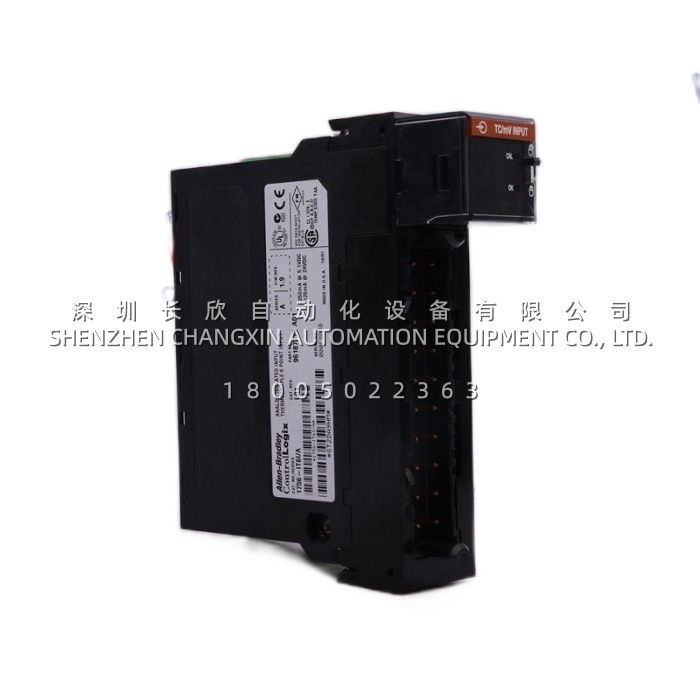
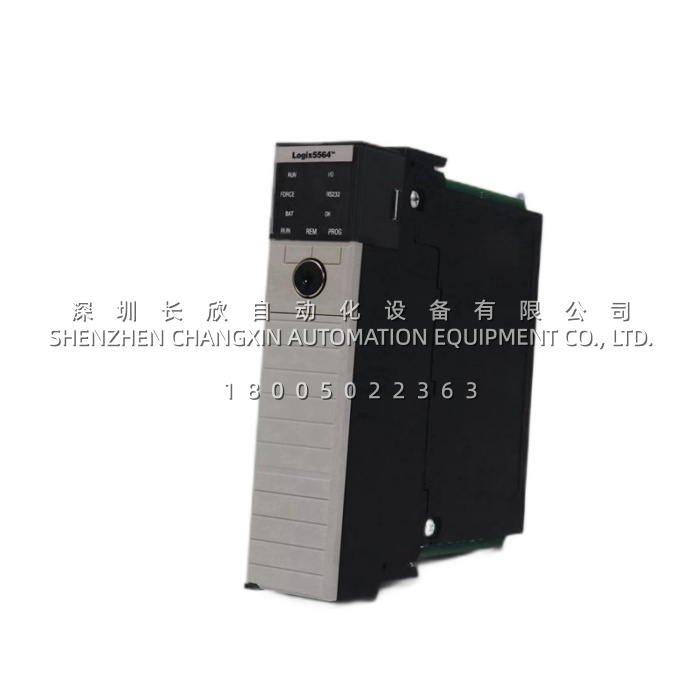
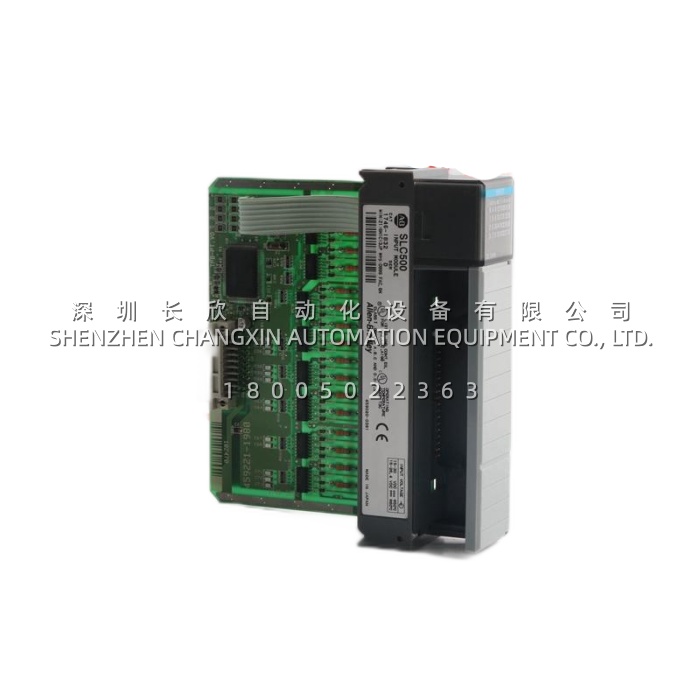
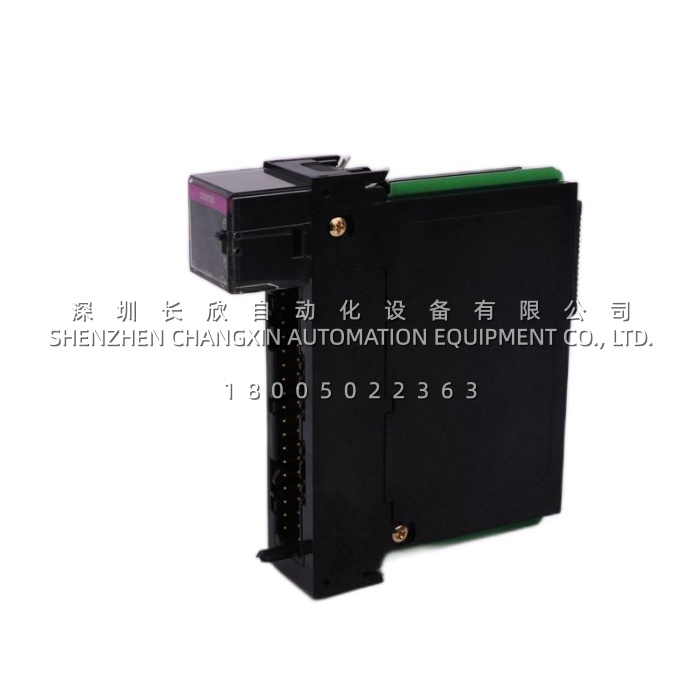
ABB FM9925A-E | Safety System Interface Module缩略图

ABB FM9925A-E | Safety System Interface Module

ABB FM9925A-E | Safety System Interface Module插图
Product Overview

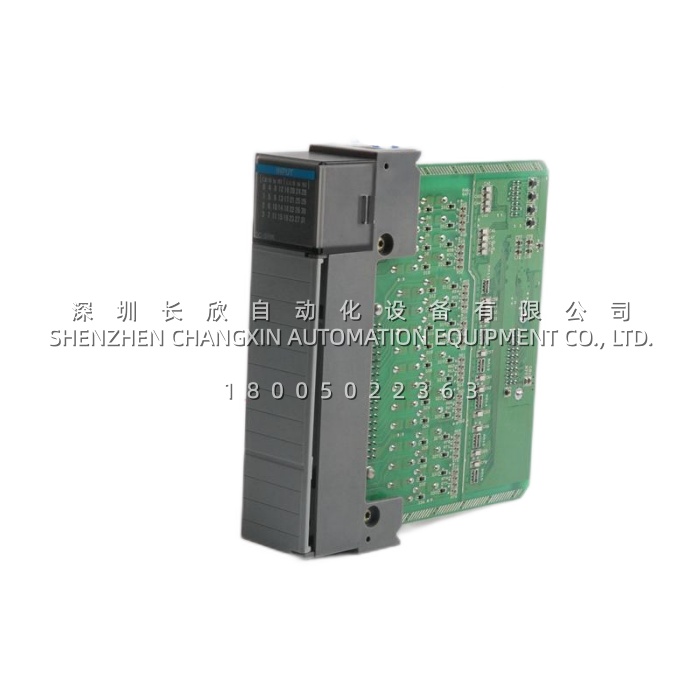
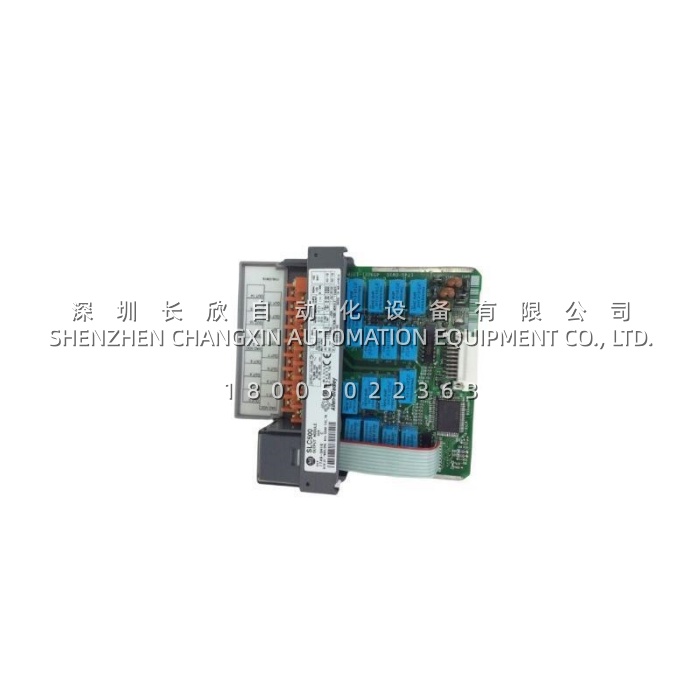
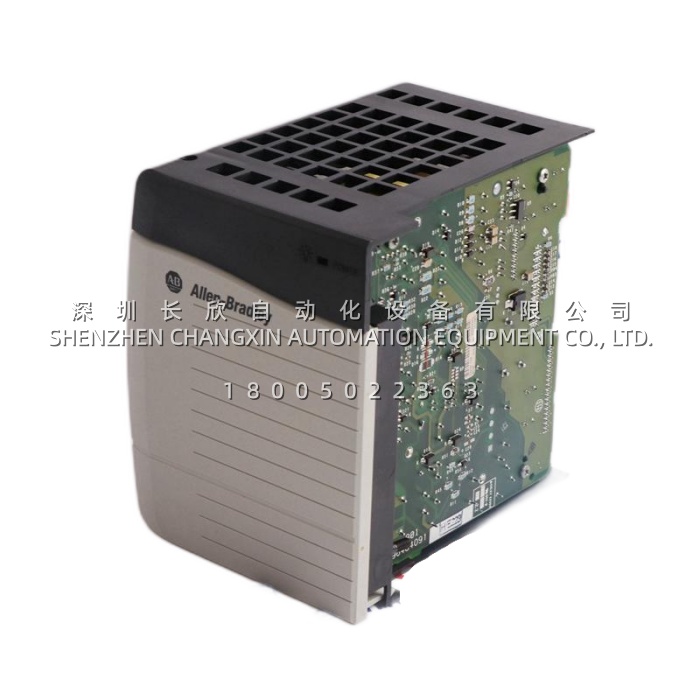
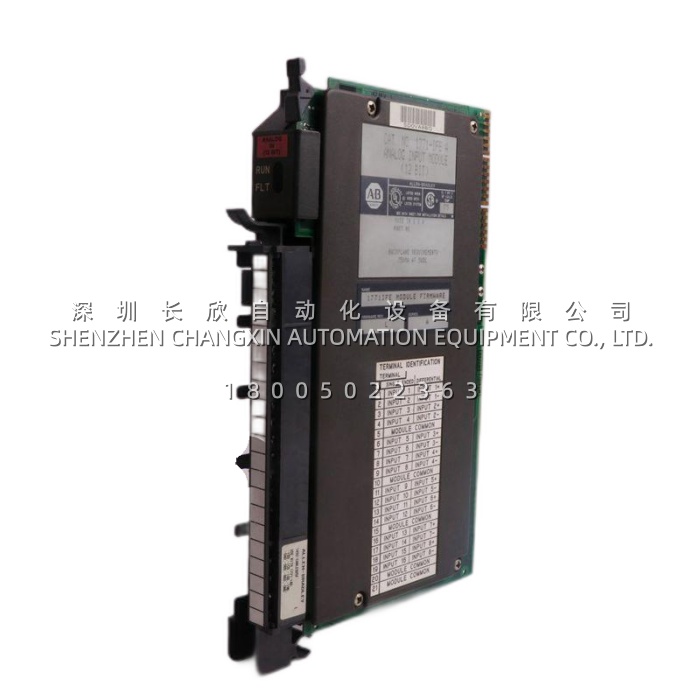
The ABB FM9925A-E​is a sophisticated Fire and Gas Detection Module that serves as a critical component within ABB’s comprehensive safety system architecture,specifically designed for hazardous environment monitoring and emergency response initiation.As an integral part of ABB’s safety instrumented systems,this specialized module provides the interface between various fire,gas,and smoke detectors in the field and the central safety logic solver.The FM9925A-E​represents ABB’s engineered approach to process safety,converting analog detector signals into actionable digital data while implementing necessary signal conditioning,validation,and voting logic to ensure reliable hazard detection without nuisance trips.In industries where flammable gases,toxic substances,or fire hazards present serious risks,this module functions as the sensory nervous system that triggers appropriate safety responses,from local alarms to full emergency shutdown sequences,thereby protecting personnel,assets,and the environment from catastrophic incidents.

Technical Specifications

Parameter Name

Parameter Value

Product Model

FM9925A-E

Manufacturer

ABB

Product Type

Fire and Gas Detection Module

System Compatibility

ABB Safety Systems(e.g.,part of System 800xA HI or dedicated safety platforms)

Input Channels

Typically 4 or 8 channels for analog detector inputs(configurable)

Detector Types Supported

4-20mA flame detectors(UV/IR,IR),gas detectors(toxic/combustible),smoke detectors,heat detectors

Input Range

4-20mA with Hart protocol support possible

Signal Processing

Includes signal validation,broken wire detection,out-of-range detection

Voting Logic

Configurable voting schemes(1oo1,1oo2,2oo3)per channel or group

Outputs

Form C relay outputs for alarm and fault indications

Communication Interface

Integration with ABB safety network or system bus(e.g.,via CI867)

Diagnostics

Comprehensive self-diagnostics and field device diagnostics

Power Supply

24 VDC typical(via system backplane or external)

Operating Temperature

-20°C to+60°C(extended range for harsh environments)

Hazardous Area Certification

Suitable for installation in control rooms;field devices connected to it are certified for hazardous areas

Safety Integrity Level

Supports implementation of Safety Instrumented Functions(SIF)up to SIL 2 or SIL 3 as part of a certified system

Certifications

TÜV,IEC 61508/61511,ATEX/IECEx for system applicability

Main Features and Advantages

The ABB FM9925A-E​distinguishes itself through its robust design focused on achieving high Safety Integrity Levels(SIL)while minimizing spurious trips—a critical balance in industrial safety.Its sophisticated input processing includes continuous validation of the 4-20mA signal integrity,capable of detecting open circuits,short circuits,and signals that deviate outside plausible ranges.This prevents a faulty detector or damaged cable from going unnoticed and ensures that only valid,credible signals are processed by the safety logic.Furthermore,the module supports advanced voting configurations.For critical areas,detectors can be arranged in a 2-out-of-3(2oo3)voting scheme,where an alarm is only raised if at least two detectors agree.This architecture dramatically increases the system’s availability by tolerating a single detector failure or a false alarm from one sensor without compromising the overall protective function.

Integration and lifecycle management are core strengths.The FM9925A-E​is designed to work seamlessly within ABB’s 800xA High Integrity(HI)or other safety-focused system frameworks.This means its configuration,diagnostics,and historical data are accessible through the same unified engineering and operator workspace used for the basic process control system(BPCS).This integration simplifies engineering,reduces training overhead,and provides operators with a single,consistent view of both process and safety status.The module also supports diagnostic capabilities that extend to the field devices themselves(if they support HART or similar protocols),enabling predictive maintenance.By monitoring trends in detector readings or diagnostic values,maintenance can be scheduled before a detector fails,ensuring the safety loop remains fully functional and compliant.

High Diagnostic Coverage and Signal Validation:Ensures signal credibility before action,significantly reducing the probability of dangerous failures and nuisance trips.

Flexible and Redundant Voting Architectures:Supports various voting schemes(1oo2,2oo3)to optimize both safety integrity and operational availability for different risk scenarios.

Seamless System Integration:Native integration with ABB’s 800xA ecosystem provides a unified engineering and operational experience,streamlining compliance and management.

Extended Field Device Diagnostics:Potential support for intelligent field device communication(e.g.,HART)enables condition monitoring and predictive maintenance strategies.

Certified for Safety Applications:Designed and certified as part of a Safety Instrumented System(SIS)to meet international standards like IEC 61511,providing a verifiable safety foundation.

Application Field

The ABB FM9925A-E​is deployed in industries where the consequences of undetected gas releases or fires are severe,both in terms of human safety and financial impact.Its application is strategic,focusing on creating reliable,independent layers of protection.

In offshore oil and gas platforms,the module forms the core of the Fire and Gas(F&G)detection system.It interfaces with a network of point and line-of-sight gas detectors positioned in process modules,pump rooms,and living quarters.Upon detecting a hydrocarbon leak at a predefined concentration,the FM9925A-E,following its configured logic,can initiate a cascade of actions:activating area-specific alarms,starting emergency ventilation,and,if the threat escalates,signaling the Emergency Shutdown(ESD)system to isolate sections of the platform.Similarly,in liquefied natural gas(LNG)export terminals,it monitors storage tank areas and loading arms for methane leaks.Here,its high reliability and avoidance of false alarms are paramount,as an unnecessary ESD during a ship loading operation carries immense cost and logistical disruption.

Oil&Gas Production and Refining:Monitoring wellheads,separation vessels,compressor stations,and refinery process units for combustible gas and flame.

Chemical and Petrochemical Plants:Protecting reaction vessels,storage tanks,and pipe racks containing volatile or toxic chemicals.

Pharmaceutical and Fine Chemical Facilities:Where solvent handling areas require reliable detection of flammable vapors to protect personnel and sensitive processes.

Power Generation(Gas Turbine Halls):Detecting fuel gas leaks in enclosures housing turbines and ancillary equipment.

Marine and Offshore Applications:Serving as the central F&G system component on Floating Production Storage and Offloading(FPSO)vessels and drilling rigs.

Related Products

Flame Detectors(e.g.,ABB UVIR/IR Flame Detectors):The field devices(sensors)that provide the primary flame detection signal to the FM9925A-E​module.

Gas Detectors(e.g.,ABB ToxiGuard or Combustible Gas Detectors):Field devices for detecting toxic or explosive atmospheres,connected to the module’s analog inputs.

800xA High Integrity(HI)Controller:The safety-certified controller that executes the safety logic based on inputs from modules like the FM9925A-E.

CI867 Communication Interface:A module that might be used to integrate the FM9925A-E​into the 800xA network architecture.

System 800xA Engineering and Operations Workplace:The software environment used to configure,monitor,and maintain the FM9925A-E​and the entire safety system.

Aspect Server and Object Types:The 800xA software elements that define the functionality and display of the FM9925A-E​within the system.

Safety Auxiliary Components:Marshalling cabinets,isolators,and power supplies that form the complete installation around the FM9925A-E.

Installation and Maintenance

Pre-installation preparation:Installing the ABB FM9925A-E​requires meticulous planning within the context of a complete Safety Instrumented System(SIS)design.The Safety Requirements Specification(SRS)must define the specific voting logic,alarm setpoints,and response actions for each channel.The module must be installed in a certified control cabinet within a safe area(control room).Prior to installation,verify compatibility with the system backbone and controller.All field wiring from hazardous area detectors must be properly routed through approved cable glands and,if necessary,intrinsic safety barriers or isolators to meet area classification requirements.

Maintenance recommendations:Maintenance of the FM9925A-E​and its associated loops is governed by strict safety lifecycle standards.Routine proof testing is mandatory to verify the entire loop’s functionality,from detector to final element.The module’s extensive diagnostics should be reviewed regularly through the 800xA system to check for any channel faults,communication errors,or deviations in detector signals.Calibration of connected field detectors must be performed at intervals defined in the SIS maintenance plan.Any modification to the module’s configuration,including setpoints or voting logic,must follow a formal Management of Change(MOC)procedure and may require re-validation of the Safety Instrumented Function(SIF).Keeping detailed records of all tests,calibrations,and modifications is essential for auditing and demonstrating continued compliance with safety standards.

Product Guarantee

We guarantee that every ABB FM9925A-E​module is a 100%genuine ABB product,sourced to ensure its integrity for use in critical safety instrumented systems.We understand the profound responsibility associated with supplying safety components.Our procurement process prioritizes vendors with verifiable ABB authorization.While we conduct basic electrical and communication functionality tests prior to dispatch,we emphasize that the final validation,integration,and periodic proof testing of this module within a certified Safety Instrumented System must be performed by qualified personnel following the system integrator’s or end-user’s safety lifecycle procedures.We provide traceable documentation with our products and support our clients with technical data to facilitate proper integration.Our role is to be a reliable source of authentic,high-integrity components that form the building blocks of systems designed to protect people,property,and the environment.

选择深圳长欣,选择放心,售后无忧 大量现货,当天顺丰发货!!!
ABB FM9925A-E | Safety System Interface Module插图1

ABB FM9925A-E | Safety System Interface Module插图2

FANUC A05B-2452-C900 10.4″ LCD CRT Replacement Operator Interface缩略图

FANUC A05B-2452-C900 10.4″ LCD CRT Replacement Operator Interface

FANUC A05B-2452-C900 10.4″ LCD CRT Replacement Operator Interface插图
Product Overview

The FANUC A05B-2452-C900 is a dedicated operator interface unit designed for seamless integration with FANUC’s high-end CNC systems,including the Series 30i,31i,and 32i-MB platforms,while maintaining backward compatibility with earlier generations such as the 15i,16i,and 18i.Serving as the primary human-machine interface(HMI)on modern CNC machining centers,the FANUC A05B-2452-C900 combines a high-resolution 10.4-inch color LCD display with a full alphanumeric keyboard,soft keys,and machine-function buttons—enabling operators to program,monitor,and control complex milling,turning,and multi-axis machining processes with precision and efficiency.

Unlike generic HMIs,the FANUC A05B-2452-C900 is engineered specifically for the demanding environment of metalworking shops,featuring a rugged aluminum front panel,sealed membrane switches resistant to coolant and oil ingress,and industrial-grade internal components rated for continuous 24/7 operation.It communicates directly with the CNC controller via FANUC’s proprietary high-speed serial interface,ensuring real-time synchronization of status data,alarm messages,and graphical toolpath previews.The unit also includes standard RS-232 and optional Ethernet ports for external data transfer,facilitating DNC operations and integration with factory MES systems.As a critical touchpoint between machine and operator,the FANUC A05B-2452-C900 enhances productivity through intuitive navigation,rapid error diagnosis,and consistent user experience across FANUC-controlled equipment worldwide.

Technical Specifications

Parameter Name Parameter Value

Product Model A05B-2452-C900

Manufacturer FANUC Corporation

Product Type CNC Operator Display Unit/Human-Machine Interface(HMI)

Display Type 10.4-inch TFT Color LCD

Display Resolution 640×480(VGA)

Input Method Integrated membrane keyboard with tactile feedback,24 soft keys,emergency stop button

Communication Interfaces FANUC High-Speed Serial Link(to CNC),RS-232C(for PC/external devices)

Power Supply+24 VDC(typically supplied by CNC cabinet)

Operating Temperature 0°C to+45°C

Degree of Protection IP54(front panel,dust and splash resistant)

Mounting Panel-mount(standard cutout:300×230 mm approx.)

Certifications CE,UL,FCC Class A

Main Features and Advantages

Purpose-built for CNC workflow efficiency:The A05B-2452-C900 isn’t just a screen—it’s a fully integrated control console optimized for FANUC’s CNC operating logic.Its layout mirrors decades of ergonomic refinement,placing frequently used functions like MDI(Manual Data Input),offset adjustment,and program search within easy reach.The color LCD renders toolpaths,coordinate systems,and alarm diagnostics with clarity,reducing setup time and preventing programming errors.Unlike third-party HMIs that require custom drivers or protocol converters,the A05B-2452-C900 plugs directly into the FANUC CNC backplane,ensuring zero configuration delay and guaranteed compatibility.

Robust construction for harsh shop-floor environments:Designed to withstand vibration,electrical noise,and exposure to cutting fluids,the A05B-2452-C900 features a sealed front membrane that resists penetration by oil mist and coolant splashes—common causes of premature failure in lesser panels.Its internal power regulation and EMI shielding meet FANUC’s stringent industrial standards,eliminating flicker or communication dropouts even near large servo drives or welding equipment.The unit’s long-life backlight and stable LCD panel minimize degradation over years of continuous use,preserving readability in both dimly lit and brightly lit workshops.

Seamless system integration and serviceability:The A05B-2452-C900 supports hot-swappable replacement in many FANUC configurations,minimizing machine downtime during maintenance.Its firmware is managed by the host CNC,eliminating standalone software updates.When paired with FANUC’s i-HMI or CNC Manager software,it enables remote monitoring and data logging.For retrofits,it serves as a direct upgrade path from older CRT-based units(e.g.,A02B-0207-Cxxx series),offering improved reliability,lower power consumption,and modern display quality—all without altering the underlying CNC logic or ladder programs.

Application Field

The A05B-2452-C900 is predominantly deployed on high-precision CNC machine tools across global manufacturing sectors where FANUC controls dominate.In aerospace component production,it interfaces with 5-axis machining centers producing turbine blades and structural fittings,where real-time monitoring of complex G-code programs is essential.Within automotive powertrain facilities,the A05B-2452-C900 operates on transfer lines machining cylinder heads,crankshafts,and transmission cases—benefiting from its durability in high-volume,lights-out production environments.

It is also standard on die and mold machining centers,where fine surface finish and micron-level accuracy demand intuitive access to tool compensation and probing routines.In job shops and contract manufacturers,machines retrofitted with FANUC 31i-B controls often adopt the A05B-2452-C900 as the operator faceplate due to its plug-and-play compatibility and reduced lifecycle cost compared to obsolete CRT units.Educational institutions teaching CNC programming also favor this model for its clear interface and alignment with industry-standard FANUC workflows.Whether on a new Okuma,Makino,or Brother machine—or a legacy Mori Seiki upgraded to modern controls—the A05B-2452-C900 delivers a consistent,reliable operator experience that keeps production moving.

Related Products

A05B-2452-C901:Variant with slightly different key labeling or regional firmware(e.g.,metric/imperial defaults)

A02B-0207-C100:Older CRT-based operator panel for FANUC 15i/16i—predecessor to A05B-2452-C900

A05B-2452-C800:Smaller 8.4-inch version for space-constrained installations

A05B-2452-C902:Updated revision with enhanced backlight life or minor hardware improvements

A02B-0303-C100:Dedicated display-only unit(no keyboard)used in dual-screen setups

FANUC Series 31i-B5:Common CNC control system that pairs natively with A05B-2452-C900

A05B-2301-C001:Handheld pendant for remote operation—complements the main A05B-2452-C900 panel

FANUC i-HMI Software:PC-based visualization tool that mirrors A05B-2452-C900 screens for remote monitoring

Installation and Maintenance

Pre-installation preparation:Before installing the A05B-2452-C900,verify that the CNC control cabinet provides a stable+24 VDC supply and that the high-speed serial cable(typically a shielded multi-conductor FANUC cable)is undamaged and correctly terminated.Ensure the panel cutout dimensions match the unit’s flange(approx.300×230 mm)and that mounting screws are tightened evenly to prevent stress on the LCD frame.Confirm compatibility with the target CNC model via FANUC’s parameter manual—while broadly compatible,certain early 30i revisions may require firmware alignment.

Maintenance recommendations:The A05B-2452-C900 requires minimal routine maintenance but benefits from periodic cleaning with a soft,lint-free cloth and non-abrasive cleaner—never spray liquids directly onto the panel.Avoid using solvents that may degrade the membrane overlay.Monitor for pixel defects,backlight dimming,or unresponsive keys,which may indicate end-of-life.Since the unit draws power from the CNC,ensure the cabinet’s cooling system prevents ambient temperatures from exceeding 45°C,as prolonged heat accelerates LCD and capacitor aging.If replacing an older CRT unit,update the CNC parameters(e.g.,#1023 for display type)to enable full functionality.Always power down the CNC before disconnecting the A05B-2452-C900 to avoid communication faults or parameter corruption.

Product Guarantee

Every A05B-2452-C900 we supply undergoes comprehensive functional validation,including full keyboard response testing,display uniformity checks,communication handshake verification with FANUC CNC simulators,and thermal stress screening.We guarantee that each unit—whether new surplus or professionally refurbished—meets FANUC’s original performance and reliability standards for industrial CNC applications.All A05B-2452-C900 modules come with a 12-month warranty covering operational defects,supported by technical staff with deep expertise in FANUC hardware integration and troubleshooting.Should your A05B-2452-C900 fail to perform as expected,we provide prompt replacement or repair—because in precision manufacturing,every minute of unplanned downtime impacts throughput,quality,and customer trust.

选择深圳长欣,选择放心,售后无忧 大量现货,当天顺丰发货!!!
FANUC A05B-2452-C900 10.4″ LCD CRT Replacement Operator Interface插图1

FANUC A05B-2452-C900 10.4″ LCD CRT Replacement Operator Interface插图2

TRICONEX 4351B | Safety System Input Card缩略图

TRICONEX 4351B | Safety System Input Card

TRICONEX 4351B | Safety System Input Card插图
Product Overview

The TRICONEX 4351B​is a high-integrity,triple modular redundant(TMR)digital input module manufactured by Triconex,a division of Schneider Electric and a global leader in safety instrumented systems.This module forms a critical component within the Tricon Tricon or Trident safety platforms,specifically designed to read binary(on/off)signals from field devices in the most demanding safety-critical processes.Its core function is to reliably acquire discrete status signals—such as emergency stop button presses,pressure switch closures,valve limit switch positions,or flame detector status—and convert them into a digital format that can be processed by the TMR safety controller.The 4351B​is engineered not merely for data acquisition but for achieving and maintaining a specified Safety Integrity Level(SIL),making it an indispensable part of the safety loop in industries where failure could lead to catastrophic consequences.

In the architecture of a Triconex safety system,the TRICONEX 4351B​embodies the principle of fault tolerance through hardware redundancy.Unlike a standard PLC input card,this module internally comprises three independent,isolated input circuits per channel.Each of the three main controllers in the TMR system reads its own version of the field signal through its dedicated circuit within the 4351B.A hardware voter inside the controller chassis then performs a 2-out-of-3 vote on these three signals to determine the definitive state.This design ensures that a single failure within the input module’s circuitry,or a discrepancy caused by noise or a faulty field contact,does not cause an erroneous trip or,more critically,a failure to trip when required.For safety engineers,specifying and maintaining the 4351B​is a foundational step in building a safety instrumented function(SIF)with a verifiable and certified probability of failure on demand(PFD),directly contributing to the protection of human life,the environment,and capital assets in facilities such as oil refineries,chemical plants,and offshore platforms.

Technical Specifications

Parameter Name

Parameter Value

Product Model

TRICONEX 4351B

Manufacturer

Triconex(Schneider Electric)

Product Type

Triple Modular Redundant(TMR)Digital Input Module

Compatible System

Tricon/Trident Safety Systems

Number of Channels

16 channels,in electrically isolated groups

Input Type

24 V DC Sinking(NPN compatible)

On-State Voltage Range

Typically 15 to 30 V DC

Off-State Voltage

0 to 5 V DC

Input Current

Approximately 6 to 9 mA per point at nominal voltage

Isolation

Channel-to-channel and channel-to-system isolation(e.g.,1500V AC)

TMR Architecture

Three independent input circuits per channel for true triple redundancy

Diagnostic Coverage

High,with continuous monitoring of circuit health

Response Time

Fast,suitable for safety-critical shutdown sequences

Connection

Removable terminal block connectors

Power Supply

Powered from the Triconex I/O bus in the chassis

Operating Temperature

0°C to 60°C(standard)

Certifications

TÜV certified for use in safety applications up to SIL 3

Main Features and Advantages

The TRICONEX 4351B​distinguishes itself through an uncompromising focus on safety,reliability,and diagnostics.Its most defining feature is the genuine Triple Modular Redundant(TMR)per-channel architecture.This isn’t a software-based redundancy;it is a hardware implementation where three separate input paths exist for each of the 16 field points.This physical redundancy,combined with the 2-out-of-3 voting logic,provides an extremely high level of fault tolerance.A latent fault in one of the three input circuits will be masked by the other two,allowing the system to continue operating safely while reporting the diagnosed fault for maintenance.This inherent resilience prevents nuisance trips caused by random hardware failures,a critical factor in maintaining operational availability in continuous processes,while still guaranteeing that a valid demand signal from the field(like a high-pressure switch closing)will be acted upon.

Beyond redundancy,the module incorporates sophisticated continuous diagnostics.It constantly monitors the health of its internal circuits and the state of the field wiring.For example,it can detect conditions like field wire breakage(open circuit)or loss of field power by monitoring the current flow in the input loop.These diagnostics are not just simple alarms;they are integral to calculating the module’s contribution to the overall Safety Integrity Level(SIL)of the loop.The diagnostic information is communicated to the main TMR controllers and can be accessed via the engineering workstation,providing maintenance teams with clear,actionable intelligence to perform predictive and preventative maintenance.Furthermore,the 4351B​is designed for maintainability.It supports hot swap replacement in configured systems,meaning a faulty module can be removed and a new one inserted without taking the safety system or the process offline,a vital capability for maximizing plant uptime.

Certified Safety Integrity:​TÜV certified for use in safety loops up to SIL 3 per IEC 61508/61511,providing a verified foundation for safety instrumented functions.

True Hardware TMR Design:​Three isolated input paths per channel ensure maximum fault tolerance and protect against common-cause failures,preventing both spurious trips and dangerous failures.

Comprehensive On-line Diagnostics:​Continuously monitors module health and field wiring integrity,enabling proactive maintenance and contributing to quantifiable safety metrics.

High Noise Immunity and Isolation:​Excellent electrical isolation and filtering ensure reliable operation in electrically noisy industrial environments,preventing false triggering.

Hot Swap Capability:​Allows for module replacement without system shutdown in redundant configurations,supporting both safety and high availability objectives.

Application Field

The TRICONEX 4351B​is deployed exclusively in applications where safety is the paramount concern,functioning as the eyes of the safety instrumented system.Its primary role is to connect critical field-initiated shutdown devices to the TMR logic solver.

In an offshore oil and gas platform,multiple 4351B​modules are used to read signals from Emergency Shutdown Valves(ESDV)limit switches,pressure safety high(PSH)and low(PSL)switches on separators,fire and gas detection system outputs,and manual emergency shutdown(ESD)push buttons.The module’s reliability ensures that a true emergency signal will always be seen by the system,while its diagnostics warn of a switch or wiring failure before it compromises the safety function.Within a petrochemical cracker or refinery,these modules interface with sensors for high reactor temperature,compressor surge detection,flammable gas detection,and burner management system permissives.The TMR voting logic is crucial here to differentiate between a true process hazard and a single sensor failure.

Similarly,in chemical processing plants,the module connects to interlocks for mixer overload,runaway reaction temperature,and spill containment system status.In power generation,particularly in turbine controls,it may be used for overspeed detection and critical lube oil pressure monitoring.Essentially,the TRICONEX 4351B​is specified anywhere a process hazard analysis identifies a need for a highly reliable digital input to trigger a safety action,protecting against fires,explosions,toxic releases,or major equipment damage.

Related Products

Triconex Main TMR Processors(e.g.,3008,3101,3102):​The central logic solvers that receive and vote on the input data from the 4351B​modules.

Triconex Digital Output Modules(e.g.,3625,3626):​The complementary TMR output modules that execute the safety actions(e.g.,close valves,stop motors)based on logic that uses 4351B​inputs.

Triconex Analog Input Modules(e.g.,3700A,3704E):​For safety applications requiring analog measurement(e.g.,pressure,temperature)instead of discrete status.

Triconex Power Supplies(e.g.,8312):​The redundant power supplies that provide clean,reliable power to the chassis containing the 4351B​and other modules.

Triconex Chassis(e.g.,4300,4400 series):​The physical enclosures and backplanes that house and interconnect the I/O modules and processors.

TriStation 1131 Software:​The integrated engineering environment used to configure the hardware,program the safety logic,and perform diagnostics on the entire system,including the 4351B.

Competitor safety I/O modules(e.g.,HIMA or ICS Triplex):​Alternative safety system components that serve similar functions in other vendor platforms.

Installation and Maintenance

Pre-installation preparation:Installing a TRICONEX 4351B​module must be performed in accordance with strict safety and procedural guidelines,often as part of a formal Management of Change(MOC)process.Ensure the specific chassis slot is designated for this module type in the system configuration.Verify that the field wiring is complete,correct,and that the field devices(switches,contacts)are in a safe state.Have the TriStation project file and latest configuration backup readily available.Ground yourself using an ESD strap to prevent damage to sensitive electronics.Identify and document any slot-specific termination boards or cables.

Maintenance recommendations:Routine maintenance is heavily reliant on the module’s diagnostic capabilities.Regularly review diagnostic reports and alarm logs in the TriStation or operator interface for any alerts related to the 4351B​or its channels(e.g.,field wire break,channel disagreement).Do not ignore diagnostic warnings,as they impact the calculated PFD of the safety loop.During planned outages,visually inspect the module and terminal connections for signs of corrosion or looseness.The most critical practice is maintaining and validating configuration backups.When replacing a module due to a diagnosed fault,follow the documented hot-swap procedure if the system is online,ensuring the replacement 4351B​is an identical part number.After insertion,the system will automatically recognize the new module and download the configuration;verify its status is”Healthy”and perform a functional test of the associated safety function if possible.

Product Guarantee

We guarantee that every TRICONEX 4351B​digital input module supplied is a 100%genuine Triconex component,sourced exclusively through authorized and traceable channels to ensure its integrity,performance specifications,and safety certification remain valid.Each module undergoes a comprehensive validation process in our facility before dispatch.This includes meticulous visual inspection,verification of all connector integrity,and a functional test on specialized safety system test equipment that validates proper power-up,communication with a simulated TMR backplane,and correct response to applied input signals.We understand the critical,life-preserving role this module plays within your safety instrumented system.Therefore,we provide full warranty coverage and support with technical documentation.Our experts are versed in functional safety principles and can assist with compatibility verification.Our commitment is to deliver a fully tested,authentic 4351B​module that meets the stringent demands of your safety application,helping you uphold the highest standards of operational safety and compliance.

选择深圳长欣,选择放心,售后无忧 大量现货,当天顺丰发货!!!
TRICONEX 4351B | Safety System Input Card插图1

TRICONEX 4351B | Safety System Input Card插图2

ABB HAC319AEV1 Dual Ethernet Redundant Network Interface for AC 800M缩略图

ABB HAC319AEV1 Dual Ethernet Redundant Network Interface for AC 800M

ABB HAC319AEV1 Dual Ethernet Redundant Network Interface for AC 800M插图
Product Overview

The ABB HAC319AEV1 is a high-availability communication module engineered for the ABB AC 800M programmable automation controller(PAC)platform,serving as the critical network interface between the controller and higher-level systems such as engineering workstations,operator terminals,and enterprise networks.Designed to replace and enhance earlier modules like the CI854 series,the HAC319AEV1 delivers dual Gigabit Ethernet ports with full hardware redundancy,enabling seamless integration into ABB’s System 800xA distributed control architecture while supporting demanding real-time and safety-critical applications.

As a core component in power generation,oil&gas,and heavy process industries,the ABB HAC319AEV1 ensures continuous,deterministic data exchange even during network failures.It supports Media Redundancy Protocol(MRP)and Parallel Redundancy Protocol(PRP)—key IEC 62439 standards—for sub-10 ms failover times,making it suitable for SIL2-certified safety applications when deployed in appropriate configurations.The module handles multiple communication protocols simultaneously,including OPC UA,Modbus TCP,and native AC 800M peer-to-peer messaging,allowing flexible connectivity to third-party devices and legacy systems.With its robust design,advanced diagnostics,and hot-swap capability,the HAC319AEV1 significantly enhances system availability,cybersecurity readiness,and lifecycle management in modern industrial automation environments.

Technical Specifications

Parameter Name Parameter Value

Product Model HAC319AEV1

Manufacturer ABB Ltd.

Product Type Dual-Port Communication Module for AC 800M Controllers

Network Interfaces 2×10/100/1000BASE-T RJ45 Ethernet ports

Redundancy Protocols MRP(Media Redundancy Protocol),PRP(Parallel Redundancy Protocol)

Supported Protocols AC 800M native protocol,Modbus TCP,OPC UA(via controller),SNMP

Data Rate Up to 1 Gbps per port

Operating Temperature 0°C to+60°C(extended range option available)

Mounting Directly onto AC 800M CPU backplane(e.g.,PM864,PM865)

Hot-Swap Support Yes(in redundant controller configurations)

Cybersecurity Features VLAN tagging,MAC filtering,secure boot(firmware-dependent)

Power Consumption~8 W(supplied via controller backplane)

Compliance Standards IEC 61000-6-2/4,IEC 62439-2/3,CE,UL 61010

Main Features and Advantages

Dual Gigabit Ethernet with Sub-10ms Failover:The ABB HAC319AEV1 features two independent Gigabit Ethernet ports that support ring or parallel network topologies using MRP or PRP.In the event of a cable break or switch failure,network reconfiguration occurs in less than 10 milliseconds—faster than most process controllers can detect a communication loss—ensuring uninterrupted control and monitoring.This makes the HAC319AEV1 ideal for applications where network downtime equates to production loss or safety risk.

Native Integration with AC 800M and System 800xA:Unlike generic network cards,the HAC319AEV1 is purpose-built for ABB’s automation ecosystem.It enables direct,high-speed communication between AC 800M CPUs,I/O stations,and System 800xA servers without protocol converters or gateways.Engineering tools like Control Builder M automatically recognize the module,simplifying configuration and reducing commissioning time.

Enhanced Diagnostics and Cyber Resilience:The HAC319AEV1 provides detailed port-level diagnostics—including link status,packet error rates,and traffic statistics—accessible via Control Builder M or ABB’s Asset Optimization suite.It also supports foundational cybersecurity measures such as VLAN segmentation and MAC address filtering,helping facilities comply with IEC 62443 guidelines.These features allow operators to proactively identify network anomalies before they impact control performance.

Future-Ready and Scalable:With Gigabit bandwidth and support for modern industrial protocols,the HAC319AEV1 is prepared for data-intensive applications like edge analytics,remote access,and digital twin integration.Its compact form factor and backplane-powered design eliminate external power supplies,reducing cabinet space and wiring complexity while maintaining compatibility with existing AC 800M racks.

Application Field

The ABB HAC319AEV1 is widely deployed in industries requiring ultra-reliable,high-speed controller networking.In thermal and renewable power plants,the HAC319AEV1 connects boiler,turbine,and balance-of-plant AC 800M controllers to central System 800xA operator stations,ensuring real-time visibility during grid frequency events or load changes.Within oil&gas upstream and midstream operations,it links compressor station controllers across wide-area networks using PRP for zero-loss communication—even during lightning-induced switch failures.

In water and wastewater treatment facilities,the HAC319AEV1 enables secure,redundant data flow between remote pumping stations and the main SCADA center,supporting regulatory compliance and remote diagnostics.Similarly,in mining and metals processing,where electromagnetic interference from large drives is common,the HAC319AEV1’s robust Ethernet implementation maintains stable communication for mill control and material handling systems.Across all these sectors,the HAC319AEV1 serves as the digital backbone that transforms isolated controllers into a unified,responsive,and resilient automation fabric.

Related Products

PM864A:Primary AC 800M CPU controller commonly paired with HAC319AEV1 for standard automation tasks.

PM865A:Redundant AC 800M CPU that leverages HAC319AEV1 for synchronized state transfer and failover.

CI854A:Legacy Profibus DP communication module;HAC319AEV1 replaces it for Ethernet-based architectures.

TK801:Terminal base for S800 I/O modules;used alongside HAC319AEV1 in full AC 800M system deployments.

System 800xA:ABB’s integrated DCS platform that relies on HAC319AEV1 for controller-to-server communication.

Control Builder M:Engineering software used to configure and diagnose HAC319AEV1 network parameters and redundancy settings.

HAC320AEV1:Higher-end variant with fiber-optic SFP ports for long-distance or EMI-sensitive installations.

Installation and Maintenance

Pre-installation preparation:Before installing the ABB HAC319AEV1,confirm that the target AC 800M CPU(e.g.,PM864 or PM865)has available backplane slots and compatible firmware(minimum version specified in ABB documentation).Plan the network topology—ring(MRP)or parallel(PRP)—and ensure managed switches support the chosen redundancy protocol.Use shielded Cat 6 cables with proper grounding,and assign static IP addresses or configure DHCP reservations in advance.The HAC319AEV1 must be configured in Control Builder M with correct IP settings,redundancy mode,and VLAN tags before insertion.

Maintenance recommendations:Although the HAC319AEV1 is solid-state and requires no routine servicing,periodic review of network diagnostics in Control Builder M is advised to detect rising error counts or port flapping that may indicate cabling or switch issues.Firmware updates should be applied during scheduled outages using ABB-approved procedures.In redundant CPU systems,the HAC319AEV1 can be replaced online—always verify synchronization status post-replacement.Store spare HAC319AEV1 modules in anti-static packaging away from moisture and extreme temperatures to preserve long-term reliability.

Product Guarantee

We guarantee that every ABB HAC319AEV1 module we supply is 100%genuine,factory-new,and fully tested on live AC 800M hardware.Each unit undergoes verification of both Ethernet ports,redundancy failover timing,and communication integrity with System 800xA servers.We provide a 12-month warranty against defects in materials and workmanship,along with lifetime access to certified ABB automation engineers for configuration and troubleshooting support.Should your HAC319AEV1 encounter any issue,we will assist promptly to minimize operational disruption.Our mission is to deliver not just a network card,but a trusted enabler of continuous,secure,and intelligent industrial operations.

选择深圳长欣,选择放心,售后无忧 大量现货,当天顺丰发货!!!
ABB HAC319AEV1 Dual Ethernet Redundant Network Interface for AC 800M插图1

ABB HAC319AEV1 Dual Ethernet Redundant Network Interface for AC 800M插图2

ABB UNS0884A-V1 3BHE004385R0001 | Advant Controller Power Supply缩略图

ABB UNS0884A-V1 3BHE004385R0001 | Advant Controller Power Supply

ABB UNS0884A-V1 3BHE004385R0001 | Advant Controller Power Supply插图
Product Brief Description

ABB UNS0884A-V1 3BHE004385R0001

Brand:ABB

Series:Freelance/AC 800F

A dual-output power supply module for the AC 800F controller,designed for harsh industrial environments.As a key component of the ABB Freelance Distributed Control System(DCS),it provides stable and reliable power to the controller’s CPU and I/O systems.

Input Voltage:​24 VDC

Output:​+5V and+3.3V DC

Genuine,fully tested,in-stock,with professional technical support.

Product Overview

The ABB UNS0884A-V1 3BHE004385R0001​is a critical internal power conditioning module specifically engineered for the ABB AC 800F series of controllers,which form the backbone of the Freelance distributed control system.With extensive experience deploying Freelance systems in food&beverage,water treatment,and modular process skids,I’ve come to appreciate that the reliability of the entire control station often hinges on the performance of such seemingly mundane internal power components.This module is not a general-purpose cabinet power supply;it is a precision-regulated,dual-output DC-DC converter designed to mount directly within the AC 800F controller’s housing.Its sole mission is to accept a raw 24 VDC input—typically supplied by an external primary power source—and convert it into the clean,stable,and precisely regulated+5V and+3.3V DC voltages required by the controller’s microprocessor,memory,ASICs,and local bus circuitry.

In the architecture of a Freelance system,the ABB UNS0884A-V1 3BHE004385R0001​functions as the controller’s internal”heart and circulatory system.”The external 24V supply is analogous to venous blood—it can have noise and minor fluctuations.This module acts as a specialized organ,purifying and pressurizing this input into the specific”arterial”voltages that the digital logic circuits need to operate without error.Any ripple,sag,or surge on these internal rails can cause symptoms ranging from mysterious controller resets and corrupted communications to catastrophic CPU failure.Therefore,the design of this power module emphasizes exceptional line and load regulation,low noise output,and robust protection against input transients.Its failure does not merely inconvenience a process;it typically brings down the entire controller node,halting all associated control loops.For maintenance engineers and system integrators,understanding and securing a reliable supply of this specific power module is a strategic activity in ensuring the long-term operational continuity of Freelance-based automation.

Technical Specifications

Parameter Name

Parameter Value

Product Model​

ABB UNS0884A-V1 3BHE004385R0001

Manufacturer​

ABB

Product Type​

Internal DC-DC Power Supply Module(for AC 800F Controller)

Compatible Controller​

AC 800F CPU Modules(e.g.,PF891A,PF892A)

Input Voltage​

24 VDC(nominal),with a specified operating range(e.g.,19-30 VDC)

Output Voltages​

+5 VDC and+3.3 VDC

Output Power/Current​

Rated for the total power consumption of the AC 800F controller(specified in watts or amperes per rail)

Regulation​

High precision,low ripple and noise on both output rails

Protection Features​

Input reverse polarity protection,overvoltage protection(OVP),overcurrent protection(OCP),and overtemperature protection

Cooling​

Conduction cooling via the metal housing of the AC 800F controller

Mounting​

Internal mounting within the AC 800F controller enclosure,secured to the main board or chassis

Operating Temperature​

Designed to match the AC 800F controller’s operating range(typically 0°C to 60°C)

Safety&EMC​

Designed to meet relevant industrial standards for safety and electromagnetic compatibility

Main Features and Advantages

Dual Precision Rails for Core Logic Integrity:The ABB UNS0884A-V1 3BHE004385R0001’s primary advantage is its delivery of two critical voltage rails with high precision.Modern microprocessors and FPGAs within the AC 800F require both a core voltage(often 3.3V)and an I/O voltage(5V).This module ensures these voltages are stable,with tight regulation and minimal noise even as the controller’s load dynamically changes during program execution and communication bursts.This clean power foundation is absolutely non-negotiable for preventing bit errors in memory,ensuring accurate analog-to-digital conversions on internal diagnostics,and guaranteeing the stability of high-speed communication interfaces within the controller.Its performance directly correlates with the mean time between failures(MTBF)of the controller itself.

Robust Protection and Seamless Integration:Built to survive in industrial environments,the module incorporates a comprehensive suite of protection mechanisms.Input reverse polarity protection guards against a catastrophic wiring mistake during external power supply installation.Overcurrent and overtemperature protection safeguard the module and the downstream controller circuitry in the event of an internal short circuit or excessive ambient heat.This robust design,coupled with its conduction cooling method(which relies on the controller’s metal housing as a heat sink),makes it exceptionally reliable.Furthermore,its form-factor and electrical interface are designed for a perfect mechanical and electrical fit within the AC 800F enclosure.This”plug-and-play”integration eliminates the need for custom power design,reduces engineering risk,and ensures optimal thermal and electrical performance as intended by the original system architects.

Enabler for System Reliability and Predictable Maintenance:By providing a dedicated,optimized power source,this module isolates the sensitive controller electronics from the vagaries of the plant’s 24VDC distribution system,which can be subject to noise from inductive loads and other equipment.This isolation is a key contributor to system-level reliability.From a maintenance perspective,when a controller fails,a faulty UNS0884A-V1 3BHE004385R0001​is a common root cause.Its modular nature allows for relatively straightforward replacement compared to diagnosing individual components on the controller’s main board.Having a genuine spare of this specific module on hand is often the fastest path to restoring a failed AC 800F station,minimizing process downtime.

Provides two precisely regulated,low-noise voltage rails(+5V&+3.3V)critical for the stable operation of the AC 800F controller’s microprocessor and digital logic.

Incorporates comprehensive protection(reverse polarity,OVP,OCP,thermal)to safeguard both the power module and the expensive controller electronics from common field wiring errors and fault conditions.

Engineered for direct,seamless integration into the AC 800F controller housing,ensuring optimal thermal performance and reliability as per the original design.

Serves as a field-replaceable unit(FRU),enabling quicker restoration of a failed controller and simplifying maintenance logistics compared to board-level repair.

Application Field

The ABB UNS0884A-V1 3BHE004385R0001​module has one specific and critical application:powering the CPU unit within ABB’s AC 800F controllers used in the Freelance DCS.Its use is therefore co-extensive with the deployment of this control platform.

In a medium-sized wastewater treatment plant,multiple AC 800F controllers might manage the aeration basins,clarifiers,and chemical dosing.Each controller’s uninterrupted operation is vital for meeting environmental discharge permits.The UNS0884A-V1​module inside each controller ensures that momentary dips or noise on the plant’s 24VDC supply—perhaps caused by the startup of a large sludge pump—do not trigger a controller reset that could disrupt the biological treatment process.In a brewery or bottling plant,these controllers coordinate batch sequences and conveyor logic.A failure of this internal power module would stop a production line,leading to significant product loss and cleanup.

The module is also crucial in packaged OEM skids,such as hydrogen generation units or compressed air systems,which use an AC 800F as the embedded controller.In these applications,the controller and its internal power supply must operate reliably with minimal maintenance for years.The robustness of the ABB UNS0884A-V1 3BHE004385R0001​makes it suitable for such standalone,sometimes unattended,operations.It is,in essence,the unsung hero ensuring the computational integrity of the controller across a vast range of light to medium process industries where the Freelance system is favored for its balance of capability and cost-effectiveness.

Related Products

ABB AC 800F CPU(e.g.,PF891A 3BSE028144R1):The main controller unit that houses and is powered by the UNS0884A-V1​module.

ABB CI854A 3BSE030220R1:A communication interface module for the AC 800F that also requires clean backplane power,indirectly dependent on the health of the controller’s power supply.

ABB SD822 3BSE018172R1:A system power supply unit that provides the external24VDC input to the AC 800F cabinet,which is then fed to the UNS0884A-V1.

ABB PM802F 3BDH000032R1:A different model of AC 800F controller,which would use a comparable but potentially different internal power module.

ABB Backup Battery Module:Often used in conjunction to maintain controller memory during a total power loss,it relies on the healthy operation of the main power module for charging.

ABB Freelance Engineering Software:Used to diagnose controller faults,which may include errors indicative of a failing UNS0884A-V1​power supply.

Installation and Maintenance

Pre-installation preparation:Replacing the ABB UNS0884A-V1 3BHE004385R0001​is a component-level repair inside the AC 800F controller.The entire controller must be powered down and removed from its rackfollowing safe electrical work procedures.Have the correct anti-static workspace and tools.Crucially,obtain the exact replacement module;using an incorrect voltage or current rating can instantly destroy the controller’s CPU.Review the controller’s hardware manual for the specific disassembly steps to access the power module board.Document or photograph cable orientations before disconnection.

Maintenance recommendations:This module has no user-serviceable parts.Proactive maintenance involves monitoring the health of the external24VDC supply to the controller,as poor input power stresses the internal converter.Signs of a failing UNS0884A-V1​module can include unexplained controller resets,communication errors on the controller’s internal bus,or the inability to boot consistently.In some controllers,diagnostic LEDs may indicate a power fault.The most effective maintenance strategy is to keep a known-good,genuine spare module in stock.When replacing,ensure all connectors are seated firmly and that the module is properly fastened to allow for effective heat conduction to the controller chassis.After replacement,thoroughly test the controller’s full functionality before returning it to service.

Product Guarantee

We guarantee that every ABB UNS0884A-V1 3BHE004385R0001​power supply module supplied is a 100%genuine ABB component,sourced through certified channels to ensure authenticity,electrical specification compliance,and reliable performance.Each unit is subjected to a stringent visual and electrical inspection process prior to dispatch.We understand that this module is the lifeline of your AC 800F controller,and its failure results in immediate process interruption.Therefore,we provide not only the authentic part but also expert verification support to confirm compatibility with your specific controller hardware revision.Our products are backed by a clear warranty,and our commitment is to deliver the quality and reliability required to maintain the operational integrity of your Freelance DCS infrastructure,ensuring your control assets remain powered and productive.

选择深圳长欣,选择放心,售后无忧 大量现货,当天顺丰发货!!!
ABB UNS0884A-V1 3BHE004385R0001 | Advant Controller Power Supply插图1

SCHNEIDER 140DDO88500 | 16-Point Transistor Output Module缩略图

SCHNEIDER 140DDO88500 | 16-Point Transistor Output Module

SCHNEIDER 140DDO88500 | 16-Point Transistor Output Module插图

Product Overview

The SCHNEIDER 140DDO88500​is a high-performance digital output module designed for Schneider Electric’s Modicon Quantum automation platform,serving as a critical interface for controlling field devices in industrial automation systems.As part of the Quantum series’extensive I/O family,this module provides reliable switching capability for actuators,solenoids,indicators,and other industrial loads requiring 24VDC control signals.The 140DDO88500​represents Schneider’s commitment to robust,modular I/O design,offering engineers a proven solution for implementing precise control logic in demanding environments such as manufacturing facilities,process plants,and material handling systems.With its solid-state transistor outputs,this module delivers fast switching speeds and long operational life compared to electromechanical alternatives,making it an essential component for modern automation architectures that demand both reliability and performance.

Technical Specifications

Parameter Name

Parameter Value

Product Model

140DDO88500

Manufacturer

Schneider Electric

Product Type

Digital Output Module

Platform Compatibility

Modicon Quantum PLC System

Output Type

Solid-State Transistor,Sourcing(Positive Logic)

Number of Channels

16 points(individually isolated)

Output Voltage

24 VDC(rated)

Maximum Load Current

0.5A per point,2A per group of 4 points,8A total module

Leakage Current

<0.5 mA per point when OFF

Voltage Drop

<2 VDC at rated current

Switching Frequency

Up to 100 Hz

Response Time

Turn ON:<1 ms,Turn OFF:<1 ms

Isolation

500V RMS between field and logic

Power Consumption

Backplane:130 mA 5VDC,Field:from external 24VDC supply

Status Indicators

Individual LED per channel(green),Group status LEDs

Connection

Removable terminal block with screw clamps

Operating Temperature

0°C to 60°C(horizontal mounting),0°C to 50°C(vertical)

Storage Temperature

-40°C to 85°C

Humidity

5%to 95%non-condensing

Certifications

UL Listed,CSA Certified,CE Marked

Main Features and Advantages

The SCHNEIDER 140DDO88500​digital output module distinguishes itself through its combination of high-density packaging and robust industrial performance.Unlike relay-based outputs that suffer from mechanical wear and slower switching speeds,this module utilizes solid-state transistor technology that provides exceptional reliability with millions of switching cycles.Each of the 16 channels can independently control loads up to 0.5A,with intelligent grouping that prevents overload conditions while maximizing utilization.The sourcing configuration(positive logic)is particularly advantageous in industrial environments where this wiring scheme offers better noise immunity and compatibility with a wide range of field devices.

Diagnostic capabilities represent another significant advantage of the 140DDO88500.Each channel features a bright green LED that provides immediate visual confirmation of output status,enabling quick troubleshooting during commissioning and maintenance operations.The module’s design includes comprehensive protection against short circuits,overloads,and overheating,with fault conditions clearly indicated through the status indicators.Furthermore,the removable terminal block design simplifies wiring and maintenance,allowing technicians to pre-wire terminal blocks offsite or quickly replace modules without disturbing field wiring.This combination of features makes the 140DDO88500​particularly valuable in applications requiring high reliability and minimal downtime.

Integration with the Quantum platform is seamless,with the module appearing as standard memory locations in the controller’s I/O table.Engineers can access individual points using standard addressing conventions,and the module’s fast response time(<1ms)ensures precise timing control for applications requiring synchronization.The module’s thermal design ensures stable operation even in high-density configurations,with derating curves provided for extreme environmental conditions.For system integrators and plant engineers,these characteristics translate to reduced engineering time,simplified maintenance,and enhanced system reliability.

Application Field

The SCHNEIDER 140DDO88500​finds extensive application across diverse industrial sectors where reliable digital output control is essential.In automotive manufacturing,this module controls pneumatic valves for robotic grippers,activates clamping mechanisms in welding stations,and drives indicator lights on assembly lines.The fast switching speed and reliability ensure precise timing for synchronized operations,while the solid-state design withstands the high cycle rates characteristic of automotive production.

Water and wastewater treatment facilities utilize the 140DDO88500​for controlling pump starters,valve actuators,and chemical dosing systems.In these critical infrastructure applications,the module’s robust construction and environmental ratings provide reliable operation in humid,corrosive environments.The individual channel isolation prevents fault propagation,ensuring that a single point failure doesn’t compromise the entire control system.For facility managers,this reliability translates to consistent process control and reduced maintenance interventions.

Material handling systems represent another key application area,where the module controls conveyor motors,sorting gates,and palletizing equipment.The high-density 16-point configuration allows for efficient control of complex material flow patterns within limited panel space.In food and beverage processing,the module drives packaging machinery,filling equipment,and labeling systems,with its solid-state design offering advantages over relays in terms of hygiene(no contact arcing)and maintenance frequency.Across all these applications,the 140DDO88500​provides the reliable interface between control logic and physical action that modern automation systems require.

Related Products

140DDI85300:16-point 24VDC sinking digital input module,providing complementary input capability to the 140DDO88500​output module.

140CPU65160:Quantum processor module that orchestrates control logic and communicates with the 140DDO88500​and other I/O modules.

140CPS21400:System power supply that provides clean,regulated power to the Quantum rack containing the 140DDO88500.

140XBP00600:Remote I/O drop interface module that enables distributed installation of the 140DDO88500​away from the central processor.

140ACI04000:Analog input module for applications requiring both discrete and analog control alongside the 140DDO88500.

140CRP93200:Redundant power supply module that enhances system availability when used with critical output modules like the 140DDO88500.

140NOE77101:Ethernet communication module that facilitates network integration of systems using the 140DDO88500.

XCKP114130:Replacement terminal block for the 140DDO88500,allowing for easy maintenance and wiring replacement.

Installation and Maintenance

Pre-installation preparation:Proper installation of the SCHNEIDER 140DDO88500​begins with verifying system compatibility and planning the module placement within the Quantum rack.Ensure the rack has adequate power capacity for the additional load,considering both the backplane current(130mA 5VDC)and the field-side 24VDC requirements.Check that the firmware version of the processor is compatible with the module,and prepare the configuration in Unity Pro software by adding the module to the hardware configuration tree.Physically,verify that sufficient clearance exists around the module for airflow and that the DIN rail is properly secured.

Before powering the system,carefully install the module by aligning it with the rack guides and firmly pressing it into the backplane connector until the locking lever engages.Connect the field wiring to the removable terminal block,observing proper wire gauges(typically 0.2-2.5mm²)and tightening torques.For the sourcing outputs,connect the 24VDC positive supply to the common terminals and connect field devices between the output points and DC negative.Double-check that polarities are correct and that the total load current does not exceed the module’s ratings,paying attention to both per-point and group limitations.

Maintenance recommendations:The solid-state design of the 140DDO88500​requires minimal routine maintenance,but regular visual inspections can prevent problems.Periodically check that all status LEDs are functioning properly and that no channels indicate fault conditions.Verify that terminal connections remain tight,particularly in environments with vibration or thermal cycling.Monitor module temperature during operation,ensuring it remains within specified limits;excessive heat may indicate overload conditions or inadequate ventilation.

When troubleshooting,use the channel LEDs to quickly identify non-functioning outputs.If a channel fails to operate,first verify field wiring and load conditions before suspecting the module.The removable terminal block design allows for easy replacement of wiring without disturbing the module itself.Keep spare modules calibrated and configured for critical applications to minimize downtime during replacement.Document all maintenance activities,including module replacements and configuration changes,to maintain system integrity and facilitate future troubleshooting.Regular firmware updates,when available from Schneider,should be applied during planned maintenance windows to ensure optimal performance and security.

Product Guarantee

We guarantee that every SCHNEIDER 140DDO88500​module supplied is an authentic Schneider Electric product,manufactured to the highest quality standards and sourced through authorized channels.Each module undergoes comprehensive testing prior to shipment,verifying all 16 output channels,status indicators,and communication functionality to ensure it meets original performance specifications.Our quality assurance process includes electrical testing under load conditions,communication protocol verification,and physical inspection to confirm perfect mechanical condition.

Our commitment extends beyond the initial sale with a full warranty covering defects in materials and workmanship.We provide technical support from automation specialists familiar with the Quantum platform,who can assist with integration questions,configuration guidance,and troubleshooting assistance.For clients maintaining legacy systems,we offer continued support for discontinued products,helping extend the operational life of critical automation infrastructure.Our inventory management system ensures availability of this essential module,with expedited shipping options to minimize downtime when replacement is urgently required.

Trust in our expertise as your automation components partner,where quality,reliability,and technical knowledge combine to deliver solutions that keep your industrial processes running smoothly and efficiently.We understand the critical nature of industrial control systems and are committed to providing the genuine components and expert support needed to maintain operational excellence in your facility.

选择深圳长欣,选择放心,售后无忧 大量现货,当天顺丰发货!!!

SCHNEIDER ATV320D15N4C 1.5kW Compact Variable Frequency Drive缩略图

SCHNEIDER ATV320D15N4C 1.5kW Compact Variable Frequency Drive

SCHNEIDER ATV320D15N4C 1.5kW Compact Variable Frequency Drive插图
Product Overview

The SCHNEIDER ATV320D15N4C is a compact,high-performance variable frequency drive(VFD)from Schneider Electric’s Altivar 320 series,engineered for precise speed and torque control of three-phase asynchronous motors in light industrial and commercial applications.Designed for machines requiring reliable,energy-efficient motor control—such as pumps,fans,conveyors,and small compressors—the SCHNEIDER ATV320D15N4C delivers 1.5 kW(2 HP)output at 380–480 VAC input,making it ideal for global installations with standard industrial power grids.Its integrated design combines power electronics,control logic,and communication interfaces into a space-saving unit that mounts directly on a DIN rail.

Built with robustness in mind,the SCHNEIDER ATV320D15N4C features an internal braking transistor(no external resistor needed for light loads),built-in EMC filter(Class C1),and conformal-coated PCBs for enhanced resistance to dust,moisture,and corrosive atmospheres.It supports key industrial protocols like Modbus RTU and CANopen out of the box,enabling seamless integration into PLC-based automation systems or building management platforms.Moreover,safety-critical applications benefit from its certified Safe Torque Off(STO)function per IEC 61800-5-2,allowing safe machine stop without cutting main power.As part of Schneider’s EcoStruxure architecture,the SCHNEIDER ATV320D15N4C bridges operational efficiency with digital readiness—offering automatic motor tuning,real-time diagnostics,and energy monitoring via SoMove software.

Technical Specifications

Parameter Name Parameter Value

Product Model ATV320D15N4C

Manufacturer Schneider Electric

Product Type Compact Variable Frequency Drive(VFD)/Adjustable Speed Drive

Motor Power Rating 1.5 kW(2 HP)–3-phase

Supply Voltage 380–480 VAC±10%,3-phase,50/60 Hz

Output Current 4.1 A(continuous)

Switching Frequency 2–16 kHz(adjustable)

Integrated Functions Built-in braking transistor,EMC filter(Class C1),Safe Torque Off(STO)

Communication Interfaces RS-485(Modbus RTU),CANopen(via RJ45)

Protection Features Overcurrent,overvoltage,undervoltage,overheating,short-circuit,motor phase loss

Mounting DIN rail(TS-35/7.5 or 15 mm)or panel mount

Degree of Protection IP20(for use inside enclosures)

Ambient Operating Temperature-10°C to+50°C(derating above 40°C)

Main Features and Advantages

Space-optimized performance with industrial-grade resilience:The ATV320D15N4C packs full-featured motor control into one of the smallest footprints in its class,reducing cabinet size and cost.Despite its compact form,it includes a built-in braking transistor capable of handling frequent deceleration cycles—ideal for conveyor indexing or fan coast-down—without requiring external hardware.The integrated Class C1 EMC filter ensures compliance with electromagnetic compatibility standards in residential,commercial,and light industrial settings,minimizing interference with nearby electronics.

Advanced connectivity and safety for modern automation:Unlike basic drives,the ATV320D15N4C natively supports Modbus RTU and CANopen,enabling direct communication with Schneider M221/M241 PLCs,third-party controllers,or SCADA systems.Its STO(Safe Torque Off)function,certified to SIL 2/PL d,allows integration into safety circuits for emergency stops or maintenance lockouts while keeping the drive powered for diagnostics—enhancing both personnel safety and system uptime.Automatic motor identification and flux vector control ensure optimal torque response even at low speeds,critical for consistent pump pressure or gentle material handling.

Energy intelligence and ease of use:The ATV320D15N4C continuously calculates and logs energy consumption,supporting sustainability initiatives and operational cost tracking.Commissioning is accelerated via the intuitive 7-segment display and keypad,or through Schneider’s free SoMove software,which enables parameter backup,firmware updates,and remote monitoring.With thermal overload protection matched precisely to the connected motor,the drive prevents damage from sustained overloads—extending equipment life and reducing unplanned downtime.

Application Field

The ATV320D15N4C excels in applications demanding compact size,energy savings,and reliable motor control across diverse sectors.In HVAC systems,it regulates chilled water pumps,cooling tower fans,and air handlers with soft start/stop to reduce mechanical stress and eliminate water hammer.Within light manufacturing,it powers assembly line conveyors,packaging machines,and labeling systems where precise speed synchronization and frequent starts/stops are routine.In water and wastewater treatment,the ATV320D15N4C controls dosing pumps and small lift station pumps,often leveraging its built-in PID loop for constant pressure or level maintenance.

It is also widely used in commercial buildings for escalator auxiliary drives,ventilation units,and boiler feed pumps—benefiting from its quiet operation(adjustable switching frequency)and low harmonic distortion.In agricultural and food processing,its conformal coating option(available on select variants)provides resistance to washdown environments and ammonia exposure.For system integrators upgrading legacy relay-based motor starters,the ATV320D15N4C offers a future-proof solution with digital communication and predictive diagnostics,aligning with Industry 4.0 principles without complexity or cost overruns.

Related Products

ATV320D07N4C:Lower-power version(0.75 kW)for smaller pumps or fans

ATV320D22N4C:2.2 kW variant for heavier conveyor or compressor loads

ATV320U15N4C:Same power rating but without built-in EMC filter(for export-restricted regions)

ATV320D15N4C+VW3A3201:Add-on remote keypad for front-panel mounting outside enclosure

ATV320D15N4C+VW3A1101R10:External dynamic braking resistor kit for high-inertia loads

SoMove Suite:Free Schneider software for configuration,monitoring,and diagnostics of ATV320D15N4C

M241 Logic Controller:Compact PLC that pairs seamlessly with ATV320D15N4C via CANopen

TeSys Island:Digital motor control system that can coexist with or replace standalone VFDs like ATV320D15N4C in modular architectures

Installation and Maintenance

Pre-installation preparation:Before installing the ATV320D15N4C,ensure adequate clearance(minimum 50 mm above and below)for airflow,especially when mounted alongside other heat-generating devices.Verify that the supply voltage matches the 380–480 VAC range and that the motor is rated for inverter-duty(insulated bearings recommended for motors>15 kW,though less critical at 1.5 kW).Ground the drive chassis properly using a dedicated terminal,and route power and signal cables separately to avoid noise coupling—shielded twisted pair is recommended for analog inputs and communication lines.

Maintenance recommendations:The ATV320D15N4C is largely maintenance-free due to its solid-state design and absence of consumable parts.However,periodic inspection every 6–12 months is advised:check for dust buildup on heatsinks(clean with dry air if needed),verify terminal tightness,and review fault history via the display or SoMove.Monitor ambient temperature—prolonged operation above 40°C may require derating or forced ventilation.If the drive trips repeatedly on overcurrent,inspect the motor and cabling for insulation faults or mechanical binding.Firmware updates via SoMove can enhance functionality or resolve rare edge-case issues,ensuring the ATV320D15N4C remains up-to-date throughout its service life.

Product Guarantee

Every ATV320D15N4C we provide is sourced through authorized channels and validated for full functional integrity,including communication,STO,and motor control performance under load.We guarantee compatibility with global voltage standards and adherence to Schneider Electric’s original specifications for reliability and safety.All units come with a 12-month warranty covering defects in materials and workmanship,supported by in-house technical experts who specialize in Altivar drive commissioning and troubleshooting.Should your ATV320D15N4C encounter any operational issue,we offer rapid diagnostic support and replacement assurance—because in industrial automation,downtime isn’t just costly;it’s unacceptable.

选择深圳长欣,选择放心,售后无忧 大量现货,当天顺丰发货!!!
SCHNEIDER ATV320D15N4C 1.5kW Compact Variable Frequency Drive插图1

YOKOGAWA SDV144-S63 | Vnet/IP Node Interface Module缩略图

YOKOGAWA SDV144-S63 | Vnet/IP Node Interface Module

YOKOGAWA SDV144-S63 | Vnet/IP Node Interface Module插图
Product Overview

The YOKOGAWA SDV144-S63​is a critical communication and processing module within Yokogawa Electric’s Centum CS 3000 and Centum VP Distributed Control System(DCS)families.Positioned as a Node Bus Unit(NBU)or a specific I/O communication module,its primary function is to serve as an intelligent interface within a Field Control Station(FCS)or between the station’s internal bus and Yokogawa’s proprietary Vnet/IP control network.This module essentially acts as a translator and traffic controller,managing the high-speed,deterministic data exchange between the central processing units of the control station and its distributed I/O subsystems,or between different stations on the network.In the layered architecture of a Yokogawa DCS,reliable and timely data flow is the lifeline of the entire plant operation,and the SDV144-S63​is engineered to ensure this lifeline remains robust and uninterrupted.

Integrating the YOKOGAWA SDV144-S63​into a Centum system reinforces the platform’s hallmark characteristics of reliability and deterministic performance.It handles the complex task of scheduling data packets,arbitrating access to shared buses,and ensuring that time-critical process data(such as control valve outputs or sensor readings)are transmitted with the low latency and jitter required for precise loop control.For system engineers,a functioning SDV144-S63​module signifies a healthy communication backbone within a control station.When this module is part of a dual-redundant configuration,it provides the fault-tolerant communication path essential for high-availability systems in industries like oil refining,petrochemicals,and power generation,where unscheduled downtime is economically catastrophic.Thus,this module is not merely a peripheral component;it is a foundational element that upholds the data integrity and control responsiveness of the entire Yokogawa automation solution.

Technical Specifications

Parameter Name

Parameter Value

Product Model

YOKOGAWA SDV144-S63

Manufacturer

Yokogawa Electric Corporation

Product Type

Node Bus Unit/I/O Communication Module

Compatible System

Yokogawa Centum CS 3000,Centum VP DCS

Primary Function

Internal station bus communication or Vnet/IP network interface

Communication Speed

High-speed data transfer matching the internal bus specifications(e.g.,for SBUS or EFBUS)

Node Addressing

Configured via hardware switches or software settings within the system

Ports/Interfaces

Specific connectors for internal backplane and/or network cabling(fiber optic or coaxial for Vnet)

Redundancy Support

Can be configured in redundant pairs(1:1)for critical communication paths

Processing Capability

Contains a dedicated processor for managing data traffic and protocol handling

Memory

On-board memory for buffering and processing data packets

Power Consumption

Powered through the control station’s backplane

Operating Temperature

0°C to 60°C(typical for control cabinet environment)

Dimensions

Conforms to the standard module size for Centum CS 3000 stations

Certifications

Compliant with industrial standards for EMC and safety

Main Features and Advantages

The YOKOGAWA SDV144-S63​delivers value through its focused design on ensuring seamless and fault-tolerant data communication within a high-performance DCS.A paramount advantage is its role in enabling deterministic and high-availability communication.By managing the data flow between CPUs and I/O modules,or across the control network,it helps maintain the predictable scan times that are crucial for stable regulatory control.When deployed in a redundant pair,the modules work in tandem,with one active and the other in hot standby.Should the active module fail,the standby SDV144-S63​takes over with minimal disruption,ensuring that process data continues to flow without causing a control station failure—this is a critical design feature for processes that cannot tolerate communication blackouts.

Another significant strength is its deep integration and diagnostic transparency​within the Yokogawa ecosystem.The module is fully recognized and managed by the Centum system’s engineering and monitoring tools.Its operational status,traffic statistics,and any fault conditions are visible to the system operator through the standard human interface station(HIS).This centralized visibility means that maintenance personnel do not need separate diagnostic tools to check the health of the communication layer;they can assess the status of the SDV144-S63​alongside all other components in the control station.This simplifies troubleshooting and supports proactive maintenance strategies,as trends in communication errors can be spotted early.Furthermore,its robust hardware design,built to withstand the electrical noise and continuous operation of industrial environments,ensures long-term reliability,minimizing the need for interventions and contributing to the overall lifecycle cost-effectiveness of the DCS installation.

Deterministic Data Path Management:​Ensures time-critical process data is exchanged predictably between controllers and I/O,forming the backbone of reliable loop control.

Redundant Operation for Maximum Uptime:​Supports 1:1 redundancy configurations,providing a seamless failover mechanism that protects against single points of failure in the communication layer.

Comprehensive System-Integrated Diagnostics:​Operational status and health information are fully accessible through the standard Centum engineering and operator stations,enabling centralized monitoring and simplified fault diagnosis.

Optimized for Yokogawa Architecture:​Engineered specifically for the internal buses and protocols of the Centum CS 3000/VP systems,ensuring optimal performance and compatibility without integration overhead.

Industrial-Grade Robustness:​Constructed with high-quality components and designed for reliable 24/7 operation in standard control room environments,contributing to long system service life.

Application Field

The YOKOGAWA SDV144-S63​is exclusively applied within plants that utilize the Yokogawa Centum CS 3000 or Centum VP DCS for process automation.Its application is intrinsic to the function of the Field Control Stations(FCS)that form the distributed control layer of these systems.

In a large-scale oil refinery,dozens of FCS cabinets are distributed near process units like the crude distillation unit,catalytic cracker,or hydrotreater.Each FCS relies on its internal communication modules,such as the SDV144-S63,to gather data from hundreds of field instruments and execute control logic.The module ensures that the pressure reading from a distant sensor and the calculated output to a control valve are synchronized within the controller’s scan cycle.In a power plant,it might be part of the FCS controlling boiler combustion or turbine sequencing,where reliable and fast internal data exchange is vital for safety and efficiency.Similarly,in chemical​or pharmaceutical​batch plants,the module supports the precise coordination of recipe steps by ensuring timely data transfer between the control processor and the I/O cards commanding reactors,valves,and feeders.Essentially,wherever a Centum FCS is deployed to automate a continuous or batch process,the SDV144-S63​(or its equivalents)works silently as the nervous system within that station,enabling coherent and responsive control.

Related Products

Yokogawa Centum CS 3000 FCS Main Processing Unit(e.g.,type designations for CPUs):​The central processor that performs control calculations and exchanges data via the SDV144-S63.

Yokogawa I/O Modules for CS 3000(e.g.,Analog Input AD51,Digital Output MD51):​The various signal conditioning modules whose data is routed through the communication bus managed by the SDV144-S63.

Yokogawa Power Supply Unit for FCS(e.g.,PW483):​Provides the regulated power to the cabinet backplane,which powers all modules including the SDV144-S63.

Yokogawa Vnet/IP Communication Modules:​Other modules that handle the station-to-station network communication on the wider Vnet/IP control network.

Yokogawa Centum VP System Modules(e.g.,ALR121):​The successor system’s equivalent components,representing the next generation of technology.

Yokogawa Engineering Station(HIS)with Centum System Software:​The configuration and monitoring platform used to set up and diagnose the entire system,including the SDV144-S63.

Yokogawa Fieldgate FG Series:​A gateway product that can sometimes interface with legacy systems for data extraction,which may be relevant during migration projects involving older Centum stations.

Installation and Maintenance

Pre-installation preparation:Installing or replacing a YOKOGAWA SDV144-S63​module requires meticulous planning and strict adherence to safety procedures.The entire Field Control Station must be taken offline or operated in a safe,manual mode as per plant procedures.Document the exact slot location and cable connections of the existing module.Ensure you have the correct replacement module with matching hardware and firmware revisions.Review the system configuration backup to understand the module’s assigned node address and redundancy settings.Gather all necessary tools and electrostatic discharge(ESD)protection equipment.

Maintenance recommendations:The SDV144-S63​module itself requires minimal physical maintenance.The primary focus is on monitoring its health through the Centum system’s diagnostic screens.Regularly check for any reported communication errors or alarm status associated with the module or its communication bus.Ensure the control cabinet environment remains clean and within the specified temperature range to prevent overheating.During any system modifications or expansions,verify that the load on the communication bus(number of I/O modules,scan rates)remains within the design limits of the SDV144-S63.The most critical maintenance practice is to maintain a current and verified backup of the entire FCS configuration.If a module needs replacement,carefully set any hardware switches(like node address)on the new unit to match the old one before insertion.After installing the new SDV144-S63,perform a full functional test of the FCS before returning it to automatic control of the process.

Product Guarantee

We guarantee that every YOKOGAWA SDV144-S63​communication module we supply is a genuine Yokogawa component,sourced through established and reliable industrial automation channels.Each unit undergoes a rigorous pre-delivery inspection and testing process to verify its basic functionality.This includes a visual inspection for any physical defects,verification of connector integrity,and,where feasible,a powered test to confirm successful initialization and communication response.We support this product with a standard warranty and provide access to relevant technical documentation for installation reference.Our technical specialists,knowledgeable in legacy DCS systems,can offer guidance on compatibility and replacement procedures.Our commitment is to provide a fully tested and reliable SDV144-S63​module that helps maintain the integrity and performance of your critical Yokogawa Centum control infrastructure,ensuring the continuity of your process operations.

选择深圳长欣,选择放心,售后无忧 大量现货,当天顺丰发货!!!
YOKOGAWA SDV144-S63 | Vnet/IP Node Interface Module插图1

YOKOGAWA SDV144-S63 | Vnet/IP Node Interface Module插图2

High-Reliability GE IS200VCRCH1B for Turbine Protection Systems缩略图

High-Reliability GE IS200VCRCH1B for Turbine Protection Systems

High-Reliability GE IS200VCRCH1B for Turbine Protection Systems插图
Product Overview

The GE IS200VCRCH1B is a specialized input/output module within the Mark VIe distributed control system(DCS),designed specifically for high-integrity vibration,speed,and position monitoring in critical rotating machinery applications.As part of GE’s Vibration Control Relay(VCR)family,the IS200VCRCH1B serves as the primary interface between field-mounted proximity probes,tachometers,and accelerometers—typically from Bently Nevada—and the Mark VIe turbine control logic.It conditions raw analog signals from sensors,digitizes them with high fidelity,and transmits real-time data to the controller for both operational monitoring and emergency trip decisions.

Deployed extensively in gas turbines,steam turbines,compressors,and generators across power generation and oil&gas facilities,the GE IS200VCRCH1B plays a pivotal role in mechanical protection systems that comply with API 670 and IEC 61508 standards.The module supports up to eight independent sensor inputs and features built-in signal validation,gap voltage monitoring,and fault diagnostics to distinguish between true machinery faults and sensor or wiring issues.This intelligence prevents nuisance trips while ensuring rapid shutdown during genuine overspeed or excessive vibration events.By integrating seamlessly into the Mark VIe architecture—with full redundancy support and deterministic communication—the IS200VCRCH1B delivers the reliability and response speed demanded by modern turbine control environments where milliseconds matter.

Technical Specifications

Parameter Name Parameter Value

Product Model IS200VCRCH1B

Manufacturer General Electric(GE)

Product Type Vibration Control Relay(VCR)I/O Module for Mark VIe

Input Channels 8 differential analog inputs(for proximity probes,accelerometers,or tachometers)

Input Signal Type-24 VDC to 0 V(proximity probe bias),±10 V(accelerometer),TTL/CMOS(speed)

Signal Conditioning Integrated amplifier,filter,and A/D conversion per channel

Communication Interface Dual-redundant Ethernet(SRTP over GEnet)to Mark VIe controllers

Diagnostic Capabilities Gap voltage monitoring,open/short detection,sensor health status

Operating Temperature 0°C to+60°C

Redundancy Support Full hot-swap capable;supports 1oo2 or 2oo3 voting architectures

Power Consumption~15 W(supplied via backplane)

Compliance Standards API 670,IEC 61508(SIL2),CE,UL 61010

Main Features and Advantages

Integrated Sensor Interface for Critical Machinery:The GE IS200VCRCH1B is engineered to directly accept signals from industry-standard Bently Nevada 3300/3500 series proximity probes and accelerometers without external conditioners.Each of its eight channels includes dedicated signal conditioning circuitry that amplifies,filters,and digitizes dynamic vibration and static gap voltage data with high resolution.This eliminates external hardware,reduces cabling complexity,and improves overall system integrity.

Advanced Diagnostics and Fault Discrimination:Unlike basic I/O cards,the IS200VCRCH1B continuously monitors not only vibration amplitude but also probe health through gap voltage trends.If a probe drifts out of range or a cable becomes damaged,the module flags a“sensor fault”rather than triggering a false trip—enhancing availability while maintaining safety.These diagnostics are visible in GE’s ToolboxST software,enabling predictive maintenance.

Seamless Integration with Mark VIe Safety Logic:The IS200VCRCH1B communicates deterministically with redundant Mark VIe controllers via dual GEnet networks.Vibration and speed data are used in real time for both operational display and hardwired trip logic.In overspeed scenarios,the module can initiate a trip command within milliseconds,meeting stringent turbine protection requirements.Its design supports SIL2-certified safety functions when configured in appropriate voting architectures.

Robust,Field-Proven Architecture:Built for harsh turbine hall environments,the IS200VCRCH1B features conformal coating,wide temperature tolerance,and immunity to electrical noise.Its compact form factor fits standard Mark VIe I/O racks,and hot-swap capability allows replacement during operation—minimizing downtime in continuous-process plants.

Application Field

The GE IS200VCRCH1B is predominantly used in power generation and heavy industrial facilities where large rotating equipment must operate safely at high speeds under extreme thermal and mechanical stress.In combined-cycle power plants,the IS200VCRCH1B monitors axial displacement,radial vibration,and rotational speed on gas and steam turbines,feeding data to the Mark VIe system for load control and emergency shutdown.Similarly,in LNG compression trains,it safeguards multi-stage centrifugal compressors by detecting bearing wear or rotor instability before catastrophic failure occurs.

Oil refineries and petrochemical complexes also rely on the IS200VCRCH1B to protect critical drivers such as boiler feedwater pumps,air compressors,and syngas expanders.Here,the module’s ability to differentiate between process-induced vibration(e.g.,surging)and mechanical degradation is crucial for avoiding unnecessary plant trips.Additionally,in hydroelectric and nuclear facilities,the IS200VCRCH1B supports regulatory compliance by providing auditable,high-fidelity machinery health data.Across all these applications,the IS200VCRCH1B acts as the vigilant“nervous system”of the turbine control architecture—ensuring that mechanical anomalies are detected,diagnosed,and acted upon with precision and speed.

Related Products

IS200VCRCG1B:Enhanced version of the VCR module with updated firmware and improved EMI shielding;backward compatible with IS200VCRCH1B.

IS200SPROH1B:Speed and Position Reference Output module,often paired with IS200VCRCH1B for full turbine sensing coverage.

IS200TVIBH1B:Dedicated Turbine Vibration Input module for non-redundant Mark VIe applications;fewer channels but lower cost.

Mark VIe Controller(IC698CPU301):Primary control processor that interfaces with IS200VCRCH1B via GEnet for real-time machinery protection.

ToolboxST Software:GE’s engineering suite used to configure,calibrate,and diagnose IS200VCRCH1B modules and entire Mark VIe systems.

Bently Nevada 3300 XL Probes:Industry-standard eddy-current sensors commonly connected directly to the IS200VCRCH1B input terminals.

IS200TRGLH1B:Trip Relay Logic module that receives trip commands from IS200VCRCH1B-processed logic to energize final output relays.

Installation and Maintenance

Pre-installation preparation:Prior to installing the GE IS200VCRCH1B,confirm compatibility with the existing Mark VIe I/O rack and ensure redundant GEnet communication paths are active.Verify that all proximity probe cables are shielded twisted-pair with proper grounding at the controller end only.Use GE-recommended terminal blocks and torque specifications to secure sensor wiring,and validate that probe gap settings match OEM specifications before powering the module.The IS200VCRCH1B must be configured in ToolboxST with correct channel types(vibration,speed,or position)and alarm/trip thresholds prior to commissioning.

Maintenance recommendations:Routine maintenance of the IS200VCRCH1B involves reviewing diagnostic logs in ToolboxST for gap voltage drift,noise levels,or intermittent faults that may indicate aging sensors or loose connections.Perform annual calibration checks using a signal simulator to verify trip setpoints.The module supports hot swapping in redundant systems—always follow GE’s lockout/tagout procedures if redundancy is not implemented.Store spare IS200VCRCH1B units in static-safe,climate-controlled packaging to preserve electronic components and conformal coating integrity.

Product Guarantee

We guarantee that every GE IS200VCRCH1B module we supply is authentic,new-in-box(or professionally refurbished to OEM standards),and fully tested on live Mark VIe hardware.Each unit undergoes functional verification of all eight input channels,communication handshake with redundant controllers,and diagnostic response simulation.We provide a 12-month warranty against manufacturing defects and offer lifetime technical support from engineers certified in GE Mark VIe systems.Should your IS200VCRCH1B exhibit any performance anomaly,we will assist with troubleshooting or expedite a replacement to ensure your turbine protection system remains uncompromised.Our commitment is to deliver not just a spare part,but a mission-critical component you can trust with your most valuable assets.

选择深圳长欣,选择放心,售后无忧 大量现货,当天顺丰发货!!!
High-Reliability GE IS200VCRCH1B for Turbine Protection Systems插图1

High-Reliability GE IS200VCRCH1B for Turbine Protection Systems插图2

TRICONEX 4329 | Triconex Peer-to-Peer Networking Module缩略图

TRICONEX 4329 | Triconex Peer-to-Peer Networking Module

TRICONEX 4329 | Triconex Peer-to-Peer Networking Module插图
Product Overview

The TRICONEX 4329​is a dedicated communications coprocessor module for the Triconex Tricon V9 and V10 series of Triple Modular Redundant(TMR)Safety Instrumented Systems(SIS).As a seasoned engineer who has commissioned numerous critical safety systems in refineries and offshore platforms,I’ve witnessed firsthand how expanding a Tricon system beyond a single chassis necessitates robust,deterministic networking.The TRICONEX 4329​fulfills this vital role.While the Main Processor(e.g.,TRICONEX 4351B)handles safety logic execution,the 4329​is specifically architected to manage high-speed,peer-to-peer communication over dedicated networks like TriNet,offloading this intensive task from the main CPU.This specialization ensures that critical safety scans are not hindered by network traffic management,preserving the deterministic performance that is the hallmark of a certified SIL 3 system.Essentially,it acts as the system’s”communications officer,”establishing reliable data highways between multiple Tricon nodes or to external supervisory systems.

Its core function revolves around expanding system capacity and enabling distributed control architectures.In a large facility,safety functions are often distributed geographically—for example,a wellhead shutdown system separated from a central compression station.The TRICONEX 4329​allows these physically separate Tricon chassis to share data seamlessly and reliably,appearing as a single,cohesive safety system to the operator.More than just a data pipe,it implements the same TMR principles in its communication paths,ensuring messages are sent and received redundantly to guard against network faults.For engineers designing complex,multi-node safety architectures,the TRICONEX 4329​is not an optional accessory;it is a foundational component that enables the scalability and geographical distribution required for modern,large-scale industrial facilities while rigorously maintaining the integrity of the safety loop.

Technical Specifications

Parameter Name

Parameter Value

Product Model​

TRICONEX 4329

Manufacturer​

Triconex(Schneider Electric)

Product Type​

Communications Coprocessor Module

Compatible System​

Tricon V9,V10 Series TMR Safety System

Primary Function​

High-speed peer-to-peer communication and I/O coprocessing

Network Support​

Primarily designed for TriNet(Triconex proprietary peer-to-peer network)

Communication Role​

Enables communication between multiple Tricon chassis(nodes)

Architecture Integration​

Integrates with the chassis’triple bus,operating in a TMR fashion

Hot Swap Capable​

Yes,supports online insertion and removal when following proper procedures

Status Indication​

Front-panel LEDs for power,active status,and fault conditions

Slot Compatibility​

Occupies a dedicated coprocessor slot in the Tricon chassis

Power Supply​

Powered by the Tricon chassis backplane

Operating Temperature​

0°C to 60°C(Standard for control room environments)

Diagnostics​

Continuous self-diagnostics;faults reported to the Main Processor

Main Features and Advantages

Dedicated Coprocessing for Uncompromised Performance:The most significant advantage of the TRICONEX 4329​is its role as a dedicated communications specialist.By offloading the demanding tasks of network protocol management and inter-chassis data exchange from the Main Processor,it ensures that the critical safety logic scan times remain fast and deterministic.In a SIL 3 system,predictable performance is non-negotiable.The 4329​guarantees that expanding your system with additional I/O or remote nodes does not introduce unpredictable delays or jitter that could affect the system’s ability to respond within its required safety time.This architectural separation of concerns is a key reason why Tricon systems maintain their performance and certification in large,distributed applications.

Enabling Scalable and Distributed Safety Architectures:The module is the key enabler for building truly distributed TMR safety systems.Through networks like TriNet,the TRICONEX 4329​allows up to 64 Tricon nodes to communicate,sharing global data points as if they were in the same chassis.This allows for elegant system design where safety functions can be localized to process areas(reducing wiring costs and complexity)while still participating in plant-wide safety sequences.For example,a turbine overspeed trip in a power generation island can trigger a coordinated unit shutdown sequence managed by a separate Tricon node overseeing balance-of-plant safety.This distributed intelligence,coordinated by the 4329,creates a resilient safety network far superior to a single,monolithic controller with miles of home-run cabling.

High-Availability and Fault-Tolerant Communications:True to the Triconex philosophy,the communications managed by the 4329​are not single-threaded.When used in redundant network configurations,it supports the creation of dual,independent communication paths.Data is sent across both paths,and the receiving 4329​module validates and votes on the incoming information,providing fault tolerance for the communication link itself.This means a single network cable cut or a fault in one network interface will not stop inter-chassis communication,preserving the overall system’s availability and functional integrity.This level of network redundancy is critical for safety systems protecting continuously operating multi-billion dollar assets.

Application Field

The TRICONEX 4329​is employed in large-scale,complex Safety Instrumented Systems where safety control is distributed across multiple geographic areas or requires extensive I/O capacity exceeding a single chassis.

In a sprawling liquefied natural gas(LNG)export terminal,separate Tricon chassis may protect the refrigeration compressors,the LNG storage tanks,and the loading docks.The TRICONEX 4329​modules in each chassis link them via TriNet,allowing a high-pressure alarm at a compressor to initiate a safe shutdown sequence that cascades to the storage and loading systems,all while maintaining the required SIL 3 integrity.Similarly,in an offshore production platform,one Tricon node may handle the subsea wellhead safety valves,another the topsides process ESD,and a third the fire and gas system.The 4329​modules create a unified”safety nervous system,”enabling a fire detection signal to automatically initiate well shutdown and process isolation.

In power generation,particularly in combined-cycle gas turbine(CCGT)plants,one Tricon system may be dedicated to turbine overspeed protection(TSI),while another manages the boiler protection and burner management system(BMS).The TRICONEX 4329​facilitates the high-speed data exchange needed for coordinated turbine-generator trip sequences,ensuring that all plant equipment responds in a safe,synchronized manner during a fault.Its use is a hallmark of large,integrated safety projects in oil&gas,petrochemicals,and power generation.

Related Products

TRICONEX 4351B:The Main Processor module that relies on the 4329​for offloaded communication tasks.

TRICONEX 4300M:Another model of comms coprocessor,often a predecessor or variant within the same family.

TRICONEX 4361:An enhanced comms coprocessor for later Tricon versions,offering additional functionality.

TRICONEX TCM(Tricon Communication Module):Various modules(e.g.,for Modbus,Ethernet)that connect to the coprocessor slot or main bus for external communication.

TriNet Cabling and Repeaters:The specialized cabling and signal boosters used to establish the physical network between TRICONEX 4329​modules in different chassis.

TRICONEX Chassis(e.g.,8101,8201):The physical enclosures that house the 4329,main processor,and I/O modules.

TriStation 1131 Software:The engineering environment where the network configuration and global data exchange between nodes using the 4329​is defined.

Installation and Maintenance

Pre-installation preparation:Installing a TRICONEX 4329​module requires careful system planning.First,confirm the target chassis slot is designated for a comms coprocessor and is compatible with the V9/V10 series.The most crucial step is pre-configuring the TriNet network parameters(node addresses,data exchange tables)in the TriStation 1131 software project.This configuration must be compiled and ready for download.For a live system,a detailed safe work procedure and management of change(MOC)authorization are mandatory.Have the correct TriNet cables and terminators on hand,and ensure the new module’s firmware revision is compatible with the rest of the system.

Maintenance recommendations:The TRICONEX 4329​is designed for long-term reliability.Routine maintenance consists of monitoring its health via the TriStation 1131 diagnostics.Pay attention to any recurring communication errors or fault LEDs on the module faceplate,which could indicate network cable issues,termination problems,or a failing module.The hot-swap capability allows for replacement.The procedure is critical:place the specific chassis slot into Programmode via the software,gently remove the old 4329,insert the new one firmly,and then return the slot to Runmode.The system will automatically integrate the new module.Always verify network connectivity and data exchange after any maintenance.Keeping a pre-configured spare 4329​is a strategic best practice for minimizing downtime during failure events.

Product Guarantee

We guarantee that every TRICONEX 4329​communications coprocessor module we supply is a genuine Triconex(Schneider Electric)component,sourced with full traceability to ensure authenticity and performance integrity.Each module undergoes a rigorous validation process,including inspection for physical damage,verification of factory markings,and functional power-on testing where feasible.We understand that this module serves as a critical communications nexus in your TMR safety system,where reliability directly impacts overall plant safety and availability.Our technical specialists provide support for compatibility verification with your existing Tricon chassis and system software.Backed by a substantive warranty and our commitment to excellence,we provide reliable,authentic components that help you maintain the uncompromising safety and operational standards demanded by your critical industrial processes.

选择深圳长欣,选择放心,售后无忧 大量现货,当天顺丰发货!!!
TRICONEX 4329 | Triconex Peer-to-Peer Networking Module插图1

TRICONEX 4329 | Triconex Peer-to-Peer Networking Module插图2

Back to Top

Search For Products

Product has been added to your cart